
Are you tired of wearing shoes that are too tight, only to experience discomfort and pain in your feet? You’re not alone. Many of us have found ourselves returning home from a day out with sore feet and blisters due to uncomfortable shoes. But what if you could stretch your shoes to make them more comfortable without having to buy new ones?
In this article, we’ll explore a simple method for stretching your shoes at home using a freezer.
Understanding the Problem
When shoes are too tight, they can cause pressure on the skin, leading to discomfort and pain. This is especially true for people with foot problems such as bunions or hammertoes. Stretching your shoes can help alleviate this pressure and make them more comfortable to wear.
The Science Behind Shoe Stretching
Shoe stretching works by using a process called “creep” to gradually stretch the material of the shoe. Creep is the ability of materials to slowly change shape over time due to external factors such as temperature changes. In the case of our method, we use water to create ice in the freezer, which then expands and applies pressure to the area of the shoe that needs stretching.
Materials Needed
To stretch your shoes using this method, you’ll need the following materials:
- A freezer or congelator with enough space to hold your shoes
- Plastic bags for each shoe
- Water
Step-by-Step Instructions
Preparing Your Shoes
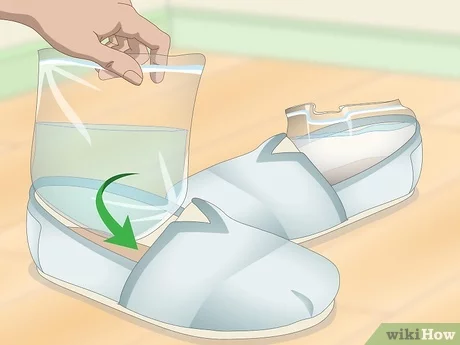
Before you start, make sure to prepare your shoes by filling a plastic bag with 1/4 of an inch (about 6 mm) of water. Seal the bag tightly and place one bag per shoe in the part that causes discomfort.
Freezing the Water
Place the bags of water into the freezer and wait for them to freeze completely. This can take anywhere from 30 minutes to several hours, depending on the temperature of your freezer.
Removing the Shoes and Allowing Them to Thaw
Once the water has frozen, remove the shoes from the freezer and let them thaw at room temperature. Allow them to sit for about 30 minutes before removing the bags of water.
Stretching the Shoe
After the shoe has thawed, you can remove the bags of water and wear your stretched shoes. You should notice an immediate improvement in comfort and reduced pressure on your feet.
Tips and Variations
- To stretch different parts of the shoe, adjust the amount of water accordingly.
- For more effective results, repeat the stretching process several times over a period of 24 hours.
- If you have trouble getting the bags to seal properly, try using a stronger adhesive or resealing them.
Preventing Shoe Stretching Failure
While shoe stretching can be an effective way to make your shoes more comfortable, there are some steps you can take to prevent the stretching process from failing prematurely. Here are some tips:
- Make sure to follow the instructions carefully and avoid over-stretching the material of the shoe.
- Repeat the stretching process several times over a period of 24 hours for optimal results.
- Keep the shoes away from direct sunlight or heat sources, as these can cause the material to shrink or become brittle.
Stretching Different Types of Shoes
While our method can be used on most types of shoes, there are some exceptions. Here are some tips for stretching different types of shoes:
- Leather Shoes: While it’s best to avoid stretching leather shoes whenever possible, you can try using this method on them. However, be cautious as leather may stretch unevenly or become brittle over time.
- Suede Shoes: Avoid using this method on suede shoes, as the material is prone to damage from water and temperature changes.
- Synthetic Leather Shoes: These shoes can be stretched using our method, but avoid applying too much pressure, as the material may tear.
Maintaining Your Stretched Shoes
While shoe stretching can be an effective way to make your shoes more comfortable, there are some steps you can take to maintain them over time. Here are some tips:
- Keep your stretched shoes clean and dry to prevent damage from moisture.
- Avoid wearing your stretched shoes too much, as this can cause the material to break down over time.
- Store your stretched shoes in a cool, dry place when not in use.
Conclusion
Stretching your shoes at home is a simple and cost-effective way to make them more comfortable. By understanding the science behind shoe stretching and following these steps, you can enjoy wearing shoes that fit perfectly without breaking the bank. So next time you find yourself in need of a comfortable pair of shoes, give this method a try!
FAQs
Q: Will this method damage my shoes?
A: No, this method is safe for most types of shoes and will not cause permanent damage.
Q: Can I use this method on leather shoes?
A: While it’s best to avoid stretching leather shoes whenever possible, you can try using this method on them. However, be cautious as leather may stretch unevenly or become brittle over time.
Q: How long does the stretched shoe take to recover from the stretching process?
A: Depending on how much the shoe is stretched and how well it’s maintained, a stretched shoe can last for several months without significant loss of shape.
Q: Can I stretch shoes with elastic sides?
A: While this method can be effective for some types of shoes, elastic sides may not stretch as evenly as rigid material.


