
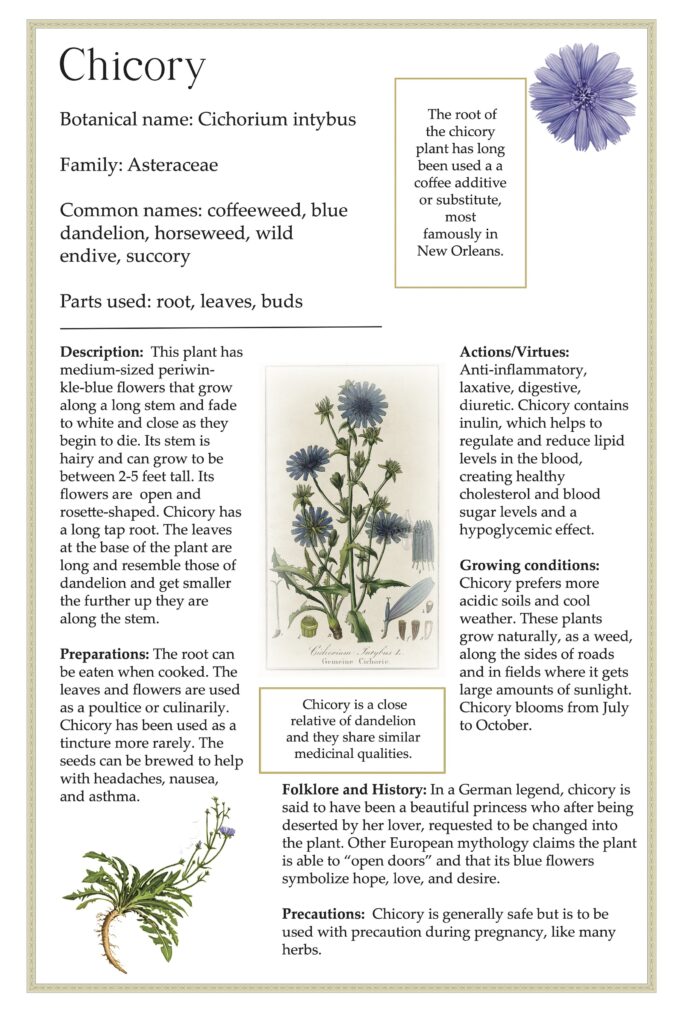
The Wonders of Chicory: Uncovering its History, Benefits, and Uses
Chicory is a perennial herbaceous plant belonging to the Asteraceae family, known for its diverse uses in both culinary and medicinal contexts. With the term chicory referring to various species of Cichorium intybus, an ancient origin native to Europe and Western Asia, this versatile plant has been cultivated and consumed globally.
What is Chicory?
Chicory is a perennial herbaceous plant with beautiful blue, violet, or rarely white flowers. It is an adaptable and robust species that can thrive in less-than-ideal conditions.
The edible parts of the plant are the leaves and roots. The leaves can be eaten raw in salads or cooked, while the root is harvested, dried, roasted, and ground into a natural flavoring substitute for coffee or used to aromatize liquor and spirits.
Properties and Benefits of Chicory
Chicory is rich in beneficial elements that contribute to overall health. It contains various minerals such as potassium, iron, calcium, magnesium, manganese, zinc, and selenium. As a good source of vitamins B, A, C, and E, it also includes carotenoids, which are crucial antioxidants, and prebiotic substances that support the development of beneficial gut bacteria.
Due to its nutrient profile, chicory has several health benefits. It aids in detoxification and drainage processes within the body. Additionally, it promotes urinary excretion, combats water retention, supports digestive functions, and helps with transit through the intestines, alleviating constipation and other digestive issues.
Research also suggests that chicory may have protective effects on the liver, preventing fatty liver disease. Furthermore, its potential in regulating blood sugar levels and cholesterol is being studied, although more research is needed to confirm these findings.
Chicory, Flower Number 8 by Bach
The Remedy No. 8 of Edward Bach’s 38 remedies are flowers used in an alternative form of medicine called “floral therapy.”
Chicory (Cichorium intybus) is recommended for individuals who tend to be overly protective or possessive towards others, often trying to control or manipulate them. It can also help those feeling a strong need for constant attention and approval from others.
The goal of using Chicory’s flower essence is to aid individuals in recognizing and letting go of these behaviors, fostering altruism and unconditional love.
Modalities of Using Chicory as Flower Number 8
Chicory can be taken directly from the bottle or diluted in water. Users are advised to take 2-4 drops in a glass of water or place them under their tongue for dosing purposes that may vary based on individual needs and professional guidance.
Chicory flower essences can be purchased at health food stores or online, such as Amazon.
Types of Chicory
There are numerous varieties of chicory, which differ by leaf shape, color, harvest period, and consumption method:
- Catalogna (or Puntarelle): The most common variety in Italy, characterized by frayed leaves resembling a corolla. It is typically used as a side dish or salad ingredient.
- Witloof (or Indivia Belgian): Known for its long, white or pale pink leaves. This type is cultivated in the dark to produce crunchy flower heads with delicate flavor.
- Radicchio Red of Treviso and Verona: Famous for its deep red amaranth color in its leaves. Ideal for salads or roasted and grilled as a side dish.
- Chicory Riccia: Characterized by frayed, ricotta-like leaves that are versatile in their use.
- Pan di Zucchero (Sugar Bread): A long, carrot-shaped variety.
For Whom is Chicory Indicated?
Chicory is recommended for detoxification and digestive purposes due to its natural properties. It can also alleviate constipation and diarrhea by regulating the intestines’ movement. Furthermore, it may help reduce the severity of fatty liver disease and support blood sugar regulation.
However, more research is needed to confirm these potential benefits. Consult a healthcare professional before adding chicory or any other herbal supplement to your diet.
Culinary Uses of Chicory
Chicory leaves and roots can be consumed in various forms:
- Raw Leaves: Add them to salads for an extra crunch.
- Roasted Roots: Grilled, pan-fried, or roasted as a side dish or added to recipes for flavoring.
- Aromatizing Liquors and Spirits: Ground chicory root can be used as a natural substitute for coffee in beverages.
Growing Chicory
Chicory is an adaptable plant that thrives in various conditions. Here’s how to cultivate it:
- Sowing: Generally done between February and April, directly in the field or indoors.
- Care: Maintain moderate watering and sarching for weed control.
- Harvest: Leaves are ready from June to October, while roots are harvested in autumn.
With proper care, chicory can be grown indoors using a planter or sown outdoors. Ensure it receives partial shade and temperate temperatures.
Chicory in Gocce
A unique and popular product of the chicory is its gocce (drops). These drops are made by drying, roasting, and grinding chicory roots to create a liquid with an intense bitter taste, often infused with other herbs like anise, licorice root, gentian, and more.
These gocces are traditionally enjoyed as an aperitif or digestive after meals due to their ability to stimulate digestion. They can be consumed chilled or mixed into long drinks for a refreshing experience.
Frequently Asked Questions
- What is the health benefits of Chicory?
Chicory contains various beneficial elements such as minerals, vitamins, and carotenoids that support digestive health, detoxification, and overall well-being. - How does chicory aid in digestion?
Chicory helps regulate bowel movements, reduces inflammation, and supports the growth of beneficial gut bacteria. - Is Chicory Good for Fatty Liver Disease?
Research suggests that chicory may have protective effects on the liver, although more research is needed to confirm these findings. - Can I consume chicory if I am allergic to other plants in the Asteraceae family?
Consult a healthcare professional before consuming chicory if you are allergic to any members of this plant family. - How often should I take Chicory Flower Essence?
Start with small doses and gradually increase as needed, under the guidance of a healthcare professional or Bach Practitioner. - Where can I find Chicory Gocce?
Available at health food stores, online retailers like Amazon, or through specialty herbalists. - What are some common side effects of consuming chicory?
Generally considered safe, but excessive consumption may lead to mild stomach upset or allergic reactions in sensitive individuals.
Consult a healthcare professional before adding any new supplement to your diet, especially if you have pre-existing medical conditions or allergies.


