
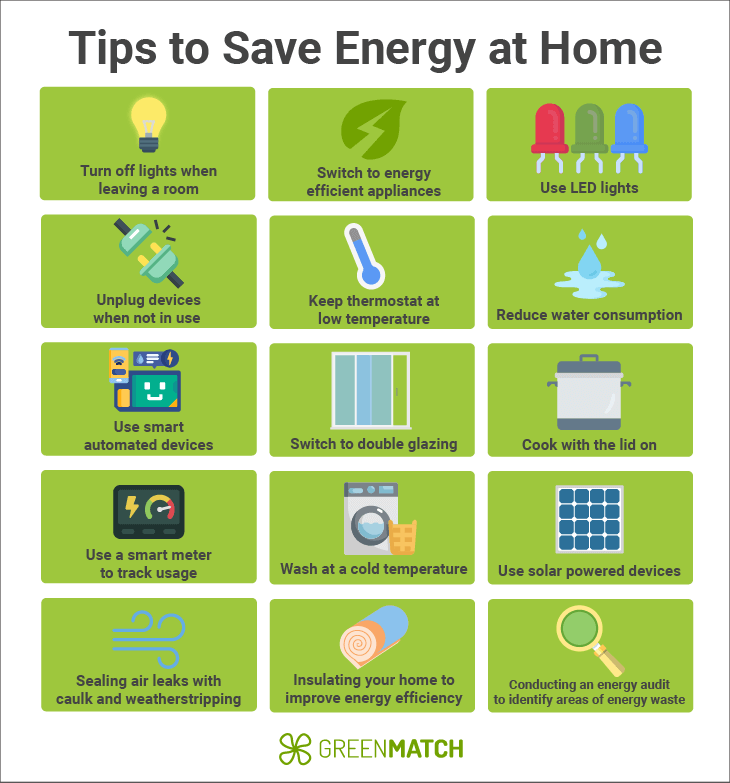
As reported by Enea, a family of average size in Italy can save energy in their homes not only on household appliances, but also on heating costs. In particular, Enea reports a 10% reduction in appliance usage and a 40% reduction in heating without sacrificing or replacing appliances.
Reducing Light Consumption: A Great Starting Point
Starting to save energy at home begins with lighting. In Italy, the amount of electricity consumed by domestic lighting exceeds 6 billion kWh. The expenditure required to cover the costs of lighting corresponds to approximately 13.5% of total household electricity consumption.
Check your light bulbs at home, and you may notice that some are still incandescent. How can you recognize old incandescent bulbs? Observe them carefully. These bulbs have an internal filament that heats up (Joule effect) when electric current is applied, causing the phenomenon of incandescence, which illuminates your home.
Incandescent bulbs do not help reduce energy consumption; they are cheap but come with a weighty bill at checkout time.
Replace incandescent bulbs with LED bulbs. LED bulbs last much longer and consume up to 75% less electricity than traditional bulbs.
Savings Strategies: Appliances
A heavier burden on lighting is represented by household appliances. The most power-hungry appliances are those that produce heat: ovens, electric stoves, washing machines, and dryers. To save energy in your home, you need to replace old appliances with more efficient ones and class A+ or A+++ appliances.
If you don’t want to spend money on new appliances, make sure to turn off appliances when not in use, get into the habit of using a timer, and buy multi-outlet power strips with an on/off switch. Did you know that even standby consumes energy? Every month, you pay around 5 euros extra for this “invisible” consumption. This means that in bi-monthly bills, 10 euros are related to consumptions invisible to us.
TVs, home stereos, DVD players… and all domestic appliances with a colored light on indicate they’re not off but in standby. Household appliances in standby continue to consume energy even when you don’t use them and think they’re turned off.
Household Appliance Maintenance: Dispersion of Electric Current
Ensure proper household appliance maintenance and above all, check for electrical dispersion in your home.
Check power outlets; these should not be excessively hot. Additionally, if your electricity bill is becoming increasingly salty despite no changes to your habits, something is amiss! There are certainly electrical dispensations going on.
Household appliances should not produce any noise. If you have a noisy refrigerator, consult a technician who will undoubtedly reveal the anomaly negatively affecting your Enel or Sorgenia electricity bills regardless of the company.
Energy-Saving Devices: A Cautionary Tale
Avoid various energy-saving devices sold mostly online, accompanied by dubious testimonies.
These devices claim to reduce consumption but their effectiveness is not proven. In fact, their uselessness is widely known. Surround yourself with appliances that have high energy efficiency and learn how to use your electric appliances during peak hours when energy consumption is lower.
If you really want an appliance to save energy, choose a device that measures your energy consumption, which will show you which appliance consumes the most electricity.
Registering Your Household Appliance Consumption
To achieve targeted savings, check which household appliances consume the most electricity. How? With an inexpensive energy meter.
It’s not complicated; you don’t need to access the electricity meter at home but rather attach it to your desired appliance outlet.
A simple and affordable energy meter can be purchased on Amazon for 19.06 euros (including shipping costs).
For all information, please visit their official page: Energy Meter.
This device is inexpensive but does not measure with precision the consumption of low-energy appliances. What do you need an improved energy meter for? Only if you want to measure the electricity consumed by low-power appliances, like lamps or other devices that consume little electricity, do you need a more precise meter.
There are various models available on the market, and the one with the best price-quality ratio can be purchased for 29.99 euros (free shipping). For all information on this product, please visit their official Amazon page: Precision Energy Meter RCE PM600.
This device can record even tiny watts of electricity (TVs in standby, lamps, DVD players, etc.).
Understanding Electricity Consumption
To save energy effectively, it is essential to understand how electricity consumption works. Household appliances consume electricity according to the principles of electrical circuitry and the physical properties of materials. The amount of electricity used by a device depends on its power rating, which is measured in watts (W).
For example, an incandescent bulb has a high power rating, typically around 60 W. In contrast, LED bulbs have a significantly lower power rating, usually between 9 and 12 W.
Tips for Reducing Energy Consumption
Here are some additional tips to help you save energy at home:
- Turn off appliances when not in use: This is one of the simplest ways to reduce energy consumption. Make it a habit to turn off lights, TVs, computers, and other appliances when they’re not in use.
- Use power strips with timers: Plug your electronics, such as TVs and computers, into power strips with built-in timers. This way, you can easily turn them off when not in use.
- Upgrade to energy-efficient appliances: When it’s time to replace old appliances, look for energy-efficient models with a high Energy Star rating.
- Use natural light: During the day, open curtains and blinds to let natural light in, reducing the need for artificial lighting.
- Insulate your home: Proper insulation can help reduce heat loss in the winter and heat gain in the summer, reducing the need for heating and cooling.
- Weatherize your home: Seal air leaks and add weatherstripping around doors and windows to prevent heat from escaping.
- Use a smart thermostat: Install a smart thermostat that can learn your schedule and preferences to optimize heating and cooling usage.
Frequently Asked Questions
- How much money can I save by replacing incandescent bulbs with LED bulbs?
Replacing incandescent bulbs with LED bulbs can save you around €20-€50 per year, depending on how many bulbs you replace and the number of hours they’re used each day.
- Are there any energy-saving appliances that are not worth the investment?
Yes, some energy-saving appliances may not be worth the investment if they don’t provide significant energy savings or have a high upfront cost. For example, some smart thermostats may require frequent software updates and have a high monthly subscription fee.
- Can I measure my household appliance consumption using a simple energy meter?
Yes, you can use a simple energy meter to measure your household appliance consumption. These meters are relatively inexpensive and can provide you with an idea of which appliances consume the most energy.
- What is electrical dispersion, and how do I detect it in my home?
Electrical dispersion refers to the flow of electricity through wires or circuits that are not designed for high-power usage. To detect electrical dispersion in your home, look for signs such as overheating power outlets, flickering lights, or unusual odors.
- Is it true that standby devices consume electricity even when turned off?
Yes, it’s true that many standby devices continue to consume energy even when they’re turned off but still plugged in. This is known as “vampire” or “standby” power.
- How can I save energy on heating costs without sacrificing or replacing appliances?
To save energy on heating costs, you can use a combination of strategies such as:
- Insulating your home to reduce heat loss
- Using thermal curtains or drapes to retain warmth
- Installing a programmable thermostat to regulate heating usage
-
Upgrading to a more efficient heating system
-
Are there any gadgets for saving energy that are not worth the money?
Yes, some energy-saving gadgets may not be worth the money if they don’t provide significant energy savings or have a high upfront cost. For example, some smart plugs may require frequent software updates and have a high monthly subscription fee.
- Can I use an energy meter to measure the consumption of low-energy appliances?
No, you cannot use a simple energy meter to measure the consumption of low-energy appliances like lamps or other devices that consume little electricity. You’ll need a more precise energy meter that can detect tiny watts of electricity.



