
Introduction
Are you looking to multiply your oleander plant? Look no further! With its beautiful flowers and minimal maintenance requirements, the oleander is a popular choice for gardeners. However, before we dive into the process, it’s essential to note that oleander contains a toxic compound called oleandrin, which can be harmful if ingested.
Is Oleander Toxic?
Yes, oleander is considered toxic. The plant’s leaves and stems contain this poisonous compound, making it crucial to handle them with care when propagating. In fact, even the wood of the tree is toxic and should not be used as firewood or for other purposes that involve high heat.
When Is the Best Time to Propagate Oleander?
The ideal time to propagate oleander is in the spring, when the plant is actively growing. This allows for maximum root development and increases the chances of successful rooting.
Step 1: Preparing the Cutting
To begin, select a few healthy, young stems from your oleander plant. These should be around 10-15 cm long and have never produced flowers. Using a sharp, clean knife or pruning saw, cut these stems at an angle, making sure to include some of the leafy nodes.
Why Cut at an Angle?
Cutting the stem at an angle allows for better water uptake and promotes rooting. It also helps prevent the cutting from sitting too deeply in the potting medium, which can lead to poor root development.
Step 2: Removing Lower Leaves
Next, remove all lower leaves from the cutting, leaving only two or three sets of leaves at the top. This will help prevent water loss and promote rooting.
Why Remove Lower Leaves?
Removing lower leaves helps prevent the cutting from drying out too quickly, which can lead to root rot. By removing these leaves, you’re allowing the cutting to focus its energy on developing roots.
Step 3: Soaking in Water
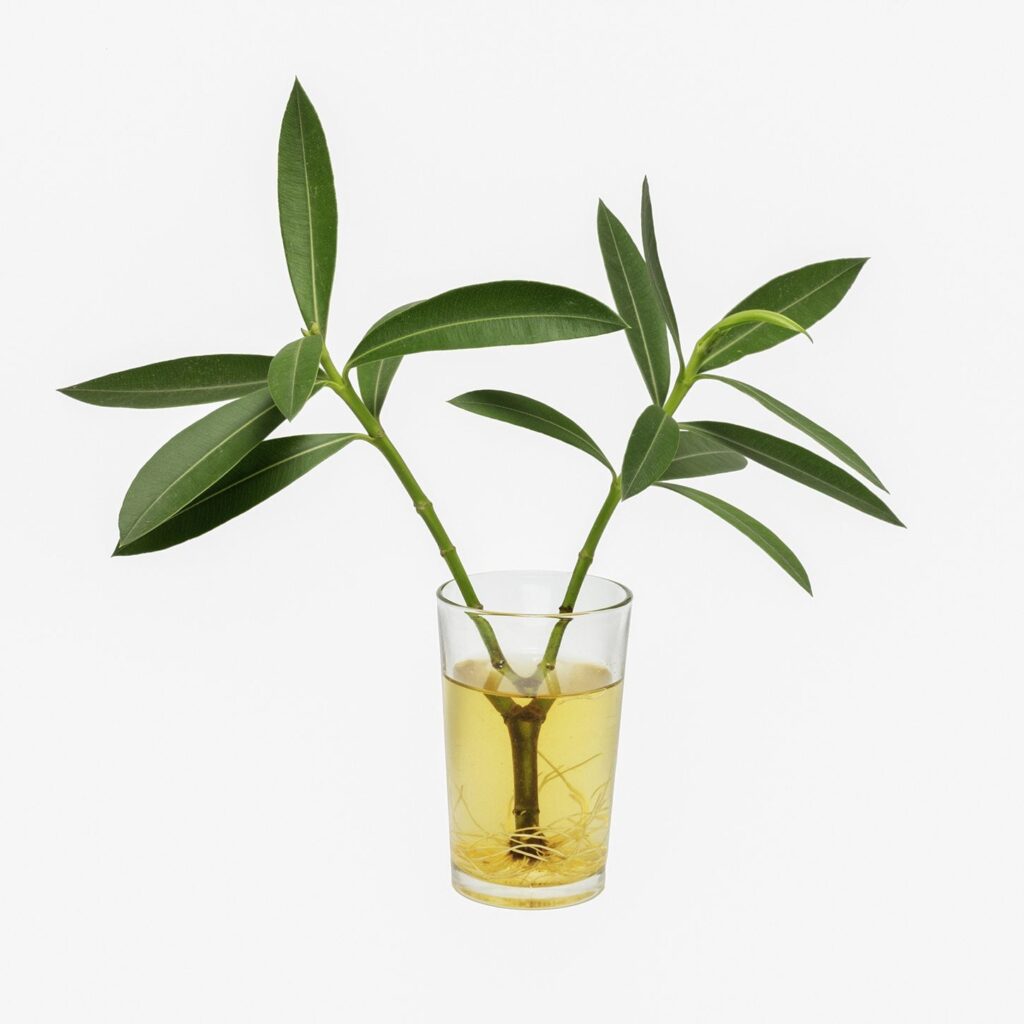
Place the cuttings in a vase filled with fresh water (not distilled), making sure the node is fully submerged. Change the water every few days to keep it clean.
Why Soak in Water?
Soaking the cutting in water helps stimulate root growth and promotes rooting. The oxygen in the water also helps prevent bacterial growth, which can lead to rot.
Optional Step: Using Rooting Hormone
To enhance rooting, you can apply a commercial rooting hormone powder or liquid to the base of the cutting before placing it in the water. Look for products specifically designed for use on woody stems like oleander.
What is Rooting Hormone?
Rooting hormone is a substance that helps stimulate root growth and promotes rooting. It’s available in various forms, including powders, liquids, and granules. When applied to the cutting, it can increase the chances of successful rooting.
Step 4: Transferring to a Rooting Medium
After 2-3 weeks, when roots start to develop and new growth appears, transfer the cuttings to a pot filled with a well-draining mix of peat moss, perlite, or vermiculite. Make sure the node is still submerged in water.
Why Use a Well-Draining Medium?
Using a well-draining medium helps prevent root rot by allowing excess water to drain away from the roots. This promotes healthy root growth and increases the chances of successful propagation.
Step 5: Providing the Right Conditions
Keep the soil consistently moist but not waterlogged. Place the potted oleander in a bright location, protected from direct sunlight and frost. Maintain temperatures between 65°F to 75°F (18°C to 24°C) for optimal growth.
What are the Ideal Growing Conditions?
Providing the right conditions is crucial for successful propagation. Make sure your potting medium is consistently moist but not waterlogged. A bright, protected location with moderate temperatures will promote healthy growth and increase the chances of successful rooting.
When Can You Transplant?
After 2-3 months of rooting, you can transplant your new oleander plant into a larger pot or directly into the ground in late spring or early summer, depending on your climate. Harden off the seedlings before transferring them outside by gradually exposing them to outdoor conditions over the course of several weeks.
Tips for Successful Propagation
- Use healthy, vigorous stems with minimal damage.
- Remove all lower leaves to prevent water loss and promote rooting.
- Keep the cutting submerged in water until roots develop.
- Avoid transplanting in extreme temperatures or weather conditions.
- Provide consistent moisture but avoid overwatering.
Common Mistakes to Avoid
- Propagating oleander when it’s too hot or cold outside.
- Handling the plant excessively, which can cause stress and damage.
- Not providing enough light for the new seedlings after transplanting.
By following these steps and avoiding common mistakes, you should be able to successfully propagate your oleander plant and enjoy its beautiful flowers year-round.
FAQs
- Is it safe to eat oleander?
No, oleander is toxic and should not be consumed in any form.
- Can I use the wood from an oleander tree for firewood or other purposes?
No, oleander wood is highly toxic and should not be used for cooking, heating, or other purposes that involve high heat.
- How often should I water my newly propagated oleander plant?
Keep the soil consistently moist but not waterlogged. Check the moisture by sticking your finger into the soil up to the first knuckle.
- Can I propagate oleander in the winter?
Yes, you can propagate oleander in the winter, but make sure to provide it with bright light and maintain temperatures between 65°F to 75°F (18°C to 24°C).
- What is the best way to protect my newly propagated oleander plant from pests?
Use a balanced fertilizer and consider using pest control methods such as neem oil or insecticidal soap if necessary.
- Can I propagate oleander in small pots or containers?
Yes, you can propagate oleander in small pots or containers, but make sure to provide enough light and maintain consistent moisture levels.
- How long does it take for my newly propagated oleander plant to grow roots?
Rooting typically takes 2-3 weeks after transferring the cutting to a rooting medium.
- Can I propagate multiple stems from one oleander tree at the same time?
Yes, you can propagate multiple stems at once, but make sure to provide enough space and care for each individual plant.


