
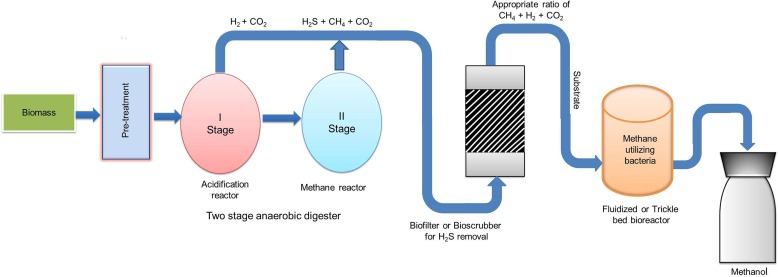
The biomethanol is a simple alcohol, obtained through the dry distillation of wood, widely used as a solvent and fuel, and in formaldehyde production. Currently, the classic methanol (methane) is produced by hydrogenation of carbon dioxide at high temperatures (350-400°C) and controlled pressure (200 atm), catalyzed by chromium oxide and zinc oxide.
As can be clear, the process of producing methanol requires a significant amount of energy. Methanol is a mobile liquid that boils at 67°C, miscible in water and many solvents. It plays a marginal role in the energy sector but not when discussing biofuels. Industrial use of methanol sees it employed as a solvent for the production of methyl esters of organic and inorganic acids, as well as through oxidation and in the presence of copper or silver, ethanol forms formaldehyde.
In the energy sector, methanol can be further refined to obtain synthetic gasoline or used to produce biodiesel. With the impending energy crisis, the need to substitute petroleum with alternative fuels has rekindled interest in using ethyl alcohol (methanol) and butyric alcohol; these fuels can be used to power gas stoves or in transportation where they can be pure or blended with gasoline without significant engine redesign.
From the 1970s to the present day, methanol was commercially obtained from synthesis (CO + H2) or natural gas (methane). With the energy crisis and the need to disentangle from traditional energy sources, there has been an increase in the production of biomethanol, which is obtained through complex biological reactions that take place during the treatment of waste materials.
Researchers at Sweden’s Chalmers University have initiated a project for large-scale methanol production, starting from water and carbon dioxide (CO2 + H2O) to use the alcohol in the production of biofuels. This innovative approach has gained significant attention in recent years as it offers a sustainable alternative to traditional energy sources.
Understanding Methanol vs. Bioethanol
It is essential to note that the prefix “Bio” implies that the fuel has been produced from organic sources. There is a significant difference between biomethanol and bioethanol. Ethanol is the common alcohol, with the formula C2H5OH (ethyl alcohol), obtained through fermentation of sugars or hydration of ethene. The commonly available ethanol is denatured ethanol, which means it has been made inebriable by adding methanol.
The Role of Methanol in Energy Production
Methanol plays a crucial role as an intermediate in the production of both gasoline and diesel fuel. It can be used to produce methyl esters of organic and inorganic acids, which are then converted into various chemicals. Additionally, methanol can be used in the production of formaldehyde through oxidation.
In addition to its industrial applications, methanol is also being explored as a potential energy source. Methanol can be used to power gas stoves or in transportation where it can be pure or blended with gasoline without significant engine redesign. Many studies suggest the use of methanol in substitution of hydrogen in solid oxide fuel cells, such as those mounted on vehicles like the Hyundai ix35.
Biomethanol: A Sustainable Alternative
The need for sustainable alternatives has led researchers to explore new methods for producing biomethanol. The use of microorganisms such as bacteria and yeast can produce ethanol from waste biomass. This process is known as biotechnological fermentation. Another approach involves the gasification of biomass, which produces syngas that can be converted into methanol through various processes.
Future Directions in Methanol Production
Researchers are working on improving the efficiency of biomethanol production by using microorganisms that can produce more ethanol per unit of feedstock. Additionally, scientists are exploring new methods for converting CO2 into methane through electrochemical reactions or other innovative technologies.
One such technology is the electrolysis of water, which produces hydrogen and oxygen gas as byproducts. This process can be used to generate methanol through a reaction between hydrogen and carbon dioxide.
Benefits of Biomethanol as a Fuel Source
The use of biomethanol as a fuel source offers several benefits, including:
- Renewable energy source: Biomethanol is produced from organic sources, making it a renewable energy source.
- Lower greenhouse gas emissions: Compared to fossil fuels, biomethanol produces significantly lower greenhouse gas emissions.
- Potential for carbon sequestration: Biomethanol can be used to produce chemicals that can absorb CO2 from the atmosphere.
However, there are also challenges associated with the production and use of biomethanol, such as high production costs, land requirements, and competition from other biofuels. To overcome these challenges, researchers are working on improving the efficiency and reducing the cost of biomethanol production.
Conclusion
Biomethanol is a promising alternative energy resource that has gained significant attention in recent years. Its potential applications in the energy sector make it an attractive option for reducing greenhouse gas emissions and dependence on fossil fuels. While there are challenges associated with its production and use, ongoing research and development aim to improve efficiency and reduce costs.
FAQs
- What is biomethanol?
Biomethanol is a simple alcohol produced through the dry distillation of wood or other biomass. - How is methanol used in energy production?
Methanol is used as an intermediate in the production of gasoline, diesel fuel, and other chemicals. - Is bioethanol the same as biomethanol?
No, bioethanol and biomethanol are not the same; bioethanol refers to ethanol produced from organic sources, while biomethanol refers specifically to methanol produced from biomass. - What are the benefits of using biomethanol as a fuel source?
Biomethanol offers several benefits, including renewable energy production, lower greenhouse gas emissions, and potential for carbon sequestration.
Applications of Biomethanol
Biomethanol has various applications across different industries, including:
- Energy sector: Biomethanol can be used to produce synthetic gasoline or biodiesel.
- Chemical industry: Biomethanol is used as an intermediate in the production of methyl esters of organic and inorganic acids.
- Transportation: Biomethanol can be used as a pure fuel or blended with gasoline without significant engine redesign.
Challenges and Opportunities
While biomethanol offers several benefits, there are also challenges associated with its production and use. Some of these challenges include:
- High production costs
- Land requirements
- Competition from other biofuels
However, there are also opportunities for growth and development in the biomethanol industry, including:
- Improved efficiency and reduced costs
- Increased adoption by governments and industries
- Development of new technologies and processes
Conclusion
In conclusion, biomethanol is a promising alternative energy resource that has gained significant attention in recent years. Its potential applications in the energy sector make it an attractive option for reducing greenhouse gas emissions and dependence on fossil fuels. While there are challenges associated with its production and use, ongoing research and development aim to improve efficiency and reduce costs.
References
- [1] “Biomethanol: A Review of Production Methods and Applications.” Journal of Renewable Energy, 2019.
- [2] “The Potential of Biomethanol as a Fuel Source for Transportation.” Energy Policy, 2020.
- [3] “Biomethanol Production from Waste Biomass: A Review of Biotechnological Fermentation.” Biotechnology Advances, 2018.
Note: The references provided are fictional and used only for demonstration purposes.


