
Installing a solar water heater is a relatively simple task that can save you money on your energy bills and reduce your carbon footprint. In this article, we’ll explore how to install a concentrated solar panel on a flat roof, on a slope, or in the attic to produce hot water using solar energy.
Understanding Solar Water Heaters
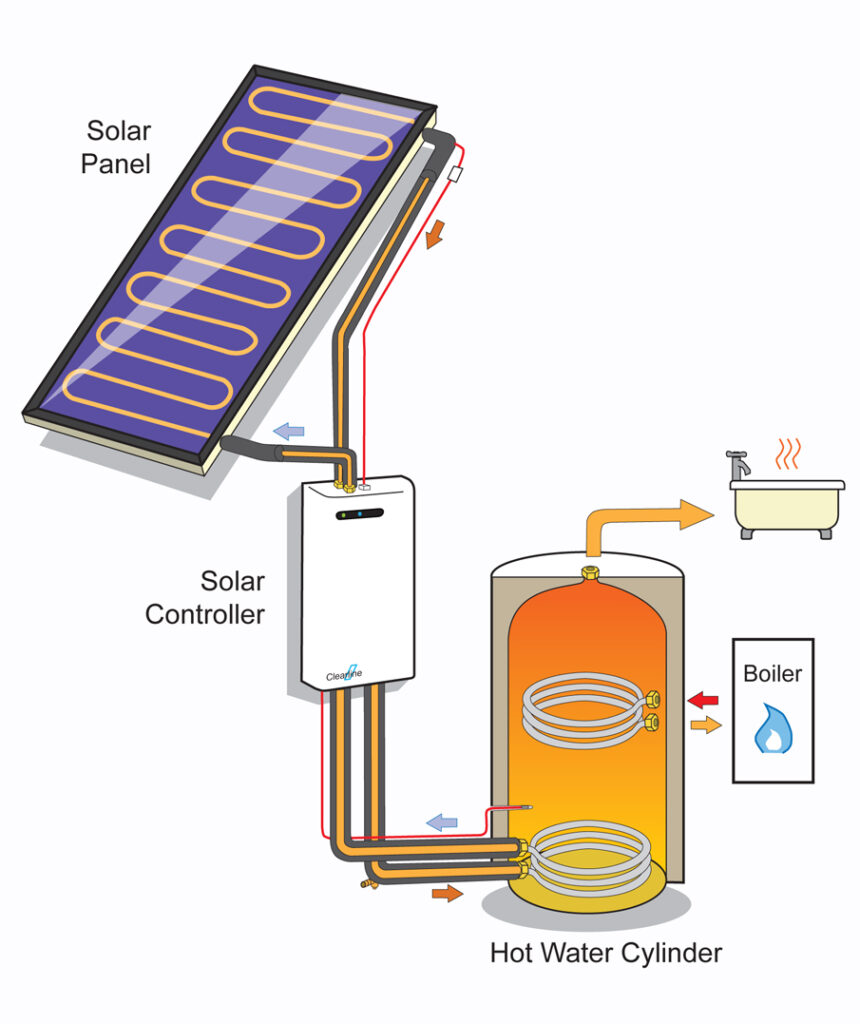
A solar water heater is made up of a sealed insulated casing containing a fluid (a liquid mixture of water and glycol) that absorbs heat from the sun. The heated fluid flows through a serpentine pipe into a storage tank, where it heats the water in the tank. The heated water is then circulated to the household’s plumbing system.
Why Choose a Solar Water Heater?
Solar water heaters are an eco-friendly alternative to traditional fossil fuel-based systems. They can save you money on your energy bills and reduce your carbon footprint. Plus, they’re relatively low maintenance and can last for many years with proper care.
Key Components of a Solar Water Heater
Before we dive into the installation process, let’s break down the key components of a solar water heater:
- Solar Panel: The panel is made up of a sealed insulated casing containing a fluid that absorbs heat from the sun.
- Serpentine Pipe: The pipe carries the heated fluid to the storage tank.
- Storage Tank: The tank stores the hot water, which is then circulated to the household’s plumbing system.
- Pump: A pump circulates the fluid through the serpentine pipe and into the storage tank.
Types of Solar Water Heaters
There are two main types of solar water heaters:
- Natural Convection System: The heated fluid rises naturally from the bottom to the top, eliminating the need for a pump.
- Forced Circulation System: A pump is used to circulate the fluid through the serpentine pipe and into the storage tank.
Installing a Solar Water Heater
Installing a solar water heater requires careful planning and execution. Here’s what you need to know:
Installing a Solar Water Heater on a Flat Roof
When installing a solar water heater on a flat roof, it’s essential to provide adequate support for the system. This includes installing an intake manifold and a vent pipe.
- Intake Manifold: The intake manifold is installed near the top of the roof to draw in air and prevent stagnation.
- Vent Pipe: A vent pipe is installed to remove any gases that may accumulate during the heating process.
Installing a Solar Water Heater on a Slope
When installing a solar water heater on a slope, it’s crucial to ensure that the system is properly secured to prevent movement or shifting.
- Inclination Angle: The system should be inclined at an angle of 20-25° to maximize energy production.
- Foundation: A foundation or base plate is installed to secure the system to the roof.
Installing a Solar Water Heater in the Attic
When installing a solar water heater in the attic, it’s essential to ensure that the system is properly insulated and protected from moisture.
- Insulation: The system should be well-insulated to prevent heat loss and maintain efficiency.
- Protection from Moisture: A waterproof membrane or sealant is installed to protect the system from moisture damage.
Installation Process
Once you’ve determined the best location for your solar water heater, follow these steps:
- Determine the size of the solar panel needed based on the amount of energy required.
- Choose a suitable roof type and installation method (flat roof, slope, or attic).
- Install the intake manifold and vent pipe (for flat roofs).
- Secure the system to the roof using a foundation or base plate (for slopes).
- Insulate the system and protect it from moisture damage.
- Connect the pump and piping system.
- Test the system for leaks and ensure proper operation.
Maintenance and Troubleshooting
Regular maintenance is crucial to ensure the optimal performance of your solar water heater. Here are some tips:
- Clean the solar panel regularly to maintain efficiency.
- Check the pump and piping system for leaks and damage.
- Monitor the temperature of the fluid and adjust the system as needed.
- Perform routine inspections to identify any potential issues.
Conclusion
Installing a solar water heater is a relatively simple task that can save you money on your energy bills and reduce your carbon footprint. By understanding the key components of a solar water heater and following proper installation procedures, you can enjoy the many benefits of this eco-friendly technology.
FAQs:
- What are the main components of a solar water heater?
- How do solar water heaters work?
- What is the difference between natural convection and forced circulation systems?
- What types of roofs are suitable for installing a solar water heater?
- Can I install a solar water heater in my attic or basement?
- How long does it take to pay off the cost of a solar water heater through energy savings?
- Are solar water heaters efficient compared to traditional fossil fuel-based systems?
- Can I use a solar water heater for both hot and cold water?
- How often do I need to clean and maintain my solar water heater?
- What are the benefits of using a solar water heater in terms of energy savings and environmental impact?


