
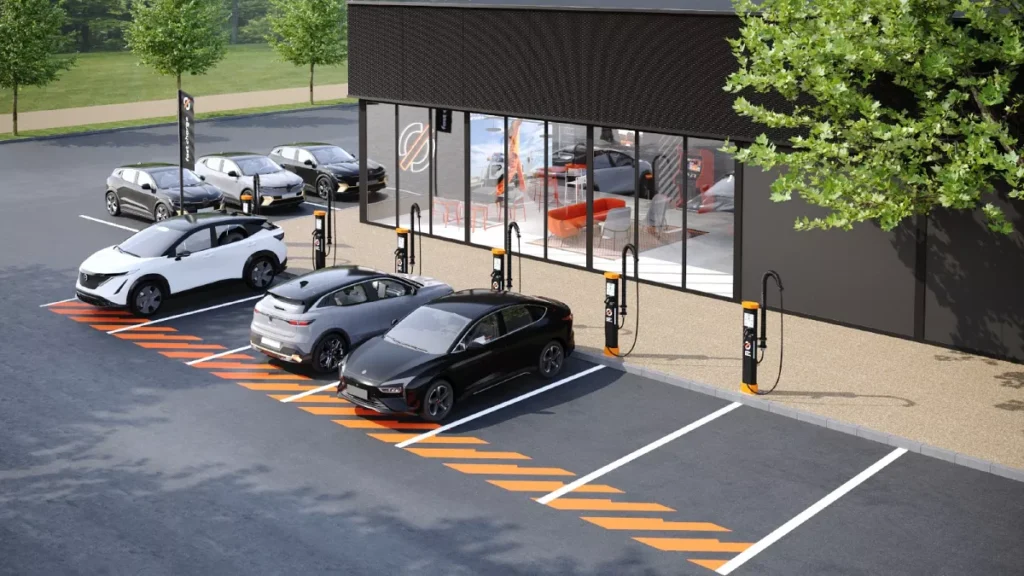
As the world continues to grapple with the challenges of climate change and air pollution, the transportation sector has come under increasing scrutiny. In response, electric vehicles (EVs) have emerged as a promising solution, offering numerous benefits including reduced greenhouse gas emissions and lower operating costs. However, one of the major bottlenecks in their adoption is the lack of widespread charging infrastructure. Renault, a French automotive giant, recognizes this challenge and is taking steps to address it.
The Rise of Electric Charging Stations: A Key to a Sustainable Transportation System
Electric vehicles have gained significant traction in recent years, with many countries investing heavily in EV production and development. However, one of the primary obstacles to their widespread adoption is the lack of charging infrastructure. Without access to reliable and convenient charging facilities, consumers are hesitant to adopt EVs, fearing that they will be unable to travel long distances without interruption.
To address this challenge, Renault has announced plans to install charging stations across France. According to Thierry Koskas, director of the company’s auto-electric program, “It’s not our job to install charging stations, but someone needs to push the market forward.” The company is also partnering with Nissan, a Japanese automaker, to deploy approximately 1,000 charging stations in France and other countries. Each station will cost around €5,000.
The Importance of Infrastructure for Electric Vehicle Adoption
While electric vehicles offer numerous benefits, including reduced greenhouse gas emissions and lower operating costs, the lack of charging infrastructure can be a significant obstacle to their adoption. Thierry Koskas notes that “Infrastructure is crucial for the success of electric vehicles.” The lack of investment in infrastructure makes it difficult to ensure that a reasonable number of charging stations are installed, leaving consumers with limited options.
In France, the government has allocated €50 million for public networks, but only 5% of this amount will be invested in infrastructure. This lack of investment is concerning, as it may limit the adoption of electric vehicles and hinder the country’s efforts to reduce greenhouse gas emissions.
Challenges Faced by Electric Vehicle Adoption
The rollout of charging infrastructure is not without its challenges. Thierry Koskas comments that “France is not on the right path to achieving its goals” regarding electric vehicle adoption, citing the lack of investment in infrastructure as a major challenge. The company faces several hurdles, including securing funding for infrastructure development and overcoming regulatory barriers.
One of the most significant challenges facing EV adoption is the high upfront cost of charging stations. While the cost of individual cars has decreased significantly, the cost of installing charging infrastructure can be prohibitively expensive. This makes it difficult for companies like Renault to justify the investment in infrastructure development.
A Partnership for Success: Renault and Nissan
The partnership between Renault and Nissan is crucial to addressing the challenge of widespread electric vehicle adoption. With an investment of €4 billion, these two companies are committed to supporting the development and production of electric vehicles. As Thierry Koskas notes, “This is not a short-term commitment.”
The partnership between Renault and Nissan has already led to significant advancements in EV technology, including the development of advanced battery systems and more efficient powertrains. By pooling their resources and expertise, these companies are able to share costs and accelerate innovation.
The Need for Standardization in Charging Infrastructure
As the demand for charging infrastructure grows, there is a pressing need for standardization. Currently, different charging stations use varying protocols, making it difficult to travel long distances without access to charging facilities. This is where Renault and Nissan come into play.
The companies are working together to develop a standardized charging system that will enable seamless integration of EVs from different manufacturers. This standardization will not only simplify the charging experience for consumers but also reduce costs associated with installing and maintaining charging infrastructure.
What’s Next for Electric Vehicle Adoption?
While there are challenges ahead, the growth of electric vehicles shows no signs of slowing down. As consumers become more aware of the benefits of EVs, demand will only continue to increase. It remains to be seen whether governments and private companies can work together to create a seamless charging experience.
To achieve widespread adoption, governments will need to invest in infrastructure development and provide incentives for consumers to adopt EVs. This may include tax credits, rebates, or other forms of support. Private companies like Renault and Nissan will also play a crucial role in driving innovation and reducing costs associated with EV production.
Conclusion
The widespread adoption of electric vehicles requires significant investment in infrastructure. Renault’s plan to install charging stations across France is an important step towards creating a sustainable transportation system. As the world continues to transition towards a more sustainable future, it will be crucial for governments and private companies to work together to address the challenges ahead.
By prioritizing infrastructure development and standardization, companies like Renault and Nissan can help create a seamless charging experience for consumers. This, in turn, will drive the adoption of electric vehicles and support the growth of a sustainable transportation system.
Frequently Asked Questions
-
What is Renault’s goal in installing electric charging infrastructure?
Renault aims to support the growth of electric vehicles by providing widespread access to charging infrastructure. -
How many charging stations will Renault and Nissan deploy?
Approximately 1,000 charging stations are planned for deployment across France and other countries. -
What is the cost of each charging station?
Each charging station costs around €5,000. -
Why is standardization crucial in charging infrastructure?
Standardization is necessary to ensure that different charging stations use consistent protocols, making it easier for consumers to travel long distances without access to charging facilities. -
What role do governments play in supporting electric vehicle adoption?
Governments can support the growth of electric vehicles by investing in infrastructure and providing incentives for consumers to adopt EVs. -
Can electric vehicles handle long-distance travel without access to charging infrastructure?
Currently, it is challenging for consumers to travel long distances without access to charging facilities. However, as charging infrastructure grows, it will become easier for consumers to travel long distances without interruption. -
How much has Renault and Nissan invested in electric vehicle development?
Renault and Nissan have invested a combined €4 billion in the development and production of electric vehicles. -
What is Thierry Koskas’s view on the current state of electric vehicle adoption?
Thierry Koskas believes that “France is not on the right path to achieving its goals” regarding electric vehicle adoption, citing the lack of investment in infrastructure as a major challenge.


