
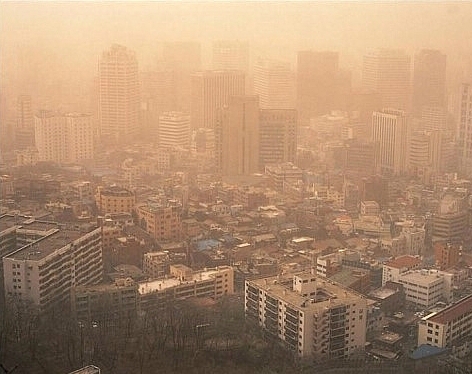
Is it possible to clean the air from fine particulates and volatile organic compounds? The problem faced by many Italians living in urban areas or near polluting industrial zones may find a solution (at least partially) thanks to technology platforms designed to combat atmospheric pollution. Equipment of this type, especially when accompanied by the development of zero-emission urban mobility, could really make the air in our cities clean.
The tool in question is called APA – Attenuation of Atmospheric Particulates and Pollution – and was presented by Is TECH Innovation in Sciences & Technologies at the recent Ecomondo Fair in Rimini. Nicknamed “smog-eating machine,” APA is indeed a smart and multifunctional platform for cleaning the air from fine particulates and harmful pollutants, suitable for industrial and urban areas.
APA was born from an idea developed since 2004 by some scientists and researchers on the team, and has been subject to field study and analysis since February 2011. The technology solution, in addition to being selected by Italia degli Innovatori in the edition 2011/12, obtained the CE mark and the IMQ (Italian Institute of Quality Mark) certification in July 2012.
Thanks to a technology based on integrated chemical-physical-mechanical processes, the APA platform is able to eliminate atmospheric particulate matter, heavy metals, IPA (Aromatic Hydrocarbons), and light hydrocarbons (such as methane, benzene, etc.), acting on very high air flow rates. The system also has a structure of continuous monitoring and control of plants and pollutants, representing a valuable tool for atmospheric data and environmental information collection.
The functioning mechanism of the APA platform is quite simple. Air is sucked in through a nozzle placed one meter from the ground and filtered inside the machine according to a procedure that reflects the natural cycle of rain: droplets of liquid strike fine particles and make them precipitate downwards, depositing them in water. At the end of the washing process, clean air is aspirated upwards and re-injected into the atmosphere, without any production of special waste.
The APA platform is modular, versatile, and separable in its various stages, making it optimal for use in different environmental risk and restoration areas. The system has a unique feature: it can take on different forms and be dimensioned according to the characteristics of the places to be cleaned, consumes very little energy, and the eliminated pollutants are disposed of at municipal treatment plants.
What is APA?
APA is a cutting-edge technology platform designed to clean the air from fine particulates and volatile organic compounds. It has been developed by Is TECH Innovation in Sciences & Technologies and presented at the Ecomondo Fair in Rimini.
How does APA work?
APA works by sucking in air through a nozzle, filtering it according to a procedure that reflects the natural cycle of rain, and then re-injecting clean air into the atmosphere. The technology is based on integrated chemical-physical-mechanical processes and can eliminate a wide range of pollutants.
Benefits of APA
The benefits of using APA include:
- Elimination of fine particulates and volatile organic compounds
- Reduction of atmospheric pollution
- Improved air quality in urban areas
- Zero-emission mobility
Limitations of APA
While APA is an effective solution for cleaning the air, there are some limitations to consider:
- Energy consumption: while APA consumes very little energy, it still requires power to operate.
- Maintenance: like any complex system, APA requires regular maintenance to ensure optimal performance.
Future Developments
APA is a rapidly evolving technology platform. Future developments may include:
- Integration with other air quality monitoring systems
- Development of new pollutants detection capabilities
Conclusion
Cleaning the air from fine particulates and volatile organic compounds is an essential step in improving air quality and reducing atmospheric pollution. APA is a cutting-edge technology platform that offers a promising solution for this challenge.
FAQs:
- What are fine particulates?
- How does APA eliminate pollutants?
- What are the benefits of using APA?
- What are the limitations of APA?
- Is APA suitable for urban areas?
- Can APA be used in industrial settings?
- How much energy does APA consume?
- Will APA become a standard solution for air quality management?
Case Studies:
- Urban Air Quality Improvement: The city of Milan has implemented the use of APA platforms to improve urban air quality. By reducing particulate matter and volatile organic compounds, the city aims to create healthier living conditions for its residents.
- Industrial Zone Pollution Reduction: A major industrial zone in Italy has seen a significant reduction in pollution thanks to the implementation of APA platforms. This innovation has contributed to improved air quality and reduced negative impacts on local ecosystems.
Real-World Applications:
- Air Quality Monitoring Systems: The integration of APA with existing air quality monitoring systems can provide a more comprehensive understanding of atmospheric conditions.
- Industrial Emissions Reduction: By incorporating APA platforms into industrial processes, companies can significantly reduce their environmental footprint and improve overall sustainability.
Challenges and Opportunities:
- Energy Efficiency: As the use of APA increases, there is a need to optimize energy efficiency to minimize power consumption.
- Maintenance and Upgrades: Regular maintenance and upgrade schedules will be essential to ensure optimal performance and extend the lifespan of APA platforms.
Conclusion
The benefits of using APA in reducing fine particulates and volatile organic compounds are undeniable. However, it’s crucial to address the challenges associated with its implementation and optimize its use for maximum effectiveness. By doing so, we can create a cleaner, healthier environment for future generations.
In conclusion, cleaning the air from fine particulates and volatile organic compounds is an essential step in improving air quality and reducing atmospheric pollution. The APA platform offers a promising solution for this challenge, with numerous benefits and opportunities for growth and development.


