
The Italian Saddle Horse, as its name suggests, contains everything that is essential to tell its story. However, since it’s a magnificent animal, it’s only fitting to devote some extra words to it, especially considering its interesting history intertwined with that of our country.
Contents
- Origin of the Italian Saddle Horse
- Characteristics of the Italian Saddle Horse: Height and Weight
- The Italian Saddle Horse: Temperament and Attitudes
- Allevamenti di Cavalli Sella Italiano in Italia
Origin of the Italian Saddle Horse
Before we dive into a little historical narrative, let’s take it back to the Middle Ages, going way further down the years until the time of our beloved equine protagonist from a scientific-naturalistic point of view.
This breed can be said to have originated primarily through incroci and meticciamenti between various well-known breeds such as the purebred English horse, the Arabian horse, the Anglo-Arabo, or even the Anglo-Arabo Sardo, along with fattrici from typical Italian breeds with an inclination towards the saddle. A beautiful mix of characteristics that might seem confusing at first but has ultimately led to successful horses.
But now let’s get to the story that we can share thanks to documents about the Italian Saddle Horse that have been found. Even in the Middle Ages, this breed was highly regarded, especially during that period when its fame was mainly associated with its role as a producer of a horse breed suitable for both war and transporting goods, as well as agricultural work. A triple value that undoubtedly made it a very precious animal. It had success primarily in certain regions of Italy such as Naples, Mantua, Ferrara, Lazio, Tuscany, and Veneto.
Due to its widespread distribution, regulations were put in place by the State with the creation of a “Libro genealogico del Cavallo da sella Italiano” (Italian Saddle Horse Genealogy Book). In this document, we can find three types of Italian horses. There’s the Anglo-Arabo Purosangue and the Arabo Purosangue; the Anglo-Arabo-Sardo; and finally, the genuine Italian Saddle Horse.
This last one must absolutely derive from the breeding of stallions Purosangue Inglese, Purosangue Arabo, Anglo-Arabo, or derived breeds, Anglo-Arabo-Sardo, or derived breeds, as well as Sella Italiano with juments produced in Italian breedings that don’t have blood derived from war horses at least up to the third generation.
Complex rules? No! There are even subcategories for our precious Italian Saddle Horse, those with an upper limit of 75% Purosangue Inglese and those with less than that.
Characteristics of the Italian Saddle Horse: Height and Weight
Maybe by mentioning the incroci that gave rise to this breed we’ve already hinted at its physical structure and appearance. Let’s clarify things a bit more. First, let’s mention the height measured from garrese, which must absolutely be above 156 centimeters. The weight is roughly around 500 kg, but we don’t have any limits on this.
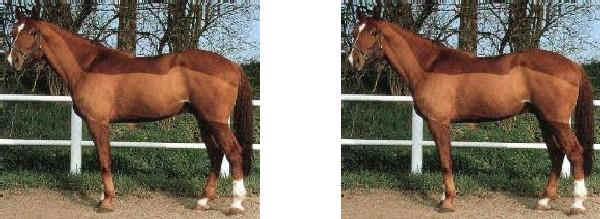
The body of the Sella Italiano is an athletic and proportionate one. The head is in harmony with the rest of its body; the profile is elegant, the ears are of medium size, and the eyes are expressive and quite large. The neck is long but not too much and robust while the back is proportioned and ends with a well-made saddle and perfectly molded posterior. The legs are long and slender, athletic, giving the whole a very elegant and refined appearance.
When it comes to coat color, we can say that the pezzato (speckled) variety is excluded from the standard, but other colors are accepted, including the dominant and highest level of numbers being bay, chestnut, or sorrel.
The Italian Saddle Horse: Temperament and Attitudes
When combining horses, it’s not just about looking at physical characteristics; you also want to obtain animals with a good temperament and that are docile and suitable for their tasks from the point of view of character. The Italian Saddle Horse therefore is not only an elegant animal but can also flaunt a great attitude.
It is a lively but very reliable horse, thanks to its Italian blood, but at the same time robust due to the contribution of the Purosangue Inglese. Among many breeds, it is one of those with the best temperament, well-disposed to learning and has made a career out of it.
Italian Saddle Horse: Attitudes
Exactly, a docile and willing horse could only become an excellent athlete and therefore, the Italian Saddle Horse is primarily used in sporting competitions like obstacle jumping and dressage. In general, we can describe its gaits as smooth and lively.
Allevamenti di Cavalli Sella Italiano in Italia
In Italy, there are many stables dedicated to this breed but the majority are found in the regions where it quickly spread, which are Campania, Emilia Romagna, Lazio, Sardinia, and Tuscany.
For those interested in this breed, there’s an Association of Italian Horses (www.cavalliditalia.it) that tells you all about its history and who breeds them, as well as sports results with excellent outcomes. We read that “The Italian Saddle Horse, with a production of just over 1,000 individuals per year but overall very qualitative, is now able to express horses at the highest international levels in all three Olympic disciplines”.
You may also find interesting articles on related breeds:
Cavallo Bardigiano
Cavallo Murgese
Frequently Asked Questions
- What are the main characteristics of the Italian Saddle Horse breed?
- How tall must an Italian Saddle Horse be?
- What is the ideal weight range for an Italian Saddle Horse?
- Is the Italian Saddle Horse a good breed for beginners?
- Can I ride an Italian Saddle Horse?
- How long does it take to train an Italian Saddle Horse?
- Are Italian Saddle Horses suitable for all climates?
- What is the average lifespan of an Italian Saddle Horse?
Conclusion
In conclusion, we can say that the Italian Saddle Horse is a magnificent breed with an interesting history and various characteristics. Its ability to excel in sporting competitions is undeniable, thanks to its excellent temperament and athletic build. If you’re interested in learning more about this breed or even purchasing one, there are many resources available to help you.
Additional Information
For those interested in learning more about the Italian Saddle Horse or finding a reputable breeder, here are some additional resources:
- The Association of Italian Horses (www.cavalliditalia.it)
- The Italian Saddle Horse Genealogy Book
- The International Federation for Equestrian Sports (FEI)
By visiting these websites and learning more about the Italian Saddle Horse, you’ll be well on your way to becoming a knowledgeable horse enthusiast.


