
The Unique Characteristics of Earth: Atmosphere, Geology, and Motion
As we explore the vast expanse of our solar system with imagination and curiosity, it’s easy to become familiarized with the features of other planets, but not so much with those of our own planet, Earth. Let’s take a closer look at our home planet together, trying not to be biased, just like we did when we studied Saturn or Mars.
The Only Planet in Our Solar System with Life
Earth is indeed the third planet from the sun, but it has a unique advantage that sets it apart from all other planets. It’s the only one known to host life forms – at least for now. What makes Earth so special? A combination of temperature and pressure conditions, but there are other factors at play as well. The distance from the sun, the composition of its atmosphere, and the presence of water all contribute to making Earth the perfect place for life to thrive.
One of the most significant factors is the planet’s size. Earth is large enough to retain an atmosphere, but small enough to maintain a stable climate. This size allows it to capture solar energy from the sun and release excess heat into space, creating a delicate balance that supports life on its surface.
Another crucial factor is the atmosphere itself. The atmosphere protects us from harmful radiation and extreme temperature fluctuations, while also regulating our planet’s temperature through greenhouse gases like carbon dioxide. This complex interaction of atmospheric elements is what makes Earth habitable for life as we know it.
The Movement of Our Planet
As we live on this planet, we’re often unaware of its movements, taking them for granted just like the 24-hour day and 365.25-day year. Let’s examine how the Earth moves through space and what consequences it has for us who inhabit it. Like other planets, Earth follows an elliptical orbit around the sun, with a speed of approximately 30 kilometers per second.
The Earth’s orbital path is not a perfect circle but rather an ellipse that brings the planet closest to the sun (perihelion) at about 147 million kilometers away and farthest from the sun (aphelion) at around 152 million kilometers. This variation in distance affects the amount of solar energy received by our planet, which in turn impacts global climate patterns.
Understanding the orbit of our planet is essential for predicting weather patterns, seasonal changes, and even minor variations in the Earth’s axis that can affect climate fluctuations over time.
Studying the Stars
Although we’re discussing Earth, let’s take a brief detour to learn more about the stars that illuminate our sky. The fact that we can see different constellations at various times of the year is directly related to Earth’s motion around the sun. As the planet moves through its orbit, it intersects with the celestial sphere in a belt-like pattern, showcasing the diverse constellations of the zodiac.
The position of the stars and planets has been studied by astronomers for centuries, providing valuable insights into the workings of our universe. By analyzing the movements of celestial bodies, scientists can gain a deeper understanding of the Earth’s place within the solar system and beyond.
Characteristics of Our Planet: Weight and Dimensions
Now that we’ve discussed the motion of our planet, let’s explore its composition. The mass of Earth is approximately 5.976 x 10^24 kilograms (6 billion billion metric tons), making it the most dense planet in our solar system. Its average density is around 5.517 grams per cubic centimeter.
If you’re wondering how to visualize this massive object, imagine a giant sphere with dimensions similar to that of a large marble. However, Earth’s shape is not an ellipsoid or a perfect sphere but rather an irregularly shaped geoid – much like the surface of a pear.
This unique shape has many bulges and depressions, which makes our planet truly one-of-a-kind. The geoid shape is a result of the planet’s rotation and the redistribution of mass due to tectonic activity.
Introducing Our Faithful Companion: The Moon
Before moving on to the atmosphere of Earth, let’s give some recognition to its loyal companion, the moon. The moon is Earth’s only natural satellite, influencing various phenomena, including the tides.
The moon’s gravitational pull has a significant impact on our planet, causing ocean currents and tidal patterns that shape coastlines and ecosystems. This celestial relationship highlights the intricate connections between the Earth and other objects in space.
The Atmosphere: Life-Sustaining and Regulating
Now that we’ve discussed Earth’s size, shape, and moon, let’s examine our atmosphere, which plays a vital role in sustaining life on our planet. About 78% of atmospheric gases are nitrogen, followed by oxygen (21%) and argon (1%), with the remaining percentage comprised of other gases.
The atmospheric pressure at sea level is approximately 1013 millibars. Within this complex environment, we have two critical elements: oxygen and carbon dioxide. Oxygen is essential for life, while carbon dioxide contributes to the greenhouse effect, keeping our planet warm enough to support life as we know it.
Dividing the Atmosphere into Layers
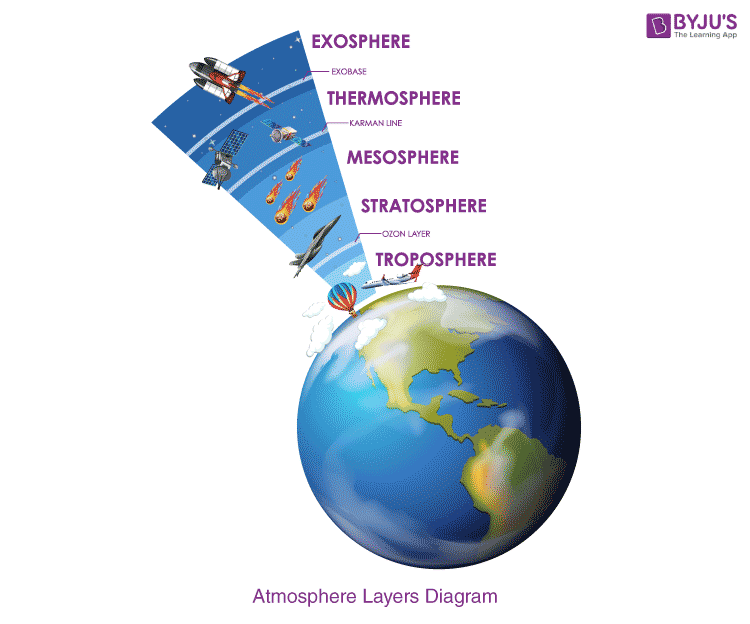
To better understand our atmosphere, let’s divide it into five main layers: the troposphere, stratosphere, mesosphere, thermosphere, and exosphere. Each layer has distinct properties that change with altitude, ranging from increasing temperature to decreasing pressure.
The troposphere is where weather occurs, with temperatures decreasing as altitude increases due to the decrease in atmospheric pressure. The stratosphere is a stable layer above the troposphere, containing ozone, which absorbs ultraviolet radiation and protects us from its harmful effects.
As we move higher into the atmosphere, we enter the mesosphere, where temperature decreases further, leading to atmospheric friction that slows down atmospheric gases. Finally, the thermosphere extends beyond the mesosphere, reaching temperatures that can ignite chemical reactions and plasma formation.
Studying the Layers of Our Planet
Finally, let’s explore the internal structure of our planet, which consists of a solid innermost layer (core), a liquid middle layer (mantle), and a rocky outermost layer (crust).
The core is divided into two layers: the inner core, composed primarily of iron and nickel, and the outer core, which surrounds it. The mantle, made up of hot rock, accounts for about 84% of Earth’s volume and plays a crucial role in plate tectonics and geological activity.
Understanding Geological Activity
Geological processes like earthquakes, volcanoes, and mountain building are driven by the movement of tectonic plates within the Earth’s mantle. This dynamic movement shapes our planet’s surface, creating diverse landscapes that support a wide range of ecosystems.
In conclusion, exploring the unique characteristics of Earth reveals its intricate connections to other celestial bodies in space. By understanding the motion of our planet, the atmosphere it hosts, and the geology that shapes its surface, we gain valuable insights into what makes Earth special – and why it’s home to life as we know it.
Frequently Asked Questions
Q: What makes Earth so special?
A: A combination of factors, including temperature, pressure, distance from the sun, composition of its atmosphere, and presence of water.
Q: How does the Earth’s orbit affect us?
A: The orbit causes changes in daylight hours and seasons, influencing our climate and weather patterns.
Q: What is the purpose of Earth’s rotation?
A: It helps distribute solar energy around the globe, creating different climates and seasons.
Q: Why is Earth’s atmosphere essential for life?
A: Oxygen and carbon dioxide play crucial roles in sustaining life as we know it.
Q: How many layers does the Earth have?
A: Three main layers: core, mantle, and crust, with additional atmospheric layers.
Q: What is the approximate weight of Earth?
A: 5.976 x 10^24 kilograms (6 billion billion metric tons).
Q: Is Earth’s shape an ellipsoid or a perfect sphere?
A: It’s neither; rather, it’s a geoid – an irregularly shaped surface with many bulges and depressions.
Q: Why do we experience seasons on Earth?
A: The tilt of the axis relative to the ecliptic plane causes variations in daylight hours throughout the year.
Q: What is the average density of Earth?
A: Approximately 5.517 grams per cubic centimeter.
Q: How many moons does Earth have?
A: One natural satellite, the moon.
Q: Is it possible for other planets to support life similar to ours?
A: While some exoplanets may share conditions with Earth that could allow for life, none have been proven to host life forms.


