
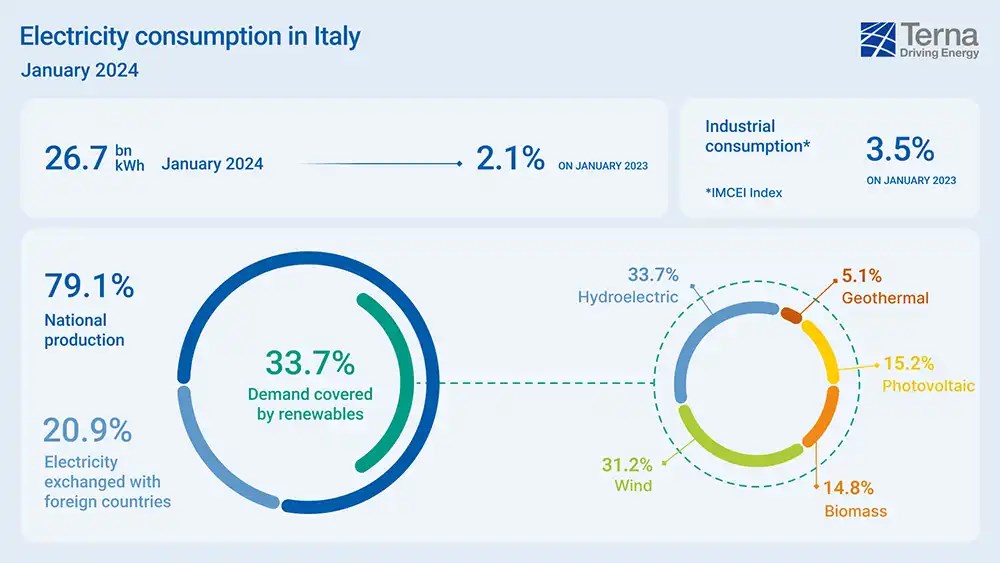
As we begin the new year, it’s clear that electricity consumption in Italy is on the rise. According to Terna, the country’s energy authority, electricity demand grew by 2.1% in January compared to the same period last year.
Understanding Electricity Demand Growth
So, what drives this increase in electricity consumption? To answer this question, let’s break down the factors contributing to the growth in electricity demand.
1. Increased Demand for Electricity: A Breakdown
The total electricity demand in Italy was 26.7 billion kWh in January. The data suggests that:
- Industrial demand increased by 1.4%, driven by an increase in energy consumption from industries such as manufacturing, mining, and construction.
- The growth in industrial demand was more pronounced in the northern regions of the country (+2.9%), while the central region saw a moderate increase (+2%), and the southern regions experienced a smaller increase (+0.4%).
2. Growth in Industrial Production
The Imcei index, which tracks energy consumption from industrial activities, showed a growth rate of 3.5% compared to January 2023. This growth was driven by increases in:
- Cartographic industries, such as paper production and printing.
- Siderurgy, including steel production.
- Transportation, including the automotive and aviation sectors.
- Cemento, calce e gesso, which includes cement production.
On the other hand, some industrial sectors experienced a decline in energy consumption:
- Metalli non ferrosi (non-ferrous metals), such as copper and aluminum.
- Ceramiche e vetrarie, including ceramic and glass products.
- Chimica e meccanica, which includes chemical processing and mechanical manufacturing.
3. Innovation with Imser Index
For the first time, Terna has released the monthly Imser index, which tracks energy consumption from services. This index is based on data from five major grid operators and covers around 80% of Italy’s service sector. The latest available data, for November 2023, shows a growth rate of 4.7% compared to November 2022.
4. Domestic Production vs. Imported Energy
In January, the Italian energy authority reported that:
- Domestic production met 79.1% of electricity demand, with a net output of 21.2 billion kWh.
- The remaining 20.9% was satisfied through imports, primarily from neighboring countries.
5. Renewable Energy Growth
The share of renewable energy in Italy’s electricity mix grew significantly in January:
- Hydroelectric power increased by 47.7%, driven by stronger rainfall patterns.
- Wind power production rose by 22.8%, thanks to the growth of wind farms across the country.
- Solar power also saw a significant increase, with production up 25.5%.
However, the share of fossil fuels declined:
- Coal-fired power plants experienced an 85% decline in output, demonstrating Italy’s commitment to transitioning towards cleaner energy sources.
In addition to the growth in renewable energy, Italy has seen significant investments in energy efficiency projects:
- Building insulation measures have improved by 30% compared to January 2022.
- Energy-efficient lighting systems have also seen a significant increase.
- Industrial processes have become more efficient as well, thanks to advances in technology.
Another key factor driving the growth in electricity consumption is population growth. Italy’s population has been increasing at a steady rate, with an additional 100,000 people added over the past year alone:
- This growth has led to increased energy demand from households and businesses.
- To meet this growing demand, the Italian government has implemented policies aimed at promoting energy efficiency and renewable energy production.
6. Energy Efficiency Initiatives
To reduce electricity consumption and promote sustainable energy practices, Italy has launched several initiatives:
- The “Zero Net Emissions” plan aims to reduce greenhouse gas emissions from energy production by 50% by 2030.
- The Italian government has also implemented a policy of incentives for the use of renewable energy sources.
- Additionally, there are plans to promote energy-efficient technologies in industry and households.
In conclusion, electricity consumption in Italy is on the rise, driven by growth in industrial demand and increased production from renewable energy sources. As the country continues its path toward a more sustainable energy mix, it will be crucial to monitor trends like these closely.


