
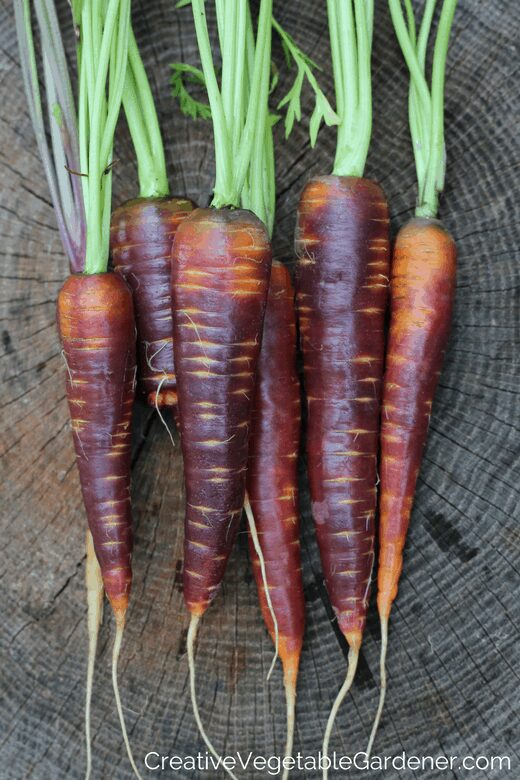
Not all carrots are orange! Among the less common varieties, we highlight the purple carrots with a violet-colored skin and flesh. The purple carrot is also known as the “royal carrot” due to its deep reddish-purple color. But have you ever wondered where this colorful root vegetable comes from? Let’s dive into the history of purple carrots and explore their benefits, recipes, and how to grow them in your garden.
Purple Carrots: Origins and History
The history of the purple carrot surprises us every time: today, the carrot is synonymous with orange, but… in the past, it was violet and not widely used in gardens. The purple carrot was more used as a medicinal remedy than a culinary ingredient. But how did this vibrant root vegetable come to be?
The plant, Daucus Carota, has its origins in Asia, where it was introduced to Europe, where it was mainly used for making infusions, cataplasms, and balsams. The carrot boom was achieved in the Netherlands, when the orange carrot (D’Orange) was selected, which is no coincidence given the country’s orange color. But what about the purple carrots? Well, they were largely forgotten until Italy rediscovered them.
In our country, there is a typical variety: the purple carrot of Polignano a Mare, protected by Slow Food and typical Puglian. Just as popular is the Purple Haze carrot, an inner yellow-goldish carrot and externally violet, and the Deep Purple carrots with a intense violet-colored skin and flesh.
Purple Carrots: Benefits and Properties
The purple carrots, like other varieties of root vegetables with dark skin and flesh, are rich in a natural coloring agent famous for its antioxidant action, which is the anthocyanin. Thanks to their content of anthocyanins, the purple carrots have interesting nutritional properties: in our body, these compounds have anti-inflammatory, antiallergic, vasoprotective, and mucosal-stomach-intestine supporting properties.
It’s for these reasons that, in the past, the purple carrot was used more as a medicinal remedy than a culinary ingredient. But what does this mean for us today? Simply put, purple carrots are not only delicious but also packed with nutrients that can benefit our overall health.
Purple Carrots: Varieties
The Deep Purple is a particular variety of carrot. It presents cylindrical roots with almost pointed tips and dimensions measuring 3 cm in diameter and 20-25 cm in length. The purple carrots present an exterior violet color while the flesh is a lighter violet color. But how to cook the purple carrots? The Deep Purple can be used better raw or grated.
The variety of Purple Haze presents cylindrical roots with an average diameter of 2-3 cm and a medium length of 18-20 cm. It’s not actually a carrot but has a deep reddish-purple color and flesh that is more orange-yellow-golden.
Purple Carrots: Where to Find Them
In the produce sections of well-stocked supermarkets, as well as at local markets or by contacting small farmers with a direct sales license. It’s not uncommon to see small agricultural companies or individual farmers who have a direct sales permit cultivating various types of purple carrots.
But where can you find them? Look no further than your local grocery store or farmers’ market. If you’re having trouble finding purple carrots, try searching online for specialty stores that carry this unique variety.
How to Grow Purple Carrots
Those who intend to grow the purple carrots must respect the same cultivation techniques used for orange carrots. We only remember that all varieties, including those with dark skin and flesh, should be handled in the same way.
In our article-guides, you can find detailed instructions on how to grow carrots. From soil preparation to harvesting, we’ve got you covered. So why not give it a try?
Tips for Growing Purple Carrots
- Plant the seeds about ¼ inch deep and spaced ½ inch apart.
- The ideal temperature for germination is around 50-60°F (10-15°C).
- Use well-draining soil with a pH between 6.0 and 7.0.
- Water the carrots regularly, but make sure not to overwater them.
Purple Carrots: Recipes and How to Cook Them
Due to their particular sweetness, it is recommended to use the purple carrot raw. The purple carrot has a milder flavor than orange carrots. But what about recipes that showcase the beauty of this vibrant root vegetable? Try pairing roasted Purple Haze with goat cheese or using Deep Purple in your favorite salads.
Some popular ways to cook purple carrots include:
- Roasted: Toss sliced or chopped purple carrots with olive oil, salt, and pepper, and roast at 400°F (200°C) for 20-25 minutes.
- Grilled: Brush sliced or chopped purple carrots with olive oil and grill over medium heat for 5-7 minutes per side.
- Sautéed: Sauté sliced or chopped purple carrots in butter or oil until tender, then season with salt and pepper.
Benefits of Eating Purple Carrots Raw
Eating purple carrots raw is not only delicious but also packed with nutrients. Here are some benefits of eating purple carrots raw:
- High in Fiber: Purple carrots are a good source of dietary fiber, which can help lower cholesterol levels and promote digestive health.
- Rich in Antioxidants: The anthocyanins in purple carrots have antioxidant properties that can help protect against cell damage and reduce inflammation.
- Supports Eye Health: The antioxidants and fiber in purple carrots may also support eye health by reducing the risk of age-related macular degeneration.
Conclusion
Purple carrots are more than just a tasty addition to your garden – they’re also packed with nutrients and antioxidants. With their unique flavor and stunning color, it’s no wonder why these little gems have become a staple in many Italian gardens. Whether you’re a seasoned gardener or just starting out, purple carrots are definitely worth trying.
Frequently Asked Questions
Q: What is the nutritional value of purple carrots?
A: Purple carrots are rich in anthocyanins, which provide anti-inflammatory and antioxidant properties.
Q: How do I cook purple carrots?
A: Purple carrots can be used raw or cooked. Try grating or roasting them for a delicious side dish.
Q: Can I grow purple carrots in my garden?
A: Yes! With the same cultivation techniques as orange carrots, you can successfully grow purple carrots at home.
Q: Where can I find purple carrots near me?
A: Look for specialty stores or farmers’ markets that carry this unique variety.
Q: Are purple carrots suitable for all recipes?
A: While purple carrots can be used in most recipes, their mild flavor pairs particularly well with goat cheese and roasted vegetables.
Q: How do I store purple carrots to keep them fresh?
A: Store purple carrots in a cool, dry place to preserve their natural coloring and flavor.
Q: Can I eat the entire carrot plant, including the leaves?
A: Yes! The leaves of purple carrots are edible and rich in vitamins A and C.


