
Understanding the Nature of Betta Splendens
Betta splendens, commonly known as the Siamese fighting fish, owes its name to its territorial nature. While cohabiting with other fish species can pose challenges, the primary issues arise from pairing multiple male betta specimens together. In their natural habitat, betta splendens does not attack other males of the same species or other fish due to lack of spatial and territorial concerns. However, in a domestic aquarium setting, the compatibility and number of male betta specimens can be closely linked to the size of the aquarium.
Optimal Conditions for Breeding Betta Splendens
To successfully breed betta splendens, it is essential to create an optimal environment that mimics their natural habitat as closely as possible. A minimum aquarium size of 20 gallons is recommended, with a divider separating the male and female specimens during the initial stages of courtship. In ideal conditions, the aquarium should be at least 40 gallons in size, equipped with a good filtration system, fine-grained substrate, and a temperature range of 26°C.
Nutritional Requirements for Betta Splendens
A well-balanced diet is crucial for the health and well-being of betta splendens throughout its life cycle. In addition to commercial pellets, offer live foods such as brine shrimp (Artemia salina), bloodworms, and red worms on a regular basis. For those preferring to prepare their own food, frozen or live brine shrimp can be provided. However, it is essential to note that betta splendens is not an excessive eater, so overfeeding should be avoided.
Initial Stage of Breeding: Separation and Observation
During the initial stage of breeding, separate the male and female betta specimens using a divider. This allows them to observe each other without direct contact. Observe both species carefully for signs of interest, such as aggressive behavior or courtship displays. If the male betta is interested in mating, he will swim towards the divider and inflate his fins. If the female betta is receptive, she will display her courtly behavior by angling her head towards the substrate.
Courtship and Mating
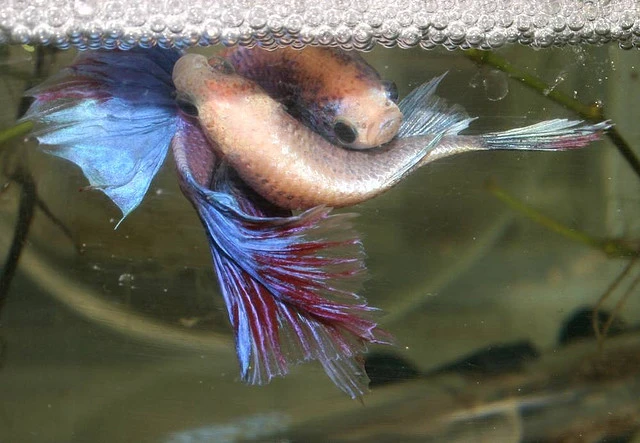
If you have observed the necessary signs of interest, it’s time to remove the divider and allow the male and female betta specimens to mate. The male betta will prepare a large bubble nest, indicating his readiness for mating. Once the female betta is present, the male will transfer eggs into the nest and protect them from other predators.
Egg-Laying and Incubation
After mating, remove the female betta from the aquarium to prevent her from destroying the eggs or eating them. The eggs will incubate in the bubble nest for a few days before hatching. During this time, maintain a consistent temperature and avoid disturbing the nest.
Hatchlings and Post-Laying Care
Once the eggs have hatched, remove the male betta from the aquarium and resume normal feeding practices for both parents. Hatchlings require specialized food, such as micro-worms or powdered food, and should be fed sparingly to prevent overfeeding. Maintain a consistent water quality by performing partial water changes (10% every week).
Transferring Hatchlings to a Separate Aquarium
After 7-10 days, transfer the hatchlings to a larger aquarium (minimum 75 gallons) with similar water conditions. This will provide them with ample space for growth and development.
As the hatchlings mature, they may engage in territorial disputes, necessitating the separation of males into individual tanks. Within 10-11 weeks from hatching, betta splendens will have developed its characteristic traits.
Frequently Asked Questions
- Q: Can I breed betta splendens with other species?
A: No, it is not recommended to breed betta splendens with other species. They require specific conditions and can lead to stress and aggression. - Q: How often should I feed the male betta during breeding?
A: Feed the male betta at regular intervals, but avoid overfeeding. Reduce food intake once the eggs have hatched to prevent overfeeding the hatchlings. - Q: Can I breed betta splendens in a small aquarium?
A: No, breeding betta splendens requires a minimum of 20 gallons for the male and female specimens during the initial stages. A larger aquarium is recommended for optimal conditions. - Q: How long does it take for hatchlings to mature?
A: It takes approximately 7-10 weeks from hatching for the hatchlings to develop their characteristic traits and be ready for release into a separate aquarium.
Tips for Breeding Success
To increase breeding success, follow these tips:
- Provide adequate space and suitable conditions in the aquarium.
- Maintain consistent water quality through regular partial water changes (10% every week).
- Offer a balanced diet to both male and female betta specimens throughout the breeding process.
- Monitor the health of your fish carefully and take action if you notice any signs of illness or stress.
- Research different breeds and select the most suitable one for your aquarium.
By understanding the unique requirements of betta splendens breeding, you can increase your chances of success in creating this magnificent species.


