
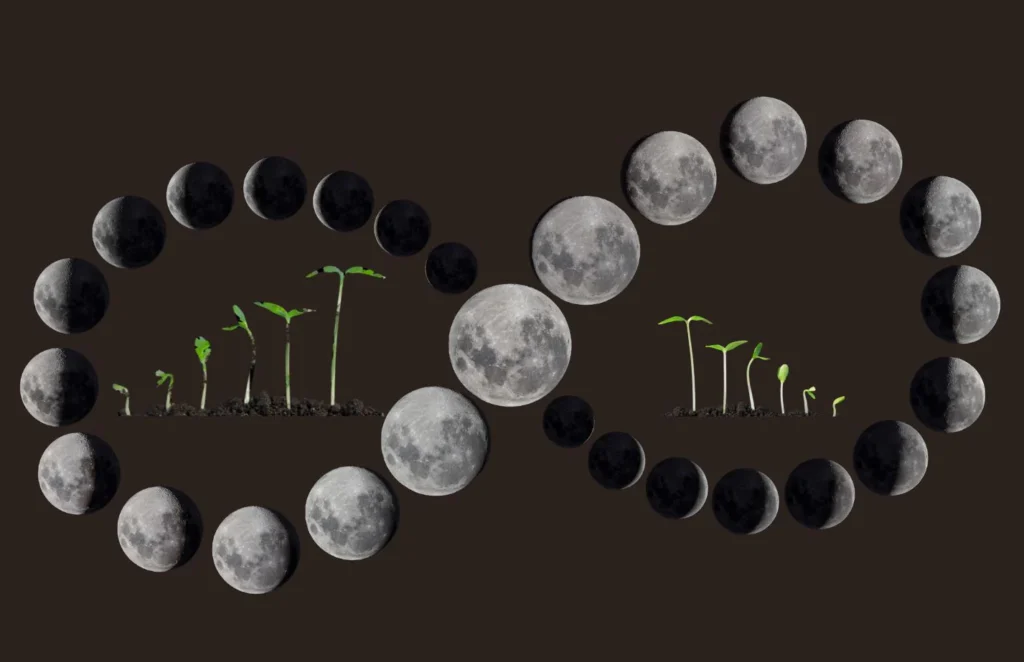
Understanding the Moon’s Movements and Gardening: A Comprehensive Guide
As a gardener, understanding the moon’s movements is crucial because they influence the planting and development of crops. This ‘influence from above’ has been considered by farmers for centuries, but it’s not just magic – it’s based on physical principles.
The Importance of Lunar Cycles in Gardening
Lunar cycles affect plant growth and development, making some work better during certain phases of the moon. This is because the moon’s gravitational pull influences the plant’s water uptake, which is essential for healthy growth. Understanding these cycles can help you optimize your gardening practices.
Understanding Lunar Cycles: A Brief Explanation
The moon orbits the Earth, but it also has an oscillating movement that affects two phases. The first phase, called the “ascension,” lasts 14 days and sees the moon rise from the horizon. The second phase, called the “descension,” lasts another 14 days and sees the moon set below the horizon.
How Lunar Cycles Affect Gardening
Lunar cycles have a significant impact on gardening practices. During the crescent moon phase, plants are more receptive to water uptake, making it ideal for planting seeds, pruning, and harvesting fruits and vegetables. On the other hand, the waning moon phase is best suited for root development, soil preparation, and transplanting.
Working with Lunar Cycles: A Guide
To make the most of lunar cycles, follow these guidelines:
- Planting: Plant seeds during the crescent moon phase, when plants are more receptive to water uptake.
- Pruning: Prune plants during the waning moon phase, when they are less sensitive to water loss.
- Transplanting: Transplant seedlings during the new moon phase, when the soil is cooler and less prone to drying out.
The Benefits of Working with Lunar Cycles
By incorporating lunar cycles into your gardening practices, you can:
- Improve plant growth and development
- Enhance soil health
- Increase crop yields
Understanding Lunar Phases: A Detailed Guide
Here’s a detailed guide to understanding lunar phases and their impact on gardening:
- Crescent Moon Phase: Ideal for planting seeds, pruning, and harvesting fruits and vegetables.
- First Quarter Moon Phase: Best time for transplanting seedlings and other soil-related activities.
- Waning Gibbous Moon Phase: Suitable for root development and soil preparation.
- Full Moon Phase: Not recommended for gardening, as it can cause water loss and damage to plants.
- Last Quarter Moon Phase: Ideal for pruning and harvesting fruits and vegetables.
Lunar Cycles and Plant Growth
The moon’s gravitational pull influences plant growth in several ways:
- Water uptake: Plants absorb water more efficiently during the crescent moon phase, making it ideal for planting seeds.
- Root development: The waning gibbous moon phase is best suited for root development, as plants are more receptive to nutrient uptake.
- Photosynthesis: The full moon phase can interfere with photosynthesis, leading to reduced plant growth.
Lunar Cycles and Soil Health
Soil health is crucial for healthy plant growth. Lunar cycles can affect soil health in several ways:
- Water retention: The waning gibbous moon phase helps retain water in the soil, reducing evaporation and runoff.
- Nutrient uptake: Plants absorb nutrients more efficiently during the crescent moon phase, making it ideal for fertilizing.
Lunar Cycles and Crop Yields
Crop yields can be significantly improved by working with lunar cycles. Here’s how:
- Improved plant growth: By understanding lunar cycles, you can optimize your gardening practices to improve plant growth.
- Enhanced soil health: Lunar cycles can help retain water and nutrients in the soil, leading to healthier plants.
- Increased crop yields: By working with lunar cycles, you can increase crop yields and enjoy a bountiful harvest.
Conclusion
Working with lunar cycles is an effective way to optimize your gardening practices and improve plant growth. By understanding the moon’s movements and their impact on your garden, you can take advantage of natural rhythms that govern plant development. Whether you’re a seasoned gardener or just starting out, incorporating lunar cycles into your gardening practices can help you grow more delicious and nutritious produce.
Frequently Asked Questions
- What is the best time to plant seeds?
- The crescent moon phase is ideal for planting seeds.
- How often should I water my plants?
- Water your plants during the crescent moon phase, when they are more receptive to water uptake.
- Can I prune my plants during any lunar cycle?
- No, pruning should only be done during the waning moon phase, when plants are less sensitive to water loss.
- What is the new moon phase used for in gardening?
- The new moon phase is ideal for transplanting seedlings and other soil-related activities.
- Will working with lunar cycles affect my crop yields?
- Yes, incorporating lunar cycles into your gardening practices can improve crop yields and overall plant health.
By understanding the moon’s movements and their impact on your garden, you can take advantage of natural rhythms that govern plant development. Whether you’re a seasoned gardener or just starting out, working with lunar cycles can help you grow more delicious and nutritious produce.


