
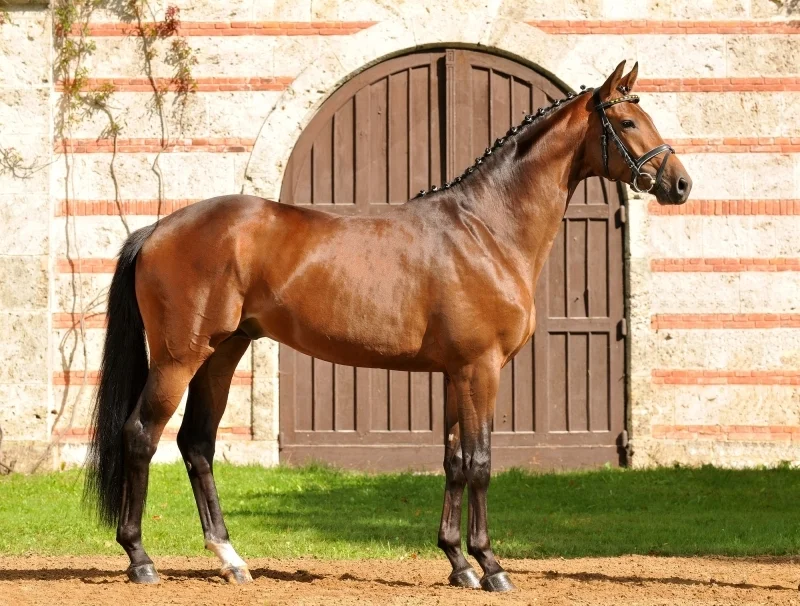
As we delve into the world of horse breeds, one particular breed that may not be widely recognized in Italy is the Trakehner. Hailing from Germany and Poland, this Eastern Prussian bloodline has been a prized possession for centuries. Let’s embark on a journey to explore the origins, characteristics, and attitudes of the magnificent Trakehner horse.
Cavallo Trakehner: Origini
To grasp the essence of the Trakehner, we must venture back in time to the 18th century, specifically to Prussia Oriental, where the city of Trakehnen earned its name. The region was home to numerous breeders affiliated with the Order of the Teutonic Knights, who selectively crossed local ponies, Schweiken, with Eastern stallions. This resulting hybrid showcased remarkable strength, tenacity, and agility – qualities that would eventually make the Trakehner a sought-after asset for agricultural labor.
The development of the Trakehner breed was largely influenced by King Frederick William I of Prussia (Federico Guglielmo I) in 1732. He initiated the establishment of the Royal Administration for Trakehner Breeding, with the aim of improving the breed through selective breeding and cross-breeding with other stallions.
The Founding Father: Federico Guglielmo I of Prussia
Federico Guglielmo I was a forward-thinking monarch who recognized the potential of the Trakehner breed. He introduced Arabian and Turcoman bloodlines to further enhance its strength, beauty, and versatility. This strategic move not only improved the breed’s overall quality but also paved the way for its eventual recognition as a prime cavalry horse.
Evolution and Refining
Over time, the Trakehner underwent significant transformations, thanks in part to cross-breeding with English Thoroughbreds in the early 20th century. This refined the breed’s elegance, speed, and stamina, solidifying its position as a premier cavalry horse. The introduction of new breeding strategies and techniques further enhanced the breed’s adaptability and resilience.
Cavallo Trakehner: Allevamenti
Fortunately, many Trakehner breeders continue to maintain traditional breeding centers. The Neumünster region in northern Germany serves as the primary hub for Trakehner breeding and training. Interestingly, some Trakehners remain in their ancestral homeland, Poland, where they are still cultivated with pride.
Caratteristiche del Cavallo Trakehner: Altezza e Peso
Contrary to popular belief, the Trakehner is not a small horse; its height can reach an impressive 167 cm (65.4 inches) for stallions and 162 cm (63.8 inches) for mares. Weighing approximately 500 kg (1,102 lbs), this majestic animal embodies both power and agility.
Characteristics of the Trakehner: Height and Build
The Trakehner is a mesodolicomorphic breed, characterized by a head with a distinctive profile, featuring a high forehead and tapering towards the nostrils. Their eyes are large and expressive, while their ears are long but slightly angled. The saddle shape is elegant, with a slight camber. Strong, muscular shoulders and a well-proportioned back define this magnificent creature.
Cavallo Trakehner: Carattere
As a horse breed, the Trakehner embodies both strength and elegance. Known for their intelligence, calm demeanor, and eagerness to please, they excel as workhorses while also thriving in various equestrian disciplines. Their versatility and adaptability make them an excellent choice for a wide range of riding styles and activities.
Cavallo Trakehner: Attitudini
Originally bred for light cavalry duties, the modern Trakehner has expanded its horizons to become a star of the equestrian world. Proven champions in dressage, show jumping, and other events, this versatile breed continues to captivate horse enthusiasts worldwide.
Frequently Asked Questions (FAQs)
- What is the origin of the Trakehner breed?
The Trakehner breed originated from Prussia Oriental, Germany, in the 18th century, where it was developed through selective breeding by the Order of the Teutonic Knights. - What are the typical height and weight characteristics of a Trakehner horse?
Trakehners can reach an impressive height of 167 cm (65.4 inches) for stallions and 162 cm (63.8 inches) for mares, with weights ranging from approximately 500 kg (1,102 lbs). - What are the breed’s distinctive physical characteristics?
The Trakehner is characterized by a mesodolicomorphic build, a high forehead, tapering nostrils, large expressive eyes, and long but angled ears. - How would you describe the Trakehner’s temperament?
Trakehners are known for their intelligence, calm demeanor, and eagerness to please, making them ideal for a variety of equestrian disciplines. - What events or competitions is the Trakehner breed well-suited for?
Trakehners excel in dressage, show jumping, and other equestrian events, thanks to their versatility, strength, and agility.
Incorporating Breeding Programs
To maintain the high standard of the Trakehner breed, various breeding programs have been established across Europe. These programs focus on preserving the breed’s original characteristics while introducing new bloodlines to enhance its overall quality. Some notable breeding centers include:
- The Trakehner Verband (Association), founded in 1947 by surviving breeders who escaped post-war Russia and established a new home for their prized animals.
- The Neumünster Breeding Center, located in northern Germany, serves as the primary hub for Trakehner breeding and training.
Modern-Day Applications
The Trakehner breed’s versatility has led to its application in various equestrian disciplines. From dressage and show jumping to trail riding and endurance competitions, this magnificent horse continues to captivate audiences worldwide.
Some notable modern-day applications of the Trakehner breed include:
- Dressage: The Trakehner’s elegant build and athletic ability make them an excellent choice for dressage competitions.
- Show Jumping: Their agility, strength, and endurance enable them to excel in show jumping events.
- Trail Riding: The Trakehner’s calm demeanor and adaptability make them a popular choice for trail riding excursions.
Conservation Efforts
Efforts are being made to conserve the Trakehner breed while also promoting its recognition worldwide. Some notable conservation initiatives include:
- The Trakehner Verband (Association) is working to establish breeding programs in various European countries, ensuring the breed’s continued survival.
- Educational programs aim to raise awareness about the Trakehner breed and promote its value as a valuable equestrian resource.
By exploring the fascinating world of the Trakehner horse, we can gain a deeper appreciation for this magnificent breed’s history, characteristics, and unique qualities. The Trakehner’s versatility, intelligence, and adaptability make it an excellent choice for various equestrian disciplines, solidifying its position as a premier cavalry horse.


