
Morocco, a country often overlooked by Europeans, is actually much closer to us than we might think. Located in North Africa, it shares borders with Algeria, Tunisia, Libya, and Mauritania, although today these four countries are also included in the Maghreb (West) term.
During the Arab Spring, Morocco did not experience violent upheavals like those seen in Libya, Algeria, and other Mediterranean basin countries. This is likely due to a moderate policy and a high appreciation for the population by the monarchy, which, however, operates within a constitutional democracy framework.
From an environmental and energy perspective, Morocco can be considered one of the most ambitious countries in North Africa, facing significant challenges related to energy security and climate change, with a young and growing population.
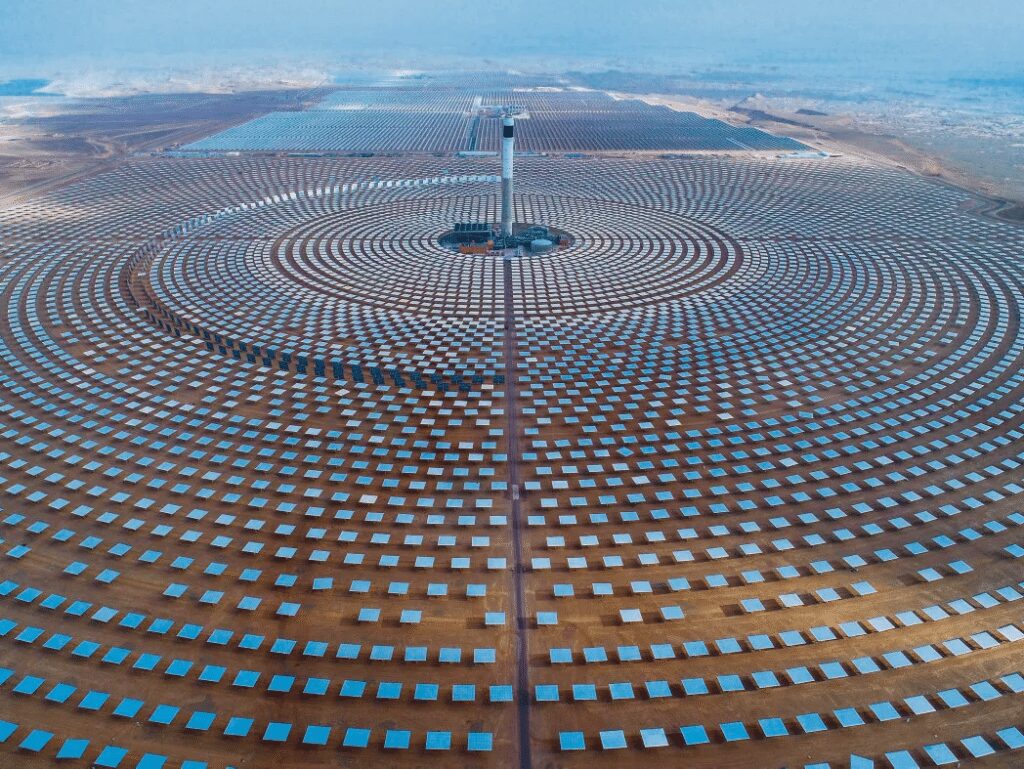
As a country without significant conventional energy resources, Morocco is the largest importer of energy in North Africa, with a dependence on fossil fuels around 92%. To address this issue and implement an eco-sustainable energy strategy aligned with climate conferences, Morocco has built Noor, the world’s largest solar complex, located at Ouarzazate.
However, despite its impressive size, the project raises concerns: “not all gold shines brightly.”
I. Introduction to Morocco
Morocco is a fascinating country that combines an ancient history with a modern spirit. Its unique blend of Arab and Berber cultures has shaped its identity. The country’s geography plays a crucial role in shaping its climate and economy.
The Atlas Mountains, which stretch across the northern part of the country, create a rain shadow effect that results in a dry and semi-arid climate in the south. This diversity of climates poses significant challenges to the country’s development, particularly regarding energy security and climate change.
II. Climate Risk for Morocco
Morocco’s climate is not uniform, with varying temperatures and precipitation patterns across different regions. This diversity poses significant challenges to the country’s development, particularly regarding energy security and climate change.
The government of Morocco has acknowledged these risks and is taking steps to address them. In 2021, the country ranked second in terms of climate change control among Arab states.
III. The Noor Solar Complex at Ouarzazate
Located near Ouarzazate, the world’s largest solar complex is a symbol of Morocco’s commitment to renewable energy and reducing its carbon footprint. The project has attracted significant international attention and investment.
However, concerns have been raised about the impact of this large-scale project on local communities and the environment.
IV. “Not all gold shines brightly”
The Noor Solar Complex raises several concerns:
- Green grabbing: Critics argue that the project involves “green grabbing,” where private interests exploit public resources for environmental purposes.
- Water usage: The complex requires significant amounts of water, which could strain local resources.
- Land use: The project has displaced local communities and altered the landscape.
Despite these concerns, Morocco remains committed to reducing its carbon footprint and promoting sustainable development.
V. Conclusion
Morocco’s journey towards a more sustainable future is marked by both hope and challenges. As the country continues to navigate the complexities of climate change, it must balance economic growth with environmental protection and social responsibility.
Frequently Asked Questions (FAQs)
- What is Morocco’s current energy mix?
- Morocco relies heavily on fossil fuels, but is working towards a more sustainable energy mix.
- How does the Noor Solar Complex impact local communities?
- The project has raised concerns about green grabbing, water usage, and land use, which may affect local communities.
- What are the benefits of Morocco’s commitment to renewable energy?
- The country aims to reduce its carbon footprint and promote sustainable development through increased reliance on renewable energy sources like solar power.
- How does Morocco rank in terms of climate change control among Arab states?
- In 2021, Morocco ranked second in the region, demonstrating its commitment to addressing climate change challenges.
- What is the current status of Morocco’s climate policy?
- The country has implemented policies aimed at reducing greenhouse gas emissions and promoting sustainable development, including targets for renewable energy production.
- How does Morocco plan to address the social impacts of its transition to a low-carbon economy?
- The government is working to mitigate the effects of climate change on local communities by investing in education, training, and infrastructure development.
- What role do international organizations play in supporting Morocco’s climate efforts?
- Organizations like the United Nations Development Programme (UNDP) and the European Union are providing technical assistance and funding to support Morocco’s transition to a low-carbon economy.
By understanding the complexities of Morocco’s climate journey, we can better appreciate the challenges and opportunities facing this unique country.


