
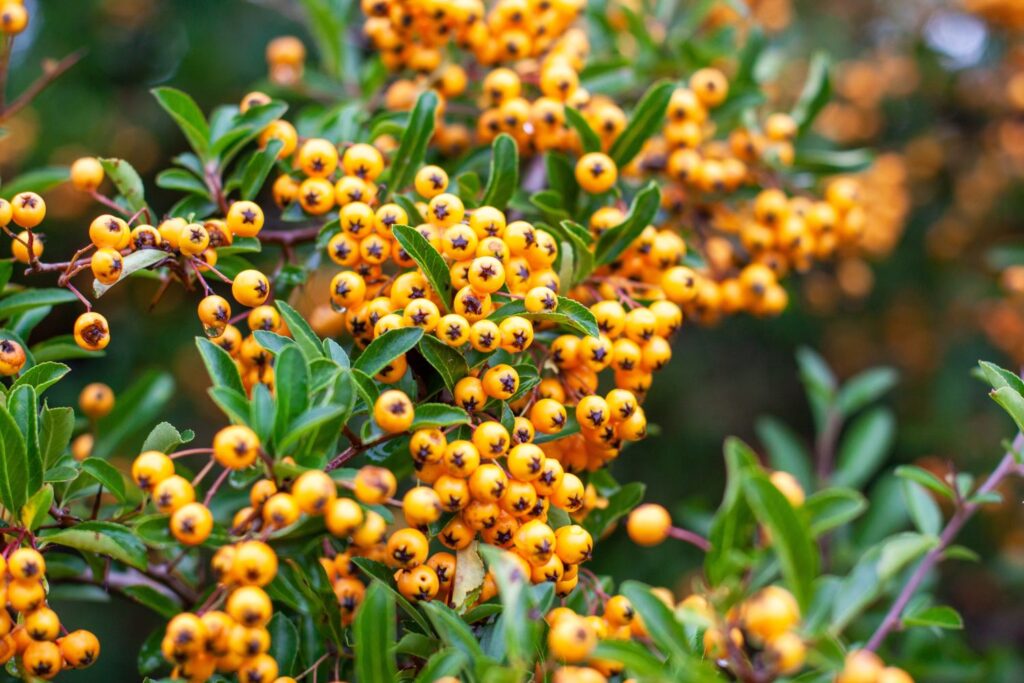
As we gaze upon the vibrant foliage of a Pyracantha plant, few of us stop to consider its rich history and intricacies. Native to Asia, this evergreen shrub has been cultivated for centuries in the Mediterranean region, as well as in China and near the Himalayas. Its name, derived from Greek, translates to “fire thorn,” a nod to its distinctive spines. In this article, we’ll delve into the world of Pyracantha, exploring its various species, cultivation methods, and care requirements.
Pyracantha: A Brief Overview
With over 20 recognized species, Pyracantha is a versatile shrub that thrives in diverse conditions. Its leaves are small and dark green, while its flowers boast a star-shaped appearance and a sweet fragrance. The plant’s fruit, typically red or yellow, ripens in autumn and can be consumed raw or used for marmalades and sauces.
Pyracantha Varieties: A Closer Look
- Angustifolia: Reaching heights of 3-4 meters, this variety features orange-red berries.
- Atalantioides: With a maximum height of 6 meters, it boasts reddish-purple berries and is relatively spine-free.
- Coccinea: This species grows up to 3 meters tall, producing bright red berries with an intense yellow hue.
- Crenatoserrata: Featuring white flowers and persistent red berries, this variety reaches a maximum height of 6 meters.
- Crenulata: Grows slowly, reaching heights of 3 meters, with yellow, orange, or red berries.
- Rogesiana: Reaching up to 3 meters tall, its bright yellow berries are highly spiny and compact.
Cultivating Pyracantha: Tips and Considerations
To encourage blooming and fruit production, provide your Pyracantha with full sun and well-draining soil. This rust-resistant shrub can adapt to various terrain types but requires attention to root moisture. Water regularly during periods of intense growth or drought, taking care not to overwater.
Pruning and Potting: Essential Techniques
Regular pruning is necessary to maintain shape and promote healthy growth. Remove any fruiting branches in spring, followed by shaping the fusti to prevent disarray. For compact varieties or container gardening, regular watering is crucial to ensure adequate moisture levels.
Common Pests and Diseases: Prevention Strategies
While Pyracantha is relatively pest- and disease-free, monitor for potential threats like aphids, whiteflies, and spider mites. Prompt action with targeted treatments can prevent infestations from spiraling out of control.
Purchasing Pyracantha and Creating a Thriving Hedge
Obtain seeds or seedlings from reputable sources, such as Amazon, to initiate your Pyracantha cultivation journey. To create an eye-catching hedge, consider combining Pyracantha with other plants like Clematis or Berberis for visually striking contrast. Smaller companions like Erica can add depth and texture.
Soil Requirements: Understanding the Needs of Your Pyracantha
Pyracantha thrives in a variety of soil types but prefers well-draining, slightly acidic to neutral soil pH (6.0-7.0). Rich organic matter and a mix of compost and perlite or vermiculite can provide the necessary nutrients for optimal growth.
Fertilization Strategies: Promoting Healthy Growth
Feed your Pyracantha with balanced fertilizers during the growing season, applying them according to manufacturer instructions. Avoid overfertilizing, as this may lead to weak growth or reduced flower production. Additionally, consider using organic matter like compost tea or fish emulsion for added nutrition.
Propagation Methods: Replacing Mature Plants
To propagate Pyracantha, use seeds from ripe fruit or seedlings obtained from reputable sources. You can also divide mature plants in spring, separating the roots carefully to avoid damage. This method is ideal for rejuvenating old or overcrowded plants.
Pest and Disease Prevention: Tips for a Healthy Hedge
Regular monitoring of your Pyracantha hedge will help you identify any potential issues early on. Keep an eye out for signs like yellowing leaves, black spots, or powdery mildew. Address these problems promptly with targeted treatments to prevent infestations from spreading.
Seasonal Care: Meeting the Needs of Your Pyracantha Throughout the Year
In winter, protect your Pyracantha from harsh winds and frost by covering it with burlap or a breathable fabric. In spring, provide fertilizer according to manufacturer instructions and prune any dead or damaged branches. During summer, maintain regular watering schedules and prune regularly to promote healthy growth.
Growing Pyracantha in Containers: Challenges and Opportunities
Pyracantha can thrive in containers, but ensure that the potting mix is well-draining and of high quality. Use a container at least 30cm deep to accommodate the roots’ spread. Water carefully, as overwatering can lead to root rot.
Growing Pyracantha Indoors: Tips for Success
To grow Pyracantha indoors, choose a compact variety like Rogesiana or use a self-watering planter. Place the plant in a sunny spot with temperatures between 18°C and 25°C (64°F-77°F). Avoid overwatering and fertilize sparingly to prevent root damage.
Growing Pyracantha Under Glass: Challenges and Opportunities
Pyracantha can be grown under glass, but ensure that the greenhouse is at least 10-15°C (50-59°F) warmer than the outside temperature. Provide adequate light, using supplemental lighting if necessary, and maintain high humidity levels.
Gardening Tips for Beginners: Navigating the World of Pyracantha
If you’re new to gardening or unsure about growing Pyracantha, start by acquiring a compact variety like Crenulata. This will allow you to develop your skills and gradually move on to more challenging species.
Pyracantha Care in Different Regions: Regional Considerations
When growing Pyracantha in different regions, be aware of regional climate conditions, pests, and diseases. In areas with high humidity, prune regularly to prevent moisture buildup. In regions with cold winters, protect your Pyracantha from frost by covering it or using anti-desiccant sprays.
Using Pyracantha for Wildlife Support: Tips for Attracting Pollinators
Pyracantha’s flowers attract pollinators like bees and butterflies. To encourage these beneficial insects, plant multiple shrubs together and provide a source of water nearby. Remove fruit regularly to prevent over-ripeness and atrophy.
Using Pyracantha as an Ornamental: Tips for Showcasing Your Plant
To showcase your Pyracantha’s unique features, prune regularly to maintain its shape and promote blooming. Combine it with other plants like Clematis or Berberis to create a visually striking hedge. Use it in container gardening or indoor spaces to add color and texture.
Common Mistakes: Avoiding Common Errors When Growing Pyracantha
Avoid overwatering your Pyracantha, as this can lead to root rot. Inspect your plant regularly for signs of pests or diseases, addressing issues promptly to prevent infestations from spreading.
Pyracantha Care in Drought: Strategies for Surviving Low Water Conditions
During periods of drought, reduce watering schedules and maintain high humidity levels. Prune the shrub regularly to promote healthy growth and encourage blooming.
Pyracantha Propagation Using Cuttings: Tips for Success
To propagate Pyracantha using cuttings, take 10-15cm stem sections from mature plants in spring or summer. Remove lower leaves and plant them in a well-draining potting mix, providing adequate moisture levels until roots develop.
How to Create a Thriving Hedge with Pyracantha: Tips for Long-Term Success
To create a thriving hedge with Pyracantha, plant multiple shrubs together, spaced 30-60cm apart. Water regularly and maintain high humidity levels during hot summer months. Prune the hedge annually to promote healthy growth and encourage blooming.
Conclusion
Growing Pyracantha can be a rewarding experience, offering a range of benefits for your garden or indoor space. By understanding its various species, cultivation methods, and care requirements, you’ll unlock its full potential as a stunning ornamental shrub. Remember to choose the right variety for your needs, adopt effective care strategies, and monitor for pests and diseases regularly. With dedication and attention, you can create a thriving Pyracantha hedge that brings joy and beauty to your outdoor or indoor space.


