
Introduction
The solar system is a fascinating topic that has captivated human imagination since ancient times. As a kid, have you ever looked up at the sky and wondered if we are alone in the universe? The answers are out there, and understanding how our solar system works can be an exciting journey of discovery.
What is the Solar System?
Imagine a big household with many planets, each with its own unique characteristics. This is essentially what the solar system is – a collection of celestial bodies that orbit around our star, the Sun. The solar system includes not just the eight planets we are familiar with but also smaller objects like dwarf planets, asteroids, comets, and other celestial entities.
The Importance of Explaining the Solar System to Kids
Explaining the solar system to kids is a great way to foster their curiosity about the world around them. It’s an opportunity to introduce basic astronomy concepts, encourage critical thinking, and inspire future scientists and explorers.
How Can We Explain the Solar System to Kids?
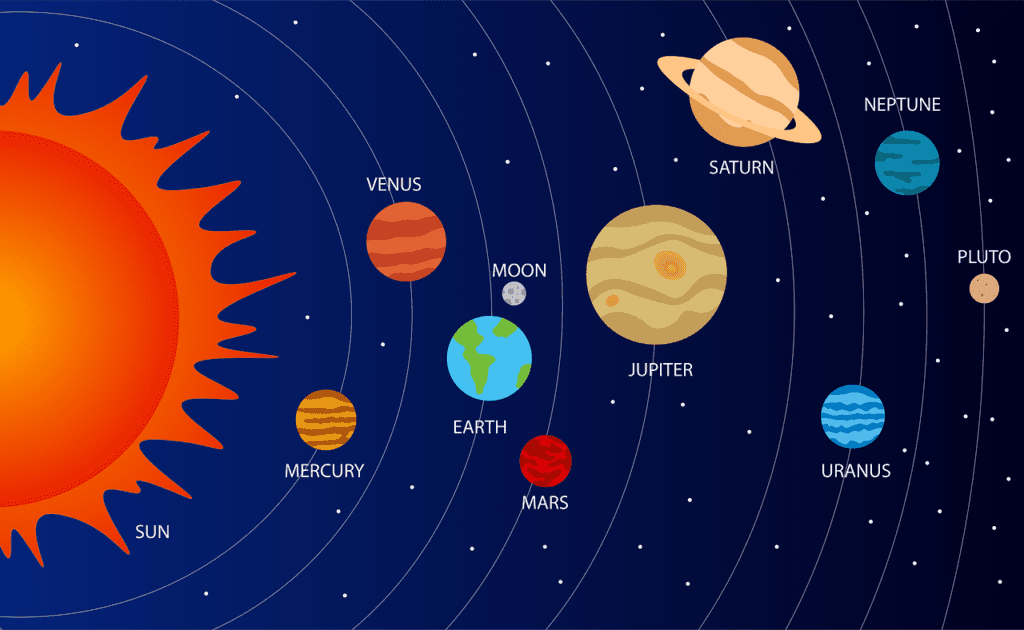
One effective way to explain the solar system to kids is through hands-on activities like coloring, building models, or even playing games. For instance, using a simple diagram, you can show how the planets orbit around the Sun, highlighting their relative positions and distances.
The Planets: Internal vs. External
The planets in our solar system can be broadly categorized into two groups: internal and external. The internal group consists of Mercury, Venus, Earth, and Mars, which are closer to the Sun. These planets are small, rocky, and relatively warm, with a solid surface.
On the other hand, the external group includes Jupiter, Saturn, Uranus, Neptune, and Pluto, which are farther away from the Sun. These gas giants are massive, gaseous, and extremely cold, with no solid surface.
The Internal Planets: Mercury, Venus, Earth, and Mars
Mercury is the smallest planet in our solar system, with a highly eccentric orbit that takes it very close to the Sun. Its surface is heavily cratered, indicating a geologically inactive surface.
Venus is often called Earth’s “sister planet” due to their similar size and proximity to the Sun. However, Venus has a thick atmosphere composed mainly of carbon dioxide, which traps heat and makes its surface extremely hot.
Earth, our home planet, is a terrestrial planet with a diverse range of environments, from oceans to deserts, and from mountains to valleys.
Mars, often referred to as the Red Planet, is a rocky planet with a thin atmosphere. Its surface features numerous volcanoes, canyons, and impact craters, indicating a geologically active past.
The External Planets: Jupiter, Saturn, Uranus, Neptune
Jupiter, the largest planet in our solar system, is a gas giant with massive storms and an incredibly strong magnetic field. Its atmosphere is mostly composed of hydrogen and helium, making it inhospitable to life as we know it.
Saturn, another gas giant, is known for its stunning ring system, which consists of ice particles and rock debris orbiting around the planet. Saturn’s moon, Titan, is also of interest due to its thick atmosphere and potential for liquid hydrocarbon lakes.
Uranus and Neptune are icy giants with highly eccentric orbits that take them far beyond the outer reaches of the solar system. Their atmospheres are mostly composed of hydrogen, helium, and methane, which gives them a distinct blue color.
Pluto: The Dwarf Planet
Pluto was once considered the ninth planet in our solar system but is now classified as a dwarf planet due to its small size and unique orbit. Pluto has a highly eccentric orbit that takes it as close as 29 astronomical units (AU) from the Sun and as far as 49 AU from the Sun.
Building Models and Playing Games
One way to engage kids with the solar system is by building models or playing games that simulate space travel. For example, you can create a simple kit using materials like cardboard, paint, and glue to build a scale model of the solar system.
You can also play games like “Solar System Scavenger Hunt” or “Planetary Order” to help kids learn about the planets in our solar system.
Teaching Kids About the Solar System
Here are some tips for teaching kids about the solar system:
- Use visual aids: Kids love pictures and diagrams, so use them to explain complex concepts like planetary orbits and sizes.
- Make it hands-on: Engage kids in activities like building models or playing games to help them learn by doing.
- Focus on the basics: Start with simple concepts like the Sun, Moon, and planets, and gradually move on to more advanced topics like dwarf planets and asteroids.
- Use stories and myths: Share stories and myths about the solar system to make learning more fun and engaging.
- Encourage curiosity: Encourage kids to ask questions and explore their curiosity about the solar system.
Conclusion
The solar system is an fascinating topic that offers countless opportunities for exploration and discovery. By explaining it in a way that’s easy to understand, we can inspire kids to become curious about the world around them and encourage them to pursue careers in science, technology, engineering, and mathematics (STEM).
Frequently Asked Questions (FAQs)
Q: How many planets are in our solar system?
A: There are eight planets in our solar system: Mercury, Venus, Earth, Mars, Jupiter, Saturn, Uranus, and Neptune.
Q: What is the largest planet in our solar system?
A: The largest planet in our solar system is Jupiter, with a diameter of approximately 142,984 kilometers (88,846 miles).
Q: Are there other objects beyond Pluto that are considered planets?
A: Yes, there are several dwarf planets and other celestial bodies in our solar system that have been discovered and confirmed by scientists.
Q: Can I build my own model of the solar system at home?
A: Yes, you can use materials like cardboard, paint, and glue to create a simple scale model of the solar system. You can also find many online resources and tutorials that can guide you through the process.
Q: How long does it take for Mars to orbit the Sun?
A: It takes approximately 687 Earth days for Mars to complete one orbit around the Sun.
Q: Is Pluto still considered a planet?
A: No, Pluto is now classified as a dwarf planet due to its small size and unique orbit.


