
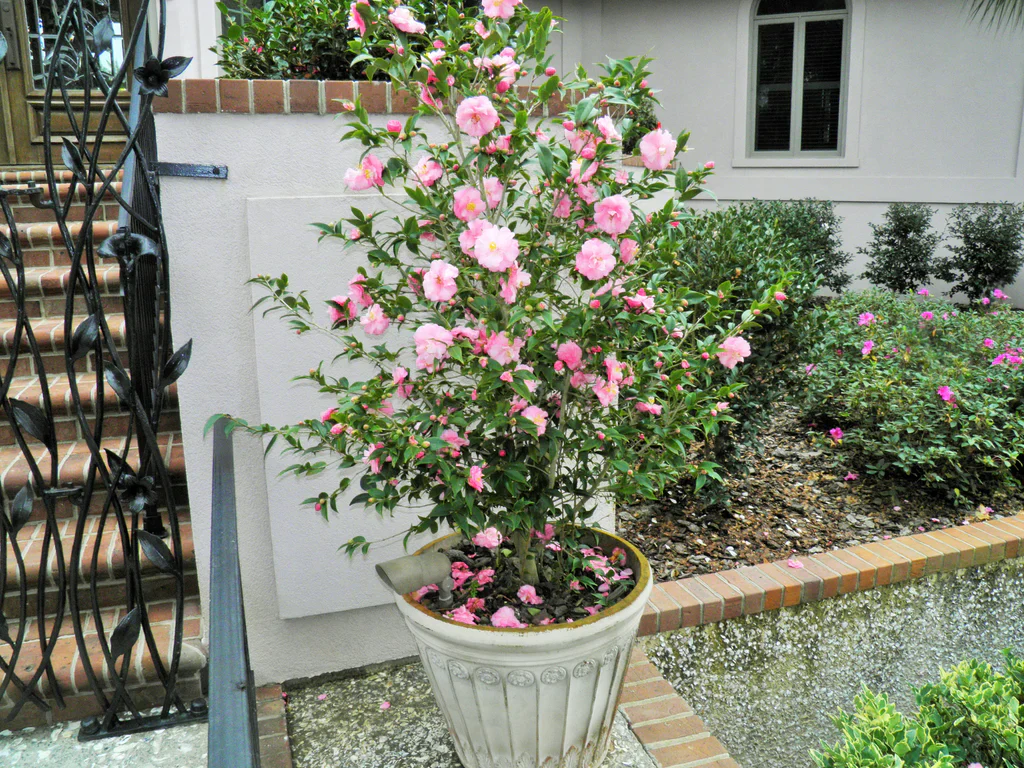
As a gardener, there’s nothing quite like the beauty of camellias in your garden or on your balcony. But have you ever wondered how to keep them thriving in pots? In this article, we’ll dive into the world of camellia care, re-potting, and fertilization to ensure your plant stays healthy and blooms beautifully.
Understanding Camellia Blooming Periods
Before we begin, it’s essential to know when camellias bloom. With over 300 species, blooming periods vary greatly depending on the type. There are spring-blooming camellias that burst into flower from February to April, while autumn-blooming camellias enjoy their blooms from October to December.
Spring-blooming camellias typically require a period of cold temperatures to induce flowering, making them perfect for gardeners living in regions with mild winters. Autumn-blooming camellias, on the other hand, bloom in response to cooler temperatures and shorter daylight hours, often requiring protection from frost to ensure they produce flowers.
Winter Care for Camellia in a Pot
When it comes to winter care, camellias in pots require special attention. Some species can withstand frost temperatures as low as -5°C, making them perfect for harsher climates. However, others need to be moved indoors to protect them from the cold.
Camellias that can handle frost temperatures include:
- Camellia sasanqua
- Camellia vernalis
- Camellia hiemalis
These hardy camellias can thrive in a sheltered spot with bright light and temperatures between 5-15°C. On the other hand, more sensitive species like:
- Camellia granthamiana
- Camellia nitidissima
- Camellia changii
require protection from frost and should be moved indoors to a well-lit room.
Mulching for Winter Protection
One effective way to protect camellias in pots from freezing temperatures is through mulching. Spread a layer of dry leaves and pine bark around the plant, about 20-25 cm thick. This will prevent the top layer of soil from freezing and ensure your camellia stays healthy.
Additionally, you can use other types of mulch like:
- Peat moss
- Coconut coir
- Straw
Avoid using fresh grass clippings or weeds, as they can harbor diseases that may infect your camellia.
Irrigating Camellia in a Pot
Camellias in pots need consistently moist soil, especially during hot summer months. Watering daily can be necessary to keep the soil from drying out. However, overwatering can lead to root rot, so it’s essential to find the right balance.
When watering your camellia:
- Check the soil moisture by inserting a finger into the soil up to the knuckle.
- Water thoroughly until water drains out of the bottom of the pot.
- Reduce watering during periods of cold weather or high humidity.
- Avoid getting water on the leaves to prevent fungal diseases.
Where to Grow Camellia in a Pot?
Camellias prefer semi-shaded positions and can thrive on balconies as long as they’re protected from strong winds. Make sure your camellia has enough space to grow and maintain its shape. A general rule of thumb is to provide at least 3-4 square feet of space for each plant.
Some popular locations for growing camellias in pots include:
- Balconies
- Patios
- Gazebos
- Greenhouses
Avoid placing your camellia near:
- Direct sunlight, which can cause scorching
- Strong winds, which can damage the leaves and stems
- Moisture-prone areas, like basements or crawl spaces
Re-potting Camellia
Re-potting is essential for maintaining the health of your camellia in a pot. Water the soil thoroughly before attempting to remove the plant, making it easier to separate from the pot. Use a well-draining potting mix and choose a pot that’s only slightly larger than the previous one.
Tips for Re-potting Camellias
- Handle the roots gently to prevent damage.
- Trim any dead or damaged roots before re-potting.
- Use a gentle, rounded trowel to minimize root disturbance.
- Re-pot your camellia in the spring or autumn when it’s dormant.
Fertilizing Camellia in a Pot
Camellias require specific fertilizers that avoid damaging the plant. Non-acidifying fertilizers can harm your camellia, causing drop petals or reduced blooming. Use a fertilizer specifically designed for acid-loving plants like rhododendrons and azaleas.
Fertilizer Recommendations
- Concime granulare with acidifying action (available on Amazon)
- Azalea Bloom Booster
- Rhododendron & Camellia Fertilizer
When fertilizing your camellia:
- Follow the instructions on the fertilizer package.
- Apply the fertilizer during the growing season (spring and summer).
- Avoid overfertilizing, which can lead to burned roots or reduced blooming.
Common Problems with Camellias in Pots
Some common problems that may affect your camellia in a pot include:
- Overwatering
- Underwatering
- Root rot
- Leaf scorch
- Drop petals
To prevent these issues, make sure to monitor your plant’s moisture levels and adjust your watering schedule accordingly.
Conclusion
Caring for camellias in pots requires attention to their specific needs. By understanding their blooming periods, providing winter protection, and using the right fertilizers, you can keep your camellia thriving. Remember to water consistently, provide semi-shaded positions, and re-pot as necessary.
Frequently Asked Questions
- What is the best time to re-pot my camellia?
The best time to re-pot your camellia is in the spring or autumn when it’s dormant. - How often should I fertilize my camellia?
Fertilize your camellia once a month during the growing season (spring and summer) using a fertilizer specifically designed for acid-loving plants. - Can I grow camellias in full sun?
Camellias prefer semi-shaded positions, so full sun can be too intense and may cause scorching of the leaves. - How do I prevent drop petals on my camellia?
Drop petals can occur if your camellia is overfertilized or exposed to high temperatures. Adjust your fertilization schedule and ensure your plant has enough water during hot summer months. - Can I grow camellias indoors?
Yes, you can grow camellias indoors as long as they receive bright light and temperatures between 5-15°C. - What is the best fertilizer for my camellia?
The best fertilizer for your camellia is Concime granulare with acidifying action, available on Amazon. - How often should I water my camellia in a pot?
Water your camellia consistently during hot summer months, but avoid overwatering, which can lead to root rot. - Can I grow camellias in heavy pots?
Heavy pots can be challenging for camellias, as they may require more frequent watering and have difficulty draining excess water.
Additional Tips
- Prune your camellia regularly to maintain its shape and promote healthy growth.
- Monitor your plant’s temperature and humidity levels to ensure optimal conditions.
- Avoid exposing your camellia to extreme temperatures or drafts.
- Keep an eye out for pests like aphids, whiteflies, and spider mites.
By following these tips and guidelines, you’ll be well on your way to growing a healthy and thriving camellia in a pot. Happy gardening!


