
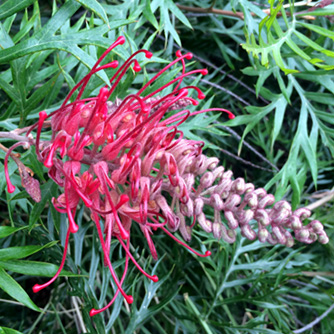
Grevillea, often referred to as the “Ragwort” due to its beautiful autumnal flowers, is a genus of plants native to Australia, New Guinea, and the Caledonian Islands. However, many species have adapted well to our Mediterranean climate, making them an excellent choice for gardeners looking to add some unique foliage to their outdoor spaces.
Characteristics of Grevillea
There are approximately 360 species within the Grevillea genus, all native to tropical rainforests. These plants are known for their striking flowers, which bloom in autumn and can range from red to yellow. The name “Grevillea” is derived from Sir Thomas Greville, a British nobleman who first discovered these plants.
One of the most distinctive features of Grevillea is its foliage, which comes in a variety of shapes and sizes. Some species have leaves that are similar to those found on rosemary, while others resemble eucalyptus or fir needles. The leaves themselves can be glossy or matte, depending on the specific species.
In addition to their attractive foliage, Grevillea plants also produce showy flowers that can add a pop of color to any garden bed. These flowers typically bloom in autumn, although some species may bloom in spring or summer as well. They come in a range of colors, including red, yellow, orange, and white.
Types of Grevillea
When it comes to choosing a Grevillea species, there are many options available. Some popular varieties include:
- Grevillea rosmarinifolia: Reaches up to 2 meters in height and has leaves resembling rosemary.
- Grevillea juniperina: Also reaches up to 2 meters in height but has a more compact structure.
- Grevillea robusta: Can grow up to 35 meters tall, making it an excellent choice for those with ample space.
Other notable species include:
- Grevillea banksii: A fast-growing variety that can reach heights of over 5 meters.
- Grevillea leucotrichophora: Features leaves with a silvery sheen and can grow up to 2 meters in height.
- Grevillea parvifolia: A compact variety that is ideal for smaller gardens or containers.
Growing Grevillea: Tips and Tricks
While growing Grevillea can be relatively easy, there are a few things to keep in mind:
- Soil Conditions: Grevillea prefers well-draining soil with moderate fertility. Avoid planting in areas with standing water or where water tends to collect.
- Watering: Plants require regular watering during the vegetative season (spring and summer) but should be watered sparingly during periods of high rainfall or winter months.
- Pruning: Regular pruning can help maintain a healthy and tidy appearance. Remove dead branches and crossed limbs to promote a balanced structure.
Common Questions About Grevillea
Here are some frequently asked questions about growing Grevillea:
- What is the best way to propagate a Grevillea?
- Can I grow Grevillea in containers or should I plant it directly into the ground?
- How do I protect my Grevillea from pests and diseases?
- Are there any specific varieties of Grevillea that are more suitable for cold climates?
- Can I use mulch to retain moisture in the soil around my Grevillea plants?
Propagation Methods
Propagating a Grevillea plant can be done through seeds, cuttings, or layering.
- Seeds: Sow seeds indoors during the spring or summer months and transplant them outside when they reach 2-3 inches in height.
- Cuttings: Take 6-8 inch stem cuttings from mature plants and remove lower leaves. Plant the cutting in a pot filled with moistened well-draining soil and keep it warm until roots develop.
Growing Grevillea in Containers
Grevillea can be grown successfully in containers, making them ideal for gardeners with limited space or those who prefer to move their plants around as needed.
- Choose a container that is at least 12 inches deep and has drainage holes.
- Use a well-draining potting mix specifically designed for cacti and succulents.
- Water sparingly, as containers can dry out quickly.
- Fertilize regularly during the vegetative season with a balanced fertilizer.
Pest and Disease Control
Grevillea plants are generally resistant to pests and diseases, but there are a few things to watch out for:
- Aphids: These small, soft-bodied insects can spread disease and weaken plants. Spray aphids off your plant using water or insecticidal soap.
- Root rot: This disease can cause roots to become rotting and weak. Remove any affected areas, prune the plant back to healthy tissue, and treat with a fungicide.
Cold Hardiness
While Grevillea plants are generally hardy in Mediterranean climates, there are some species that are more tolerant of cold temperatures than others.
- Grevillea parvifolia: This compact variety can tolerate light frost but may still suffer damage at extreme temperatures.
- Grevillea banksii: A fast-growing variety that can withstand moderate temperatures and occasional light frosts.
Conclusion
Growing Grevillea can be a rewarding experience, especially with the right care and attention. By understanding the characteristics and growing requirements of these unique plants, you’ll be well on your way to creating a stunning outdoor space that’s sure to impress. Whether you’re looking to add some new foliage to your garden or create a beautiful display of autumnal flowers, Grevillea is an excellent choice for any gardener.
Additional Tips
Here are a few more tips to keep in mind when growing Grevillea:
- Plant multiple Grevillea plants together for added color and interest.
- Divide and replant Grevillea every 2-3 years to maintain their health and vigor.
- Be patient, as it may take time for your Grevillea plant to establish itself in a new environment.
By following these tips and understanding the unique characteristics of each species, you’ll be able to grow healthy, thriving Grevillea plants that will add beauty and interest to any outdoor space.


