
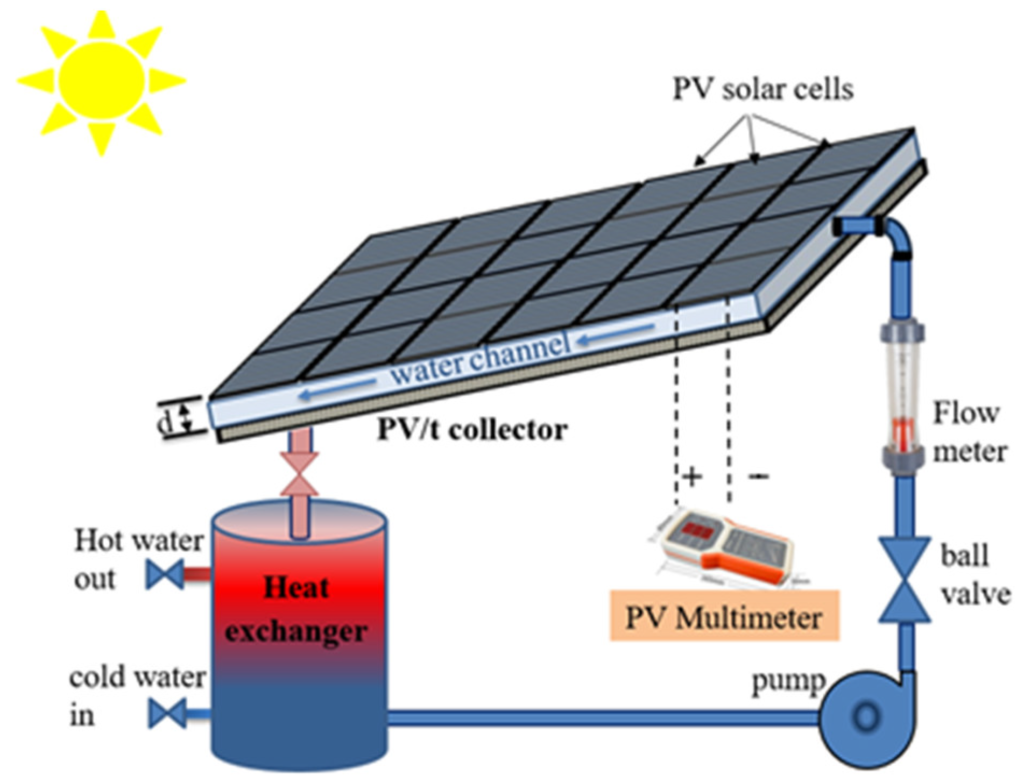
As the world shifts towards renewable energy sources, solar thermal systems have become an attractive option for households and businesses. But how do these systems perform? What are the key factors that determine their efficiency?
In this article, we’ll delve into the world of solar thermal systems, exploring the technologies used, performance criteria, and types of installations. We’ll also examine the costs associated with each type of system and provide insights into their applications.
Temperature of Operation and Efficiency
The temperature of operation and efficiency are the primary factors in evaluating a solar thermal system’s performance. The system’s ability to extract heat from the sun’s rays is crucial, and it’s affected by the location where the system is installed.
Systems with high temperatures (0-220°C) are considered more efficient than those with lower temperatures (0-150°C). Those with intermediate temperatures (0-30°C) fall somewhere in between. However, it’s essential to note that even systems with lower temperatures can still provide effective heat.
Collector Types and Their Characteristics
There are three main types of collectors used in solar thermal systems:
- Scrapped collectors: These collectors are exposed to direct sunlight and use a transparent tube to absorb heat from the sun’s rays.
- Flat glass collectors: In this type, the collector is a flat pane of glass that absorbs heat from the sun’s rays through conduction. The absorbed heat is then transferred to the fluid inside the pipe.
- Vacuum-insulated collectors: These collectors use a vacuum-insulated tube to minimize heat loss and maximize efficiency.
Scrapped collectors are known for their high efficiency, but they require more maintenance than other types of collectors. Flat glass collectors offer excellent thermal conductivity and are often used in industrial applications. Vacuum-insulated collectors provide the best heat transfer while minimizing losses, making them suitable for various environments.
Price and Cost per Square Meter
The cost of a solar thermal system can vary significantly depending on the type of collector used and the application. Here’s a rough estimate of the costs associated with each type of collector:
- Scrapped collectors: €450-€600 per square meter (ACS)
- Flat glass collectors: €350-€450 per square meter (ACS) and €600-€700 per square meter (ACS + riscaldamento)
- Vacuum-insulated collectors: €70-€100 per square meter
The costs mentioned above are approximate values that can vary depending on the region, installation complexity, and other factors.
What is a Solar Thermal System?
A solar thermal system is an energy-efficient solution that harnesses the power of the sun to produce hot water or steam for various applications. These systems use a heat exchanger to transfer heat from the collector to a fluid, which is then used to generate hot water or steam.
Solar thermal systems are designed to provide both hot water and space heating. The system works by collecting solar radiation and converting it into heat energy. This heat energy is then transferred to a fluid that circulates through the collector, generating hot water or steam.
Types of Installations
Solar thermal systems can be categorized based on their installation method:
- Natural circulation: This type of system uses natural convection to circulate the fluid through the collector.
- Forced circulation: In this case, a pump is used to force the fluid through the collector.
The forced circulation system accounts for approximately 90% of all installations. Natural circulation systems are less expensive but require more maintenance and space.
Types of Applications
Solar thermal systems can be used in various applications:
- Hot water production: This is the most common application of solar thermal systems.
- Space heating: Some systems are designed to provide space heating instead of hot water production. These systems use a separate heat exchanger to generate steam or hot water for space heating.
The types of applications and their requirements will influence the choice of collector type, installation method, and overall system design.
Components and Components Efficiency
Solar thermal systems consist of several components that work together to optimize performance:
- Collector: The collector is responsible for absorbing solar radiation and converting it into heat energy.
- Heat exchanger: The heat exchanger transfers the heat energy from the collector to a fluid, generating hot water or steam.
- Pump: The pump circulates the fluid through the collector, ensuring efficient heat transfer.
Each component plays a crucial role in determining the overall efficiency of a solar thermal system. Efficient components can significantly improve performance and increase the return on investment (ROI).
Maintenance and Repair
Regular maintenance and repair are essential for maintaining optimal performance:
- Cleaning: Regular cleaning is necessary to remove debris from the collector, ensuring efficient heat transfer.
- Inspection: Regular inspections help identify any potential issues before they become major problems.
Performing routine maintenance tasks can extend the lifespan of solar thermal systems. A well-maintained system will provide consistent performance and minimize downtime.
Comparison with Other Renewable Energy Sources
Solar thermal systems have a unique advantage compared to other renewable energy sources:
- Heat generation: Unlike photovoltaic (PV) panels that generate electricity, solar thermal systems produce heat.
- Space heating potential: Solar thermal systems can be designed to provide space heating, making them suitable for regions with moderate temperatures.
However, solar thermal systems also have some limitations:
- High upfront costs: The initial investment in a solar thermal system can be expensive compared to other renewable energy sources.
- Location dependence: The performance of a solar thermal system is heavily dependent on the location, where it’s installed. Regions with high temperatures and abundant sunlight are ideal for these systems.
Real-World Applications
Solar thermal systems have numerous real-world applications:
- Residential hot water production: Solar thermal systems provide an efficient solution for residential hot water production.
- Commercial space heating: These systems can be used to heat commercial buildings, reducing energy consumption and greenhouse gas emissions.
- Industrial processes: Solar thermal systems can be integrated into industrial processes to generate steam or heat.
Examples of successful solar thermal system installations can be found in various regions around the world. For instance:
- Spain: The Spanish government has implemented several large-scale solar thermal projects, providing clean energy and reducing greenhouse gas emissions.
- Australia: Solar thermal systems have been used in Australia to provide hot water for residential and commercial buildings.
The success stories of solar thermal system installations demonstrate their potential as a renewable energy source. With continued advancements in technology and decreasing costs, solar thermal systems are likely to become an increasingly popular choice for households and businesses worldwide.
Challenges and Future Directions
Despite the advantages of solar thermal systems, there are several challenges that need to be addressed:
- Cost reduction: The high upfront cost of solar thermal systems is a significant barrier to adoption.
- Scalability: As demand increases, it’s essential to develop scalable solutions that can accommodate larger installations.
To address these challenges, researchers and manufacturers are working on developing new technologies and improving existing ones. Some promising areas of research include:
- Thin-film collectors: Researchers are exploring the development of thin-film collectors that can increase efficiency and reduce costs.
- Solar thermal systems with heat storage: Integrating heat storage systems into solar thermal systems could improve performance and extend their lifespan.
As the world continues to transition towards renewable energy sources, solar thermal systems will play an increasingly important role. With ongoing innovation and advancements, these systems are likely to become a leading choice for households and businesses worldwide.


