
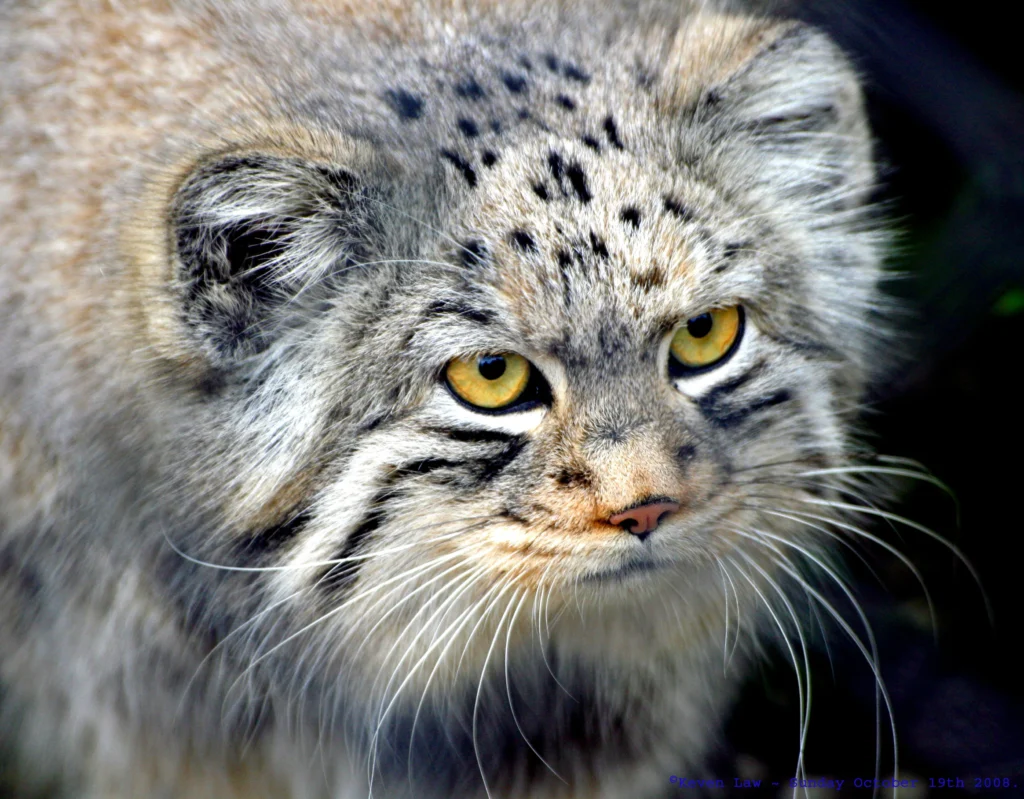
In the vast expanse of Asia Central, there exists a feline so unique and intriguing that it defies categorization. Meet the Manul, also known as the Pallas’s Cat, a creature that embodies both curiosity and danger. Its peculiar appearance, habits, and habitats make it a true enigma among the Felidae family.
What is the Manul?
As its name suggests, the Manul was first described by Peter Simon Pallas, a German zoologist who meticulously studied this species. The Manul belongs to the same family as domestic cats but is distinct in its physical characteristics and behaviors. Its size is remarkable, measuring around 60 centimeters in length, including its tail, which alone reaches 25 centimeters.
The Manul’s fur is a striking feature, with an orange base coat that can change color depending on the season. In summer, it tends to darken to brown, while in winter, it lightens to gray and becomes more uniform, with the stripes often becoming less distinct.
Is the Manul a Perilous Creature?
At first glance, the Manul’s appearance might seem alarming, but this feline is generally not aggressive towards humans. However, its nocturnal nature and carnivorous diet make it a formidable hunter. Its prey includes small mammals like pikas, argali gazelles, marmots, gerbils, and even other predators such as the corsac and various mustelid species.
The Manul’s hunting style is also unique, using its long, narrow ears to detect vibrations in the ground, allowing it to pinpoint its prey with ease. Its sharp claws and agile body enable it to pounce on unsuspecting rodents, making it a highly effective predator in its native habitat.
Why is the Manul an Endangered Species?
Unfortunately, the Manul is threatened by several factors that pose significant risks to its survival. One major concern is the decline of its primary prey, the marmot, which is essential for the Manul’s sustenance and habitat stability. In areas where the marmot population has decreased, the Manul is forced to adapt to new territories, leading to a potential weakening of its genetic pool.
Another significant threat comes from domestic dogs, such as shepherd dogs, that roam freely in the region and can easily detect and attack the Manul without hesitation. The presence of these dogs not only poses a direct threat to the Manul’s survival but also disrupts the natural balance of the ecosystem.
Habitat and Distribution
Contrary to popular belief, the Manul is not exclusive to Mongolia; it can be found in various parts of Asia Central, including China, Iran, Armenia, and Azerbaijan. Its habitat ranges from 3,000 meters to as high as 5,050 meters above sea level, making it one of the highest-altitude cat species in the world.
The Manul’s habitat is characterized by rocky outcrops, scrublands, and open grasslands, providing it with an ideal environment for hunting and roosting. Its adaptability to different elevations and habitats has enabled it to thrive in a variety of ecosystems, from alpine meadows to arid deserts.
Behavioral Patterns
Manuls are primarily solitary animals, with large home ranges that they mark with scent to deter other Manuls. This territorial behavior is essential for their survival, as it allows them to protect their food sources and mating territories from rival males.
The Manul’s diet consists mainly of small mammals, but it will also consume birds, lizards, and insects if opportunities arise. Its hunting strategy involves stalking its prey, using its exceptional hearing and vision to detect movement and track down its quarry.
Conservation Efforts
To protect the Manul from extinction, conservation efforts are underway to address the primary threats facing this species. These include:
- Habitat preservation: Protecting and restoring natural habitats to ensure the long-term survival of the Manul.
- Prey population management: Managing marmot populations to prevent overgrazing and maintain a healthy balance between prey and predator.
- Domestic dog control: Educating local communities about the risks posed by domestic dogs to the Manul and implementing measures to control their numbers.
- Research initiatives: Conducting studies on the Manul’s behavior, ecology, and population dynamics to inform conservation efforts.
Conclusion: Unraveling the Mystery of the Manul
The Manul’s unique characteristics make it an intriguing subject for study and appreciation. However, its endangered status highlights the importance of conservation efforts to protect this enigmatic feline. As we continue to learn more about the Manul, we must also acknowledge the delicate balance between humans and wildlife in our shared ecosystems.
Frequently Asked Questions
- Is the Manul a wild cat?
Yes, the Manul is a wild cat species that belongs to the Felidae family. - What are the Manul’s primary prey?
The Manul primarily feeds on pikas, argali gazelles, marmots, gerbils, and other small mammals. - Why is the Manul an endangered species?
The Manul is threatened by habitat loss, decline of its primary prey (marmot), and attacks from domestic dogs. - Can I see a Manul in captivity?
While there are no breeding programs for the Manul in captivity, conservation efforts aim to protect this species in its natural habitats. - How do I help conserve the Manul?
Support organizations dedicated to wildlife conservation and research initiatives focused on protecting the Manul’s habitat and reducing human-wildlife conflict. - What is the significance of the Manul’s unique appearance?
The Manul’s distinct physical characteristics serve as a warning to potential predators, while its unusual appearance makes it stand out from other feline species. - Are Manuls social animals?
Manuls are generally solitary animals and have large home ranges, which they mark with scent to deter other Manuls. - Can I encounter a Manul in the wild?
While rare, sightings of Manuls in their natural habitat can occur, especially during early morning or late evening when they are most active.
Interesting Facts
- The Manul’s fur is water-repellent, which helps to keep it dry and warm in cold climates.
- The Manul has a unique way of communicating with other Manuls through scent markings and vocalizations.
- The Manul’s hearing is extremely sensitive, allowing it to detect prey movements at great distances.
- In the wild, Manuls can live up to 15 years, although their average lifespan is around 10-12 years.
- The Manul has been recognized as an important cultural symbol in Mongolia, where it appears on national flags and coats of arms.
Conclusion
The Manul is a fascinating feline species that continues to captivate scientists and wildlife enthusiasts alike. Its unique appearance, hunting style, and behavioral patterns make it a true marvel of the natural world. As we learn more about this enigmatic creature, we are reminded of the importance of conservation efforts to protect its habitat and ensure the long-term survival of this incredible animal.


