
In today’s fast-paced world, our lives are often dominated by a flurry of activities that can leave us feeling overwhelmed and stressed. From work to family responsibilities, the demands on our time and energy are endless. As a result, many of us struggle with feelings of anxiety and burnout.
Fortunately, there is a way to break free from this cycle of stress and find peace in the present moment: Mindfulness. This powerful practice has been shown to have numerous benefits for both body and mind, including reducing stress, increasing focus and memory, and improving mood.
In this article, we’ll explore what Mindfulness is, its objectives, and the five exercises that can help you overcome stress and cultivate a more mindful lifestyle.
What is Mindfulness?
Mindfulness is an attitude that can be cultivated by practicing meditation. While it originated from Buddhist teachings, modern mindfulness has been adapted to be secular and accessible to everyone. The practice of Mindfulness revolves around two essential principles:
- Consciousness: Being aware of your thoughts, emotions, and surroundings in the present moment.
- Concentration: Focusing your attention on the present moment, without judgment or distraction.
Objectives of Mindfulness Exercises
The primary goal of Mindfulness is to develop self-awareness and understanding of ourselves and the world around us. By practicing mindfulness, we can:
- Reduce stress and anxiety
- Increase focus and concentration
- Improve mood and emotional regulation
- Enhance problem-solving skills
- Develop empathy and compassion
Benefits of Mindfulness
Research has confirmed that regular practice of Mindfulness leads to numerous benefits for both physical and mental health. Some of the most significant advantages include:
- Reduced stress and anxiety
- Improved focus and concentration
- Enhanced mood and emotional regulation
- Lower blood pressure and heart rate
- Increased productivity and creativity
- Improved relationships and social skills
- Greater sense of well-being and happiness
5 Mindfulness Exercises to Overcome Stress
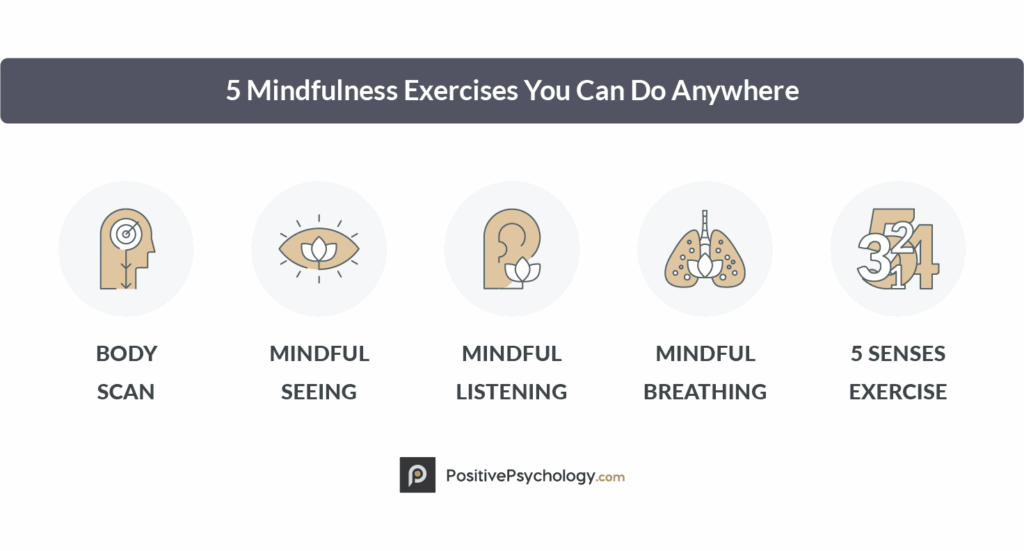
In this section, we’ll explore five simple yet powerful exercises that can help you cultivate mindfulness and reduce stress.
1. Breathing with Awareness
This exercise is a great way to start your mindfulness journey. Find a quiet spot, sit comfortably, and focus on your breath. Pay attention to the sensation of the air entering and leaving your nostrils, without trying to control it. If your mind wanders, gently bring it back to the present moment.
- Tips for effective breathing exercises:
- Start with short sessions (5-10 minutes) and gradually increase the duration.
- Use a timer or app to keep yourself on track.
- Practice deep breathing by inhaling through your nose and exhaling through your mouth.
- Avoid distractions like electronic devices or loud noises.
2. Mindful Walking
Take a short walk while focusing on each step you take. Pay attention to the sensation of your feet touching the ground, the movement of your legs and arms, and the rhythm of your breath. Bring your full attention to the present moment, letting go of distractions and thoughts about the past or future.
- Tips for effective mindful walking:
- Choose a quiet, distraction-free area.
- Pay attention to your posture and balance.
- Notice the sensation of each step, from the weight transfer to the movement of your legs.
- Bring your full attention to the present moment, letting go of thoughts about work or other responsibilities.
3. Observing
Choose an object in nature, such as a leaf or a flower, and focus on it for a few minutes. Observe its color, shape, texture, and scent without judgment or distraction. This exercise helps you cultivate mindfulness by slowing down your pace and connecting with the natural world.
- Tips for effective observing:
- Start with simple objects like leaves or flowers.
- Use all of your senses to observe the object (sight, sound, smell, touch, taste).
- Avoid judgment or analysis – simply observe the object as it is.
- Practice mindfulness by bringing your full attention to the present moment.
4. Listening with Awareness
Put on some calming music and sit comfortably with your eyes closed. Focus on each note and rhythm, letting go of distractions and thoughts about the past or future. Allow yourself to fully immerse in the sound, without trying to control it.
- Tips for effective listening exercises:
- Choose calming music that promotes relaxation.
- Sit comfortably with your eyes closed or slightly open.
- Focus on each note and rhythm, letting go of distractions.
- Avoid thinking about what you’re going to do next – simply focus on the sound.
5. Taking a Mindful Break
Take regular breaks throughout the day to recharge and refocus. Find a quiet spot, take deep breaths, and bring your full attention to the present moment. Let go of distractions and thoughts about work or other responsibilities, allowing yourself to simply be in the moment.
- Tips for effective mindful breaks:
- Take short breaks (5-10 minutes) throughout the day.
- Find a quiet spot with minimal distractions.
- Practice deep breathing by inhaling through your nose and exhaling through your mouth.
- Avoid checking electronic devices or engaging in work-related activities.
Mindfulness Books for Beginners
For those looking to deepen their mindfulness practice, there are numerous books available that offer practical guidance and insights. Some recommended titles include:
- The Mindful Way Workbook by John D. Teasdale
- Wherever You Go, There You Are by Jon Kabat-Zinn
- Mindfulness: A Practical Guide to Finding Peace in a Frantic World by Mark Williams and Danny Penman
Frequently Asked Questions
Here are some common questions about Mindfulness:
Q: Is Mindfulness a form of meditation?
A: Yes, Mindfulness involves meditation as one of its key components. However, Mindfulness encompasses more than just meditation – it’s an attitude and way of being that can be applied to daily life.
Q: Can anyone practice Mindfulness?
A: Absolutely! Mindfulness is for everyone, regardless of age, culture, or background. With a little practice and patience, you can develop the skills and awareness needed to cultivate mindfulness in your daily life.
Q: How do I get started with Mindfulness?
A: Start by committing to just a few minutes of mindfulness practice each day. Begin with simple exercises like breathing with awareness or mindful walking, and gradually increase the duration as you become more comfortable with the practice.
Q: Can Mindfulness help me manage stress and anxiety?
A: Yes! Regular Mindfulness practice has been shown to reduce stress and anxiety by teaching us how to focus on the present moment and let go of worries about the past or future.
Q: How long does it take to see results from practicing Mindfulness?
A: The benefits of Mindfulness can be experienced immediately, even in just a few minutes of practice. However, regular commitment to the practice will lead to more profound changes over time.
Q: Can I use Mindfulness for personal growth and development?
A: Yes! Mindfulness is not just about reducing stress; it’s also about cultivating self-awareness, emotional regulation, and compassion – all essential components of personal growth and development.


