
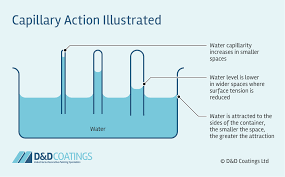
Capillary action is a ubiquitous phenomenon that has fascinated scientists, engineers, and everyday individuals for centuries. It’s the ability of liquids to flow through narrow tubes or channels without the need for external pressure, seemingly defying gravity. But what makes this happen? In this article, we’ll delve into the fascinating world of capillary action, exploring its science, history, and applications.
What is Capillary Action?
Capillary action is a phenomenon that occurs when a liquid comes into contact with a solid surface, such as a narrow tube or channel. The interaction between the liquid molecules and the solid surface creates forces that cause the liquid to move upward or downward, depending on the conditions. This movement is known as capillary rise.
The three main forces involved in capillary action are:
- Cohesion: The attractive force between like molecules (in this case, water molecules).
- Adhesion: The attractive force between unlike molecules (water molecules and the solid surface).
- Surface tension: A measure of the energy density on the interface between a continuous body and another solid, liquid, or gas.
When these forces are in balance, the liquid rises or falls depending on the conditions. For example, if the capillary tube is narrower than its cross-sectional area, the pressure inside the tube will be greater than outside, causing the liquid to rise. Conversely, if the tube is wider, the pressure difference will cause the liquid to fall.
Water Capillary Action: A Classic Example
Water is a classic example of capillary action, and it’s often used as a teaching tool to illustrate this phenomenon. When you dip a narrow glass tube into water, the water molecules in the tube attract each other more strongly than they do the surrounding air or solid surface. This creates an upward force that causes the water to rise up the tube.
However, when the tube is placed at an angle relative to its horizontal position, the water doesn’t behave as expected. Instead of rising straight up, it forms a concave meniscus (or “hump”) towards the bottom of the tube. This occurs because the adhesive forces between the water molecules and the solid surface are stronger than their cohesive forces.
Explaining Capillary Action to Kids
So, how can we explain capillary action to kids? One way is to use an analogy involving pressure. Imagine that inside a narrow tube, there’s a higher or lower pressure compared to outside, causing the liquid to adjust its volume to restore equilibrium. This movement of the liquid results in different levels and curved surfaces – which could be likened to smiling faces or bumpy skin.
Examples of Capillary Action
Capillary action is not just limited to laboratory settings; it occurs naturally in many biological processes and everyday life. Here are some examples:
- Xylem vessels in plants: Water is transported through xylem vessels, tiny tubes that connect the roots to the leaves. Capillary action helps to pull water upwards against gravity, ensuring that the plant receives the necessary resources for photosynthesis and growth.
- Blood circulation: Peripheral circulation involves capillaries – tiny blood vessels where oxygen and nutrients are exchanged between the bloodstream and tissues. Capillary action facilitates this process by helping to distribute these essential substances evenly throughout the body.
- Absorption of liquids: When you dip a sponge into water, the liquid is absorbed into its pores through capillary action. This helps to distribute the water throughout the sponge’s structure.
In Conclusion…
Capillary action is an fascinating phenomenon that reveals the intricate interactions between molecules of liquids and their surroundings. By understanding these forces – cohesion, adhesion, and surface tension – we can gain insights into various scientific disciplines like materials science, biology, and engineering.
Whether it’s about water or other liquids, capillary action leads to remarkable consequences that have implications in our daily lives and the natural world. So next time you observe a liquid rising up a narrow tube or channel without external pressure, remember the intricate forces at play – it’s a testament to the power of science!
Frequently Asked Questions (FAQs)
- What causes capillary action?
Capillary action is caused by the interaction between liquid molecules and solid surfaces on their separation boundary, resulting from a combination of forces including cohesion, adhesion, and surface tension.
- Is capillary action limited to water?
No, capillary action can occur in other liquids as well, although its characteristics might vary depending on the specific fluid involved.
- What is the role of surface tension in capillary action?
Surface tension plays a crucial role in capillary action by causing the liquid molecules at the interface to behave in certain ways that influence the movement and behavior of the liquid within narrow tubes or channels.
- How does capillary action work in plants?
In plants, capillary action facilitates the transport of water through xylem vessels towards leaves, allowing for photosynthesis and other essential processes. This process ensures that the plant receives the necessary resources to grow.
- Can you provide an example of how capillary action affects everyday life?
Capillary action affects our daily lives in numerous ways, from the distribution of liquids within small spaces (like the way water spreads on a surface) to biological processes where it facilitates nutrient uptake by plants and transport through organisms.
- Is capillary action related to atmospheric pressure changes?
Yes, changes in atmospheric pressure can influence the level of liquid surfaces due to its effects on the forces acting within the liquid.
- How does surface tension affect capillary rise?
Surface tension influences the shape and behavior of the liquid’s surface, particularly when it comes to rising up narrow tubes or channels. It affects how high or low the liquid rises before reaching equilibrium under given conditions.
- Can you tell me about laboratory methods for studying capillary action?
Yes, researchers often use a setup involving narrow glass tubes filled with liquids of different viscosities to observe and measure the effects of surface tension on capillary rise.


