
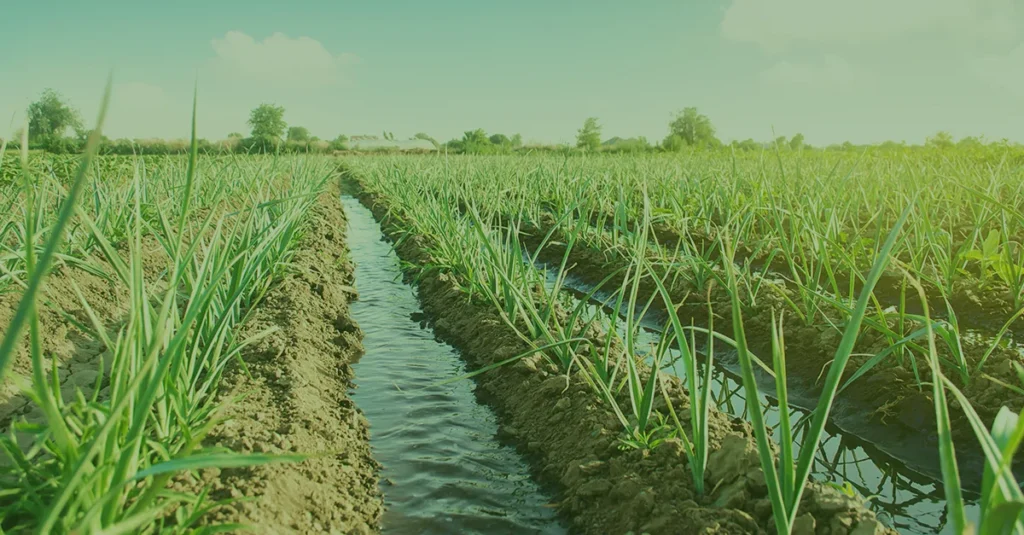
We need to feed ourselves, and producing food requires a high amount of clean, non-saline water. The global demand for water resources is expected to increase by 40% over the next 20 years, while the demand for food is projected to rise by 70% by 2050. How can developing countries avoid an inevitable water crisis? The answer lies in sustainable agriculture with more efficient use of water resources.
Water’s Crucial Role in Our Lives
Water plays a vital role in our lives and is essential in various industrial sectors, including agriculture. According to data released by the European Environmental Agency, one-third of the water consumed on the continent is used by the agricultural sector. In Europe, the misuse of pesticides, fertilizers, and soil pollution are the main causes of droughts.
Water is also a crucial component for maintaining food production. Irrigation systems rely heavily on water to support crops such as fruits, vegetables, grains, and legumes. However, in many parts of the world, water scarcity is becoming an increasingly pressing issue due to climate change and population growth.
Agriculture Can Achieve Significant Efficiency Gains in Water Use
Agriculture can reap significant gains in terms of water efficiency starting with irrigation of crops. Countries such as Greece, Italy, Portugal, Cyprus, Spain, and southern France have arid or semi-arid soils that require frequent irrigation. In these regions, nearly 80% of the water used for agriculture is wasted on irrigation. Yet, modern irrigation techniques can use only the amount of water required by crops.
For example, in Greece, replacing traditional irrigation methods with more modern ones has been estimated to save up to 95% of water. These new systems utilize advanced sensors that detect soil moisture levels and automatically adjust the irrigation schedule accordingly. This technology allows farmers to optimize their water usage while minimizing waste.
European Agricultural Policy Encourages Water-Saving Irrigation Systems
In Europe, agricultural subsidies through the Common Agricultural Policy (CAP) have encouraged the use of more efficient irrigation systems. In the province of Córdoba, Spain, upgrading an irrigation system for cotton cultivation resulted in a 40% water savings. This upgrade was made possible with partial government support.
The European Union has implemented several policies aimed at promoting sustainable agriculture practices and reducing water usage in the agricultural sector. For instance, the EU’s Water Framework Directive sets out a framework for managing water resources across Europe, including agriculture. By implementing these directives and supporting farmers to adopt more efficient irrigation systems, the EU can help reduce water waste and ensure a more sustainable future for European agriculture.
Water Conservation Efforts in Italy
In Italy, Tavarnella Val di Pesa, in Florence Province, demonstrates excellence in water conservation through innovative irrigation techniques. This region has implemented a number of initiatives aimed at reducing water usage, including the use of drip irrigation systems and rainwater harvesting. These efforts have helped to decrease water consumption by 50% compared to traditional methods.
Addressing the Water Crisis: A Call to Action
So what can we do about it? One solution is to develop more efficient irrigation systems. Another approach involves reusing wastewater, reducing the negative environmental impact of agriculture on a global scale.
To achieve this goal, policymakers, farmers, and water experts must work together to create policies that support sustainable agriculture practices. Governments can offer incentives for farmers to adopt more efficient irrigation systems and provide funding for research into new technologies that reduce water usage. Additionally, public awareness campaigns can help raise the profile of the issue and encourage individuals to take action.
Water Reuse in Agriculture: A Promising Solution
One promising solution involves using reclaimed water in agriculture. In some parts of the world, such as Cyprus and the Gran Canaria archipelago in Spain, agricultural production relies heavily on recycled wastewater. For example, in Cyprus, most of the water used for irrigation comes from treated sewage sludge.
Reusing wastewater in agriculture not only helps to reduce water scarcity but also offers a range of environmental benefits. By using reclaimed water, farmers can decrease their reliance on natural water sources and minimize the impact of agriculture on local ecosystems.
However, there are still significant challenges associated with reusing wastewater in agriculture. These include ensuring the water is safe for human consumption and avoiding contamination from agricultural chemicals and pathogens. To overcome these challenges, researchers have been exploring new technologies that allow for the efficient treatment and reuse of wastewater in agriculture.
Water Efficiency: A Key to Sustainable Agriculture
In summary, addressing the global water crisis requires a concerted effort. By developing more efficient irrigation systems and reusing wastewater, we can create a more sustainable future for agriculture.
To achieve this goal, policymakers must implement policies that support sustainable agriculture practices and encourage farmers to adopt more efficient irrigation systems. Governments should also invest in research into new technologies that reduce water usage and provide funding for initiatives aimed at promoting water conservation in agriculture.
Frequently Asked Questions (FAQs)
- What is the current state of agricultural water usage globally?
The demand for clean water resources is expected to increase by 40% over the next 20 years due to an expanding global population and growing food requirements. According to the United Nations Food and Agriculture Organization (FAO), agriculture accounts for approximately 70% of global freshwater withdrawals, with a significant portion of this usage being inefficient.
- How can sustainable agriculture help alleviate water scarcity?
Sustainable agriculture practices, such as using efficient irrigation systems and reusing wastewater, can significantly reduce water usage in agriculture. By adopting these practices, farmers can decrease their reliance on natural water sources, minimize the impact of agriculture on local ecosystems, and promote a more sustainable future for food production.
- What are some examples of innovative water-saving measures used in European agriculture?
Modernization of irrigation systems has been implemented in countries like Greece and Spain to improve efficiency, reducing water loss. The use of drip irrigation systems and rainwater harvesting have also become increasingly popular among farmers, allowing them to decrease their water consumption by up to 50%.
- How can we ensure that agricultural waste is minimized while still achieving maximum crop yields?
Minimizing agricultural waste requires a multifaceted approach that incorporates efficient irrigation systems, soil conservation techniques, and the use of renewable energy sources. By adopting these practices, farmers can reduce their environmental impact while maintaining high levels of productivity.
- What role can government subsidies play in promoting sustainable agriculture practices?
Government subsidies can play a crucial role in promoting sustainable agriculture practices by providing financial incentives for farmers to adopt more efficient irrigation systems and other water-saving measures. By offering support for research into new technologies that reduce water usage, governments can help create a more sustainable future for agriculture.
- In what ways can we encourage the adoption of efficient irrigation systems across all agricultural sectors?
To encourage the adoption of efficient irrigation systems, policymakers must implement policies that support sustainable agriculture practices and provide funding for initiatives aimed at promoting water conservation in agriculture. Governments should also invest in research into new technologies that reduce water usage and offer incentives for farmers to adopt more efficient irrigation systems.
- Can reusing wastewater in agriculture be a viable solution to global water scarcity?
Reusing wastewater in agriculture has the potential to significantly reduce global water scarcity while minimizing environmental impacts. However, there are still significant challenges associated with reusing wastewater, including ensuring safety from human consumption and avoiding contamination from agricultural chemicals and pathogens.
- How do innovative technologies help optimize water usage in different regions worldwide?
Innovative technologies such as drip irrigation systems, rainwater harvesting, and precision agriculture have become increasingly popular among farmers around the world. These technologies allow for more efficient use of water resources while minimizing environmental impacts.
Conclusion
The importance of water in agriculture cannot be overstated. The global demand for clean water resources is expected to increase by 40% over the next 20 years, while the demand for food is projected to rise by 70% by 2050. To address this challenge, policymakers must implement policies that support sustainable agriculture practices and encourage farmers to adopt more efficient irrigation systems.
By investing in research into new technologies that reduce water usage and providing funding for initiatives aimed at promoting water conservation in agriculture, governments can help create a more sustainable future for food production. Additionally, public awareness campaigns can help raise the profile of the issue and encourage individuals to take action.
The adoption of efficient irrigation systems and reusing wastewater are just two examples of how we can address global water scarcity while minimizing environmental impacts. By working together to support sustainable agriculture practices, we can create a more resilient and food-secure future for generations to come.


