
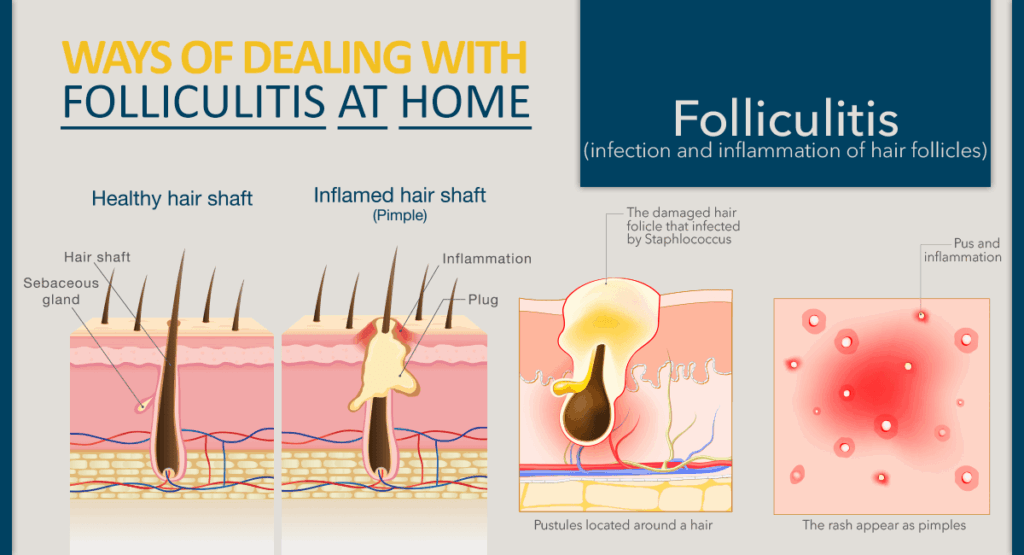
Folliculitis is a common skin condition characterized by the inflammation of hair follicles. It is often caused by an infection, usually bacterial or fungal, and can appear as small red bumps or whiteheads around the affected areas. If left untreated, the infection can spread and worsen, making it essential to identify its symptoms early on.
The Symptoms of Folliculitis
The primary signs and symptoms of folliculitis include:
- Small red bumps or whiteheads forming around hair follicles
- Vesicles opening up and filling with crust
- Itchy skin that may burn
If the condition is widespread, and the symptoms persist for several days, it’s crucial to consult a doctor to discuss antibiotic or antifungal medication options.
Types of Folliculitis
There are two main types of folliculitis: superficial and deep. Superficial folliculitis affects only part of the hair follicle, while deep folliculitis involves the entire follicle and is generally more severe.
- Superficial Folliculitis
- Can be further divided into:
- Bacterial folliculitis
- Pseudomonas folliculitis
- Razor burn folliculitis (pseudofolliculitis barbae)
Bacterial folliculitis is the most common type, characterized by white, pus-filled bumps. It occurs when bacteria like Staphylococcus aureus infect the hair follicles through cuts or other injuries.
Pseudomonas folliculitis develops after exposure to contaminated water, such as hot tubs or pools with poor chlorine and pH levels.
Razor burn folliculitis is caused by ingrown hairs due to shaving or waxing.
- Can be further divided into:
Causes and Risk Factors of Folliculitis
Folliculitis can be caused by bacterial, viral, or fungal infections. Other factors that increase the risk of developing folliculitis include:
- Weakened immune system due to conditions like diabetes or leukemia
- Acne or eczema
- Certain medications, such as corticosteroids or long-term antibiotics
- Wearing tight clothing that traps heat and sweat
- Immersion in contaminated hot tubs or pools
- Injuries to hair follicles from shaving, waxing, or tight clothing
Treating Folliculitis
Treatment options for folliculitis depend on the type and severity of the condition. Topical creams can be used to control infections, while oral antibiotics may be prescribed in severe cases.
For mild infections, topical treatments like antibiotic ointments, lozenges, or creams are usually sufficient. If the infection is more severe, your doctor may prescribe oral antibiotics as a last resort.
Antifungal medications are typically reserved for fungal folliculitis caused by yeast infections.
In some cases, reducing inflammation with anti-inflammatory medications or steroids can provide relief from itching and discomfort.
If topical treatments fail, surgical intervention may be necessary to drain the pus. This can help alleviate pain, speed up recovery, and minimize scarring.
Laser therapy is another option for treating folliculitis that has not responded to other treatments. While expensive and requiring multiple sessions, it can permanently remove infected hair follicles and reduce inflammation in the treated area.
Home Remedies for Folliculitis
In addition to seeking medical attention, there are several home remedies that may help alleviate symptoms of folliculitis:
- Warm compresses: Applying a warm compress to the affected area can help bring pus to the surface and encourage drainage.
- Tea tree oil: This essential oil has antibacterial properties and can be applied topically to infected areas with a cotton swab.
- Aloe vera gel: Aloe vera has anti-inflammatory properties that may help soothe itchy skin and reduce redness.
- Oatmeal baths: Soaking in an oatmeal bath can help relieve itching and inflammation.
Preventing Folliculitis
While folliculitis can be a frustrating condition, there are several steps you can take to prevent its occurrence:
- Maintain good hygiene practices: Wash your hands regularly, especially after touching the skin or hair.
- Avoid sharing personal care items: Don’t share razors, shaving cream, or other personal care products with others.
- Wear loose clothing: Tight clothing that traps heat and sweat can contribute to folliculitis.
- Showers regularly: Taking regular showers can help keep your skin clean and reduce the risk of infection.
Complications of Untreated Folliculitis
If left untreated, folliculitis can lead to several complications, including:
- Scarring: Untreated folliculitis can cause scarring, especially if the condition is severe or recurrent.
- Post-inflammatory hyperpigmentation (PIH): PIH is a condition characterized by darkening of the skin after inflammation has subsided. It’s more common in people with darker skin tones and may take several months to resolve.
- Acne or eczema: Untreated folliculitis can increase the risk of developing acne or eczema, two common skin conditions that require treatment.
Conclusion
Folliculitis is a common skin condition that can be caused by bacterial, fungal, or viral infections. While it may seem like a minor issue, untreated folliculitis can lead to complications such as scarring and post-inflammatory hyperpigmentation. By recognizing the symptoms of folliculitis and seeking medical attention early on, you can ensure effective treatment and prevent long-term consequences.
FAQs
Q: What are the common causes of folliculitis?
A: Bacterial or fungal infections, weakened immune systems, acne, eczema, certain medications, tight clothing, and contaminated water sources can all contribute to folliculitis.
Q: How do I diagnose folliculitis?
A: Look for small red bumps or whiteheads around hair follicles, as well as itchy skin that may burn. If symptoms persist for several days, consult a doctor for proper evaluation and treatment.
Q: What are the different types of folliculitis?
A: Superficial and deep folliculitis exist, each with its own subtypes (bacterial, pseudomonas, razor burn).
Q: How can I prevent folliculitis?
A: Maintain good hygiene practices, avoid sharing personal care items, wear loose clothing, and shower regularly to reduce the risk of infection.
Q: Can I treat folliculitis at home?
A: Yes, mild cases can often be managed with over-the-counter treatments like creams or ointments. However, if symptoms persist or worsen, consult a doctor for proper guidance and treatment.
Q: Are there any long-term consequences of untreated folliculitis?
A: Untreated folliculitis can lead to scarring, post-inflammatory hyperpigmentation (PIH), or the development of more severe skin conditions like acne or eczema.
Q: Can I get folliculitis from someone else?
A: Yes, bacterial or fungal infections can be spread through close contact with an infected person or contaminated objects.
Q: How long does it take to recover from folliculitis?
A: Recovery time varies depending on the severity of the condition and treatment options. Mild cases may resolve within a few days, while more severe cases may require several weeks or months for full recovery.



