
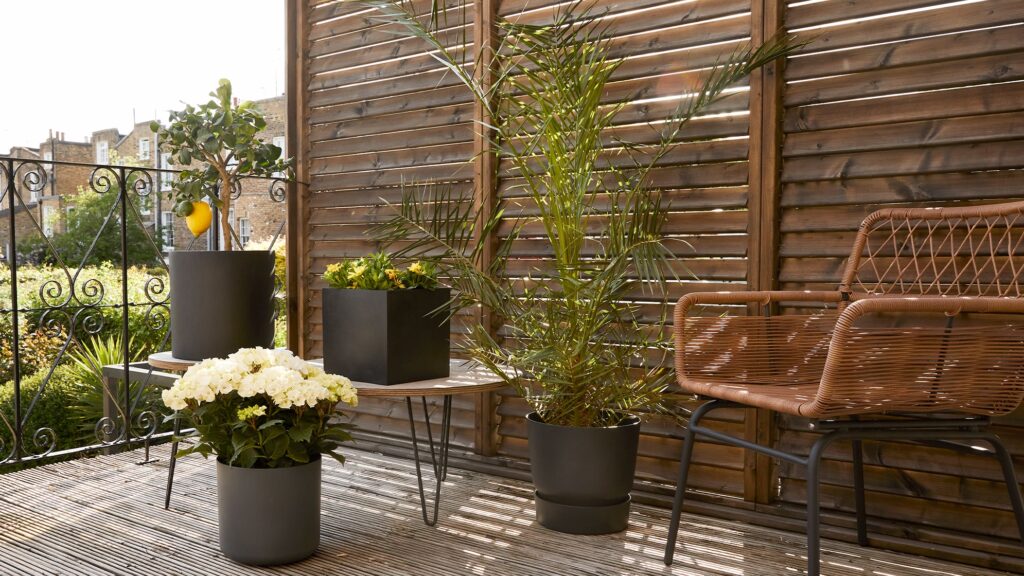
A balcony decked out with a lovely green corner allows us to step outside on sunny days and enjoy the cool evening air. But which plants should we choose, and how should we arrange them on our balcony? Many people unfortunately, despite having a spacious balcony, don’t know how to decorate it with plants that are best suited for the space.
In this article, we’ll show you how to choose the right plants for your balcony by following our guidelines. Whether you’re a seasoned gardener or a beginner, these tips will help you create a beautiful and thriving balcony garden.
Choosing Plants Based on Exposure
Before decorating your balcony with any type of plant, you need to consider their exposure. Is your balcony exposed to the north? In this case, you should choose plants that prefer shade: while there’s limited options, don’t be discouraged! On the other hand, if your balcony is oriented towards the south, you’ll have a wider selection of plants that love sunlight: even those that require partial shade will thrive. For terraces and balconies with an east or west exposure, the most suitable plants are those that prefer partial shade.
Another important factor to consider is the presence of nearby buildings, which can block sunlight and reduce the amount of light available on your balcony. In this case, you’ll need to choose plants that prefer partial shade even if your balcony is oriented towards the south.
Choosing Plants Based on Climate
In addition to exposure, it’s also essential to consider the climate before choosing plants for your balcony. Winter is the most challenging time for plants, especially if they can’t be brought indoors and placed in a suitable location.
If the winter temperature drops below 15 degrees Celsius, you shouldn’t leave your plants outside on the balcony, with the exception of some robust varieties that can withstand cold temperatures: this is the case for examples such as the Erica. If the climate is particularly harsh or wet, consider using plants that are native to similar climates.
Choosing Plants Based on Space
Another crucial aspect to consider when choosing plants for your balcony is the available space. If your balcony is at least 5 meters long and 1.5 meters wide, you have a lot of options for choosing plants. However, if your balcony is smaller, you’ll need to limit yourself to two large pots that can be placed on the ground in the main corners, and add some hanging planters outside the balcony railing.
When selecting plants for small balconies, consider using vertical space by using trellises or arbors to support climbing plants like ivy, clematis, or wisteria. This will help make the most of your available space while adding visual interest to your balcony.
Choosing Plants Based on Selection
For south-facing balconies, you can opt for some ornamental plants: just water them every morning and add a liquid fertilizer once a week. For more information, see our article on “How to Care for Ornamental Plants”.
Another popular balcony plant is the mouth of the lion, a very scenic plant that will give you many flowers until autumn. This plant is relatively easy to care for and can thrive in partial shade.
You can also choose the surfinea, which has colorful flowers and the advantage of growing quickly: put two plants in pots and within a month, you’ll have a 40-50 cm greenery return. The surfinea is an excellent choice for balconies with limited sunlight, as it prefers partial shade.
For more shaded balconies, we suggest the azure blue plumbago and the pink or red geranium. These plants are perfect for adding color to your balcony without requiring too much direct sunlight.
Frequently Asked Questions
Q: What types of plants are best suited for a balcony with limited sunlight?
A: Choose plants that prefer partial shade, such as ferns, succulents, or flowering plants like impatiens or begonias. Consider using self-watering planters to reduce watering frequency and prevent overwatering.
Q: How often should I water my balcony plants during the winter months?
A: Water your plants sparingly during the winter months, only when the soil feels dry to the touch. Avoid getting water on the leaves to prevent fungal diseases.
Q: Can I grow vegetables on my balcony?
A: Yes, you can grow a variety of vegetables on your balcony, such as tomatoes, cucumbers, and herbs like basil or mint. Just make sure to provide them with enough sunlight and water. Consider using trellises or arbors to support climbing plants that will help maximize space.
Q: How often should I fertilize my balcony plants?
A: Fertilize your plants regularly, depending on the type of plant and its growth rate. A general rule of thumb is to fertilize once a month during the growing season.
Q: Can I move my balcony plants indoors during the winter months?
A: Yes, you can move your balcony plants indoors during the winter months to protect them from cold temperatures and frost. Choose a location with bright indirect light and maintain a consistent temperature between 10-20 degrees Celsius.
Q: How often should I prune my balcony plants?
A: Prune your balcony plants regularly to maintain their shape and promote healthy growth. Pruning also helps prevent pests and diseases from spreading.
Q: Can I grow flowers on my balcony?
A: Yes, you can grow a variety of flowers on your balcony, such as geraniums, petunias, or impatiens. Just make sure to provide them with enough sunlight and water.
Q: How often should I repot my balcony plants?
A: Repot your balcony plants every year or two, depending on their growth rate. This helps prevent root bound and promotes healthy growth.
Q: Can I use self-watering planters on my balcony?
A: Yes, you can use self-watering planters on your balcony to reduce watering frequency and prevent overwatering. Self-watering planters have a built-in water reservoir that slowly releases water as needed.
Tips for Creating a Balcony Garden
When creating a balcony garden, consider using a mix of plants with different textures and growth habits to add visual interest to your space. Choose plants that are compact or trailing to make the most of vertical space and create a lush, layered look.
Use planters and pots that fit the style and theme of your balcony decor. Consider using recycled materials or repurposed containers to add an eco-friendly touch to your garden.
To improve air circulation on your balcony, use planters with good drainage holes to prevent waterlogged soil. This will help prevent fungal diseases and root rot in your plants.
Finally, don’t forget to enjoy the fruits of your labor! A well-designed balcony garden can be a tranquil oasis in the midst of bustling city life, providing a peaceful space to relax and unwind.
By following these guidelines and tips, you’ll be able to create a beautiful and thriving balcony garden that brings joy and serenity to your outdoor space. Happy planting!


