
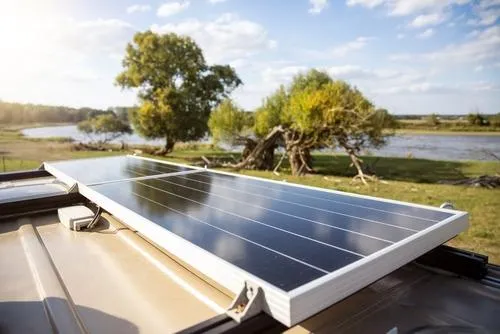
As a camper, you’re likely always on the lookout for ways to maximize your time outdoors and enjoy the freedom that comes with it. One way to do this is by installing solar panels on top of your camper. Not only can they increase your energy autonomy, but they also provide a sustainable and eco-friendly source of power.
In this article, we’ll delve into the world of solar panels for campers, exploring what you need to know to make an informed decision.
What’s in an Solar Panel System?
A solar panel system for campers is composed of the same components as a traditional solar panel system:
- Modules (Solar Panels): These are the individual units that convert sunlight into electricity.
- Batteries: These store excess energy generated by the panels during the day for use at night or when the sun isn’t shining.
- Inverter: This device converts DC power from the batteries to AC power, which is usable in most campers.
- Charge Controller: This regulates the flow of energy between the panels and batteries.
However, choosing the right solar panel system for your camper can be daunting. You’ll need to consider factors such as energy consumption, battery capacity, and system size.
Estimating Your Energy Needs
To determine how much power you need, calculate your energy requirements based on the devices and appliances in your camper. Start by listing each device with its corresponding wattage and usage hours. For example, if you have a 1200-watt hair dryer that’s used for one hour a day, your total daily energy requirement would be 1.2 kW.
Alternatively, consult the user manual of your appliances to determine their energy output in mA or W.
Selecting the Right Solar Panels
When choosing solar panels, consider the following factors:
- Wattage: A higher wattage panel provides more power, but it also increases the system size and cost.
- Efficiency: Look for panels with high efficiency ratings (above 15%) to maximize energy output.
- Durability: Choose panels made from high-quality materials that can withstand extreme temperatures.
A 100-watt solar panel is suitable for basic camping needs, while a 200-watt panel provides more power for devices like fridges and TVs.
Inverter and Battery Selection
Don’t forget to select an inverter and battery that match your system size. An inverter converts DC power from the batteries to AC power, which is usable in most campers. Choose an inverter with a high efficiency rating (above 95%) to minimize energy loss.
Batteries store excess energy generated by the panels during the day for use at night or when the sun isn’t shining. Choose a battery with a capacity that matches your system size.
Cost Considerations
The cost of a solar panel system for campers varies depending on the system size, components, and brand. A basic system can start as low as $500, while a larger system with high-end components can cost upwards of $5,000.
Some popular options include:
- Yeti 1250 Solar: This kit includes an inverter, battery, and solar panels for a total system size of 2000W.
- Renogy 1000W Solar Kit: This kit includes an inverter, battery, and solar panels for a total system size of 1500W.
Considerations for Off-Grid Camping
When choosing a solar panel system for off-grid camping, consider the following factors:
- Energy Autonomy: Choose a system that can provide enough power to meet your energy needs without relying on external sources.
- Battery Life: Select a battery with sufficient capacity to store excess energy generated by the panels during the day.
- Weather Resistance: Ensure the solar panel system is designed for outdoor use and can withstand extreme temperatures and weather conditions.
Tips for Installing Solar Panels
Installing solar panels on your camper requires careful planning and execution. Here are some tips to keep in mind:
- Choose a suitable location: Select a spot that receives direct sunlight for at least 6 hours a day.
- Use a sturdy mounting system: Ensure the solar panels are securely fastened to the roof or trailer.
- Connect the system properly: Follow proper wiring and connection procedures to avoid electrical hazards.
Maintenance and Repair
Regular maintenance and repair of your solar panel system is essential to ensure optimal performance. Here are some tips:
- Clean the solar panels regularly: Use a soft brush or cloth to remove dirt and debris from the panels.
- Check the battery level regularly: Ensure the batteries are not overcharged or undercharged.
- Monitor the system’s performance: Keep an eye on the system’s energy output and adjust as needed.
Conclusion
Installing solar panels on your camper can provide a sustainable source of power and increase your energy autonomy. By following this guide, you’ll be able to choose the right solar panel system for your needs and enjoy the freedom that comes with off-grid camping.
FAQs
- Q: Do I need an inverter if my devices don’t require AC power?
A: No, but it’s recommended to have one for safety and convenience purposes. - Q: Can I use a 12V battery with a 120W solar panel system?
A: Yes, but make sure the battery is compatible with the solar panels and has sufficient capacity. - Q: How often do I need to maintain my solar panel system?
A: Regular cleaning and inspection of the panels are necessary to ensure optimal performance.


