
As the world becomes increasingly aware of the need to reduce our carbon footprint, many homeowners are considering alternative heating solutions that can help them save energy and money. One such solution is geothermal heating systems, which harness the natural heat of the earth to provide warmth and cooling for your home.
Benefits of Geothermal Heating Systems
Geothermal heating systems offer several benefits over traditional heating methods. For one, they can significantly reduce energy costs, as they use the constant temperature of the earth to generate heat. Additionally, geothermal systems produce no greenhouse gas emissions, making them a more sustainable option for homeowners who want to do their part in reducing climate change.
- Energy Efficiency: Geothermal systems are highly efficient, converting up to 300% of the electrical energy used to power the system into usable heat.
- Long-Term Cost Savings: By harnessing natural energy, geothermal systems can reduce heating costs by up to 50% compared to traditional systems.
- Reliability: Geothermal systems are less prone to failure and require minimal maintenance, ensuring consistent performance over time.
- Low Operating Costs: With no moving parts or fossil fuels required, geothermal systems have lower operating costs than traditional heating methods.
How Geothermal Heating Systems Work
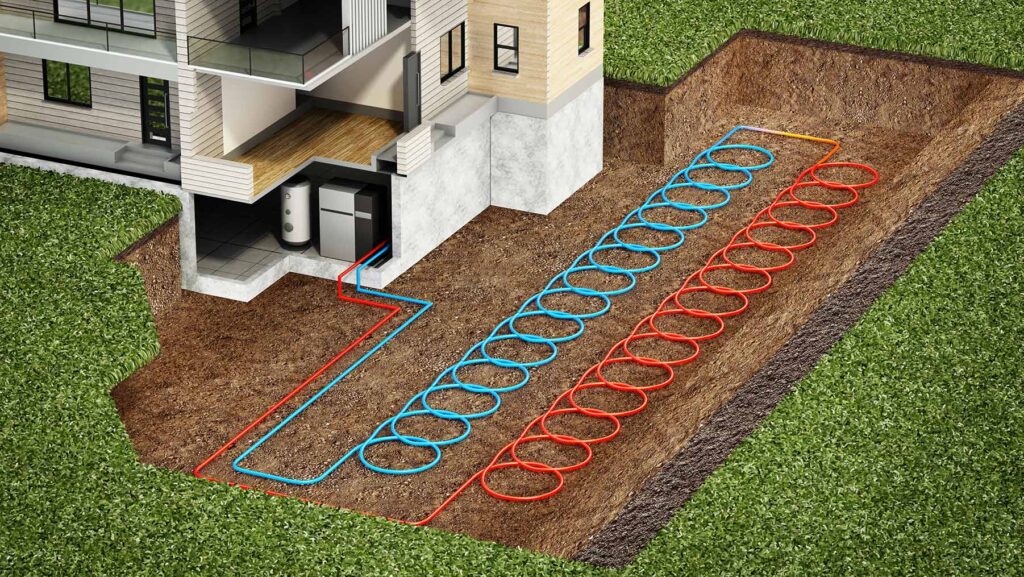
A geothermal heating system uses underground pipes to circulate water that absorbs heat from the earth and transfers it to your home’s heating system. The process works as follows:
- Drilling a Well: A well is drilled into a thermal aquifer, which is a layer of rock that can absorb and release heat.
- Water Circulation: Water is pumped into the well and flows through underground pipes, absorbing heat from the surrounding rocks.
- Heat Exchanger: The heated water is then circulated to your home’s heating system, where it provides warmth.
Types of Geothermal Heating Systems
There are two main types of geothermal heating systems: open-loop and closed-loop. Open-loop systems use a well to access groundwater that has absorbed heat from the earth, while closed-loop systems use underground pipes to circulate water that is heated by the earth’s natural temperature.
- Open-Loop Systems: These systems are less expensive than closed-loop systems but can be more susceptible to contamination of the groundwater.
- Closed-Loop Systems: These systems use underground pipes to circulate water that is heated by the earth’s natural temperature, providing more efficient heat transfer and longer lifespan.
Open-Loop Systems
Open-loop systems are designed for areas with access to a reliable source of clean groundwater. They are less expensive than closed-loop systems but require additional treatment to remove contaminants from the water before it can be used in the system.
- Treatment System: An open-loop system typically includes a treatment system that filters out contaminants and ensures the water is safe for use in the geothermal system.
- Well Maintenance: Regular maintenance of the well is necessary to prevent contamination and ensure optimal performance.
Closed-Loop Systems
Closed-loop systems are more expensive than open-loop systems but provide better heat transfer and longer lifespan. They are ideal for areas with poor groundwater quality or where access to a reliable source of clean water is limited.
- Pipes and Insulation: Closed-loop systems use underground pipes to circulate water that is heated by the earth’s natural temperature, which requires careful pipe sizing and insulation to ensure optimal heat transfer.
- Ground Source Heat Pump (GSHP) System: A closed-loop system typically includes a ground source heat pump (GSHP) system, which extracts heat from the earth and transfers it to your home’s heating system.
Design Considerations for Geothermal Heating Systems
When designing a geothermal heating system, several factors must be considered:
- Depth: The depth of the well or pipes will depend on the local geology and climate. Deeper wells typically provide better heat transfer but can be more expensive to drill.
- Soil Type: The type of soil in your area can affect the performance of the system. For example, soils with high thermal conductivity (such as sand or gravel) can absorb and release heat quickly, while soils with low thermal conductivity (such as clay) may require additional insulation to improve heat transfer.
- Climate: The climate in your area will also impact the design of the system. In areas with extreme temperature fluctuations, a more efficient heat exchanger may be necessary.
Installation Considerations for Geothermal Heating Systems
When installing a geothermal heating system, several factors must be considered:
- Site Selection: The site where the well or pipes will be installed must be carefully selected to ensure optimal performance. This includes considering the local geology, soil type, and climate.
- Well Casing: The well casing is the pipe that surrounds the well bore. It should be made of durable material and be designed to withstand the pressure and corrosion associated with drilling a deep well.
- Pipe Sizing: The size of the pipes will depend on the volume of water that needs to be circulated through the system.
Costs Associated with Geothermal Heating Systems
The costs associated with geothermal heating systems can vary widely depending on factors such as the type of system, depth of the well or pipes, and site selection. However, in general, geothermal heating systems are more expensive than traditional heating methods but can provide significant long-term savings.
- Initial Installation Costs: The initial installation costs for a geothermal heating system can range from $10 to $30 per square foot, depending on the type of system and location.
- Operating Costs: Once installed, geothermal systems have lower operating costs than traditional heating methods, with some homeowners saving up to 50% on their energy bills.
Conclusion
Geothermal heating systems offer a sustainable alternative to traditional heating methods that can help homeowners save energy and money. By understanding how these systems work, types of systems available, design considerations, installation considerations, and costs associated with them, you can make an informed decision about whether a geothermal heating system is right for your home.
FAQs
- How do I determine if my home is suitable for a geothermal heating system?
- What are the benefits of using a closed-loop geothermal heating system versus an open-loop system?
- Can geothermal heating systems be used in conjunction with other heating methods, such as radiant floor heating or baseboard heaters?
- How often do I need to maintain my geothermal heating system to ensure optimal performance?
- What are the typical costs associated with installing and maintaining a geothermal heating system?
- Can geothermal heating systems be used for cooling purposes as well as heating?
- Are there any local or regional regulations that govern the use of geothermal heating systems in my area?
- How do I determine if my groundwater is suitable for use with a closed-loop geothermal heating system?


