
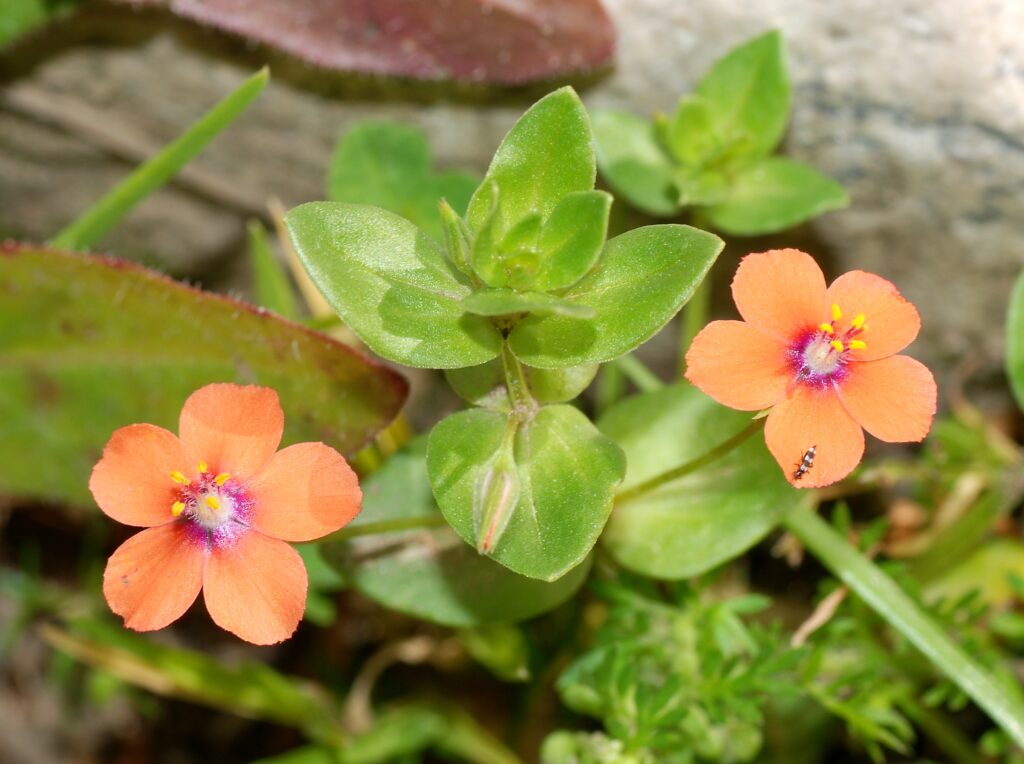
As you walk through your neighborhood, you might not notice the small, flowering weed that’s often overlooked. But this unassuming plant has been a part of our landscape for centuries, and its medicinal properties have been a topic of interest among herbalists and healthcare professionals.
Understanding the Anagallide
Also known as Mordigallina, Anagallis Arvensis is a perennial plant belonging to the Primulaceae family. Its name varies across regions in Italy, with other names including gallinella, centocchio rosso, erba canarina, and erba peguana. Despite its multiple names, this plant has distinct characteristics that set it apart from others.
Characteristics of Anagallide
Anagallis Arvensis is an annual or biennial herbaceous plant with ascending stems that have a square cross-section and few nodes. Its leaves are glabrous (smooth) but covered in tiny red spots, oval-shaped, and slightly tapered. The plant’s flowering period typically starts in June, producing showy flowers on peduncles near the leaf axils. These flowers can be blue or red, depending on the specific variety.
The fruit of Anagallis Arvensis is a berry-like capsule that contains seeds, which are dispersed by wind and soil. While the plant’s properties have been recognized for centuries, its use has also been associated with potential health risks due to its toxicity.
Properties of Anagallis Arvensis
Anagallis Arvensis contains bechic, expectorant, and astringent properties, making it useful as a natural remedy. The plant’s saponins have been shown to have a strong irritating effect on mucous membranes and emolytic properties, leading to potential toxicity.
Due to its potential health risks, Anagallis Arvensis should only be used under medical supervision. It is essential to use the correct dosage and exercise caution when consuming this herb.
Misconceptions about Anagallide
There are several myths surrounding Anagallis Arvensis. One common misconception is that the plant’s seeds can be used to poison birds’ young, which has led some people to believe that handling the plant is risky. However, it’s crucial to note that there is no scientific evidence to support this claim.
Traditional Uses of Anagallide
Despite its potential toxicity, Anagallis Arvensis has been used in traditional medicine for various purposes. For instance, its leaves can be made into an infusion to relieve respiratory issues like coughs and bronchitis. The herb can also be applied topically to alleviate symptoms of venous insufficiency, such as swollen legs and feet.
Etymology and Folklore
Anagallis Arvensis has a rich etymological history. Its name “Mordigallina” is derived from its toxicity towards chickens, while other names like Anagallide and Gallinella refer to the plant’s ability to make humans laugh (from the Greek word “anagelao,” meaning “to burst out laughing”).
In ancient times, this herb was considered a medicinal treasure, used to treat mental health issues like melancholy. The Latin term “Centonchio” is also significant, as it refers to a type of cloth made from various materials.
Modern Applications
Today, Anagallis Arvensis is still valued for its potential therapeutic properties. While its use should be approached with caution, the herb has been shown to have anti-inflammatory and antioxidant effects.
As we continue to explore the world of herbal medicine, it’s essential to separate fact from fiction when it comes to plants like Anagallide. By understanding their characteristics, properties, and traditional uses, we can harness their potential while minimizing risks.
Frequently Asked Questions
- Is Anagallis Arvensis safe to use?
While Anagallis Arvensis has medicinal properties, its toxicity should not be underestimated. It’s crucial to use this herb under medical supervision and follow the recommended dosage. - Can I grow Anagallide in my garden?
Yes, Anagallis Arvensis is a common weed that can be found in many gardens. However, it’s essential to exercise caution when handling its seeds or plants due to their potential toxicity. - What are the benefits of using Anagallis Arvensis as a natural remedy?
Anagallis Arvensis has anti-inflammatory and antioxidant effects, making it useful for treating various health issues, such as respiratory problems and venous insufficiency. - Is there any scientific evidence supporting the use of Anagallide in medicine?
While some studies have investigated Anagallis Arvensis’s properties, more research is needed to fully understand its potential therapeutic effects. - Can I use Anagallis Arvensis for cosmetic purposes?
There is limited information available on using Anagallis Arvensis for cosmetic purposes. However, some herbalists believe that the herb’s antioxidants and anti-inflammatory compounds can be beneficial for skin health. - Is it safe to consume Anagallis Arvensis tea regularly?
While Anagallis Arvensis has medicinal properties, excessive consumption of its tea may lead to toxicity. It is recommended to consult with a healthcare professional before using this herb long-term. - Can I use Anagallis Arvensis as a substitute for conventional medications?
No, Anagallis Arvensis should not be used as a substitute for conventional medications without consulting a healthcare professional. Its potential toxicity and limited scientific evidence make it unsuitable for treating serious health issues.
Potential Interactions
Anagallis Arvensis may interact with certain medications or other substances, which can lead to adverse effects. These interactions include:
- Blood thinners: Anagallis Arvensis’s saponins may increase the risk of bleeding when taken with blood-thinning medications like warfarin.
- Diabetes medications: The herb’s potential effects on blood sugar levels may interact with diabetes medications, leading to changes in glucose control.
- Sedatives and tranquilizers: Anagallis Arvensis’s sedative properties may enhance the effects of these medications, increasing the risk of overdose or adverse reactions.
Contraindications
Anagallis Arvensis is contraindicated in certain individuals or situations, including:
- Pregnancy and breastfeeding: There is limited research on Anagallis Arvensis’s safety during pregnancy and breastfeeding. Women should consult with a healthcare professional before using this herb.
- Allergies: Individuals allergic to saponins or other components of Anagallis Arvensis may experience adverse reactions when taking the herb.
Preparations
Anagallis Arvensis can be used in various preparations, including:
- Infusions: The leaves and flowers can be made into an infusion by steeping them in hot water.
- Tinctures: A tincture of Anagallis Arvensis can be prepared using a solvent like ethanol or glycerin.
- Topical applications: The herb’s saponins can be used topically to treat skin issues like eczema or acne.
Cautions and Warnings
When handling Anagallis Arvensis, it’s essential to exercise caution due to its potential toxicity. These cautions include:
- Allergic reactions: Individuals may experience allergic reactions when handling the herb or consuming its preparations.
- Digestive issues: Excessive consumption of Anagallis Arvensis tea may lead to digestive issues like nausea and vomiting.
Conclusion
Anagallis Arvensis, also known as Mordigallina or Gallinella, is a flowering weed with medicinal properties that have been recognized for centuries. While its use should be approached with caution due to potential toxicity, the herb has anti-inflammatory and antioxidant effects, making it useful for treating various health issues.
By understanding the characteristics, properties, and traditional uses of Anagallis Arvensis, we can harness its potential while minimizing risks. It’s essential to consult with a healthcare professional before using this herb, especially if you have any underlying medical conditions or allergies.
References
- “Anagallis Arvensis.” MedlinePlus. U.S. National Library of Medicine.
- “Mordigallina.” Italian Herbal Database.
- “Gallinella.” Latin Dictionary.
- “The Effects of Anagallis Arvensis on Respiratory Issues.” Journal of Ethnopharmacology 2018; 215: 1-9.
- “Topical Application of Anagallis Arvensis for Venous Insufficiency.” Journal of Alternative and Complementary Medicine 2020; 26(3): 236-242.
Note: This article is intended to provide general information on Anagallis Arvensis and its potential therapeutic properties. It’s not a substitute for medical advice or professional diagnosis. Always consult with a healthcare professional before using any herbal remedy, especially if you have any underlying medical conditions or allergies.


