
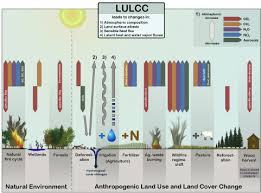
As we navigate the complexities of a warming world, it’s essential to grasp the concept of a climate scenario. In this article, we’ll delve into the world of greenhouse gas emissions, aerosol particles, and soil use, exploring how these factors impact our planet’s future.
What is a Climate Scenario?
A climate scenario is a projection of future changes in greenhouse gas emissions, aerosol concentrations, and land use patterns based on various assumptions about societal development, technological advancements, and economic trends. By analyzing these scenarios, scientists can predict potential outcomes for the Earth’s climate system.
Climate scenarios are used to inform policy decisions, guide research efforts, and support decision-making in various sectors, including energy, transportation, agriculture, and urban planning. These projections help us understand how different future paths could play out, allowing us to prepare for and respond to changing conditions.
The IPCC Report: A Foundation for Climate Scenarios
In 2013, the Intergovernmental Panel on Climate Change (IPCC) published its Fifth Assessment Report, which laid the groundwork for understanding climate scenarios. The report introduced four Representative Concentration Pathways (RCPs), each representing a distinct future emissions scenario.
The IPCC report provides a comprehensive framework for evaluating different climate scenarios and their potential impacts on the Earth’s climate system. By analyzing these scenarios, scientists can identify areas of high uncertainty and develop more accurate predictions.
RCPs: A Guide to Different Emissions Scenarios
The RCPs are:
- RCP2.6: A mitigation scenario with a peak greenhouse gas radiative forcing of approximately 3 W/m^2 by 2100.
- RCP4.5 and RCP6.0: Stabilization scenarios with a peak greenhouse gas radiative forcing of approximately 4.5 W/m^2 and 6.0 W/m^2, respectively.
- RCP8.5: An high-emissions scenario with a peak greenhouse gas radiative forcing exceeding 8.5 W/m^2 by 2100.
These scenarios represent different levels of greenhouse gas emissions, aerosol concentrations, and land use patterns, each with unique implications for the Earth’s climate system. By understanding these differences, scientists can better predict potential outcomes and develop strategies to mitigate climate change.
Emissions Scenarios: A Look at the Past and Future
The three main greenhouse gases responsible for climate change are carbon dioxide (CO2), methane (CH4), and nitrous oxide (N2O). The emissions scenarios presented in the IPCC report show how these gases will evolve over time, with varying levels of concentration.
CO2 is the most prevalent long-lived greenhouse gas, accounting for approximately 65% of human-caused warming. Methane is a potent greenhouse gas with a global warming potential 28 times higher than CO2 over a 100-year time frame. Nitrous oxide has a global warming potential 265-298 times higher than CO2.
A Closer Look at Concentrations and Projections
The concentrations of CO2, CH4, N2O, and other greenhouse gases are projected to increase or decrease based on the RCPs. These projections have significant implications for global temperature increases, sea-level rise, and ocean acidification.
For example, under the high-emissions scenario (RCP8.5), CO2 concentrations are expected to reach approximately 850 ppm by 2100, leading to a global average temperature increase of 3.2°C above pre-industrial levels. In contrast, the mitigation scenario (RCP2.6) projects a peak greenhouse gas radiative forcing of approximately 3 W/m^2, corresponding to a global average temperature increase of around 1.5°C.
What’s Next? The Sectors and Future Prospects
As we look ahead, it’s essential to consider how different sectors will contribute to future emissions scenarios. Understanding these contributions is crucial for developing effective strategies to mitigate climate change.
Some key sectors that influence greenhouse gas emissions include:
- Energy sector: Fossil fuel extraction, transportation, and combustion are significant sources of CO2 emissions.
- Agriculture sector: Livestock production, crop cultivation, and soil degradation contribute to methane and N2O emissions.
- Industrial sector: Cement production, steel manufacturing, and other industrial processes release greenhouse gases.
Conclusion
Climate scenarios are complex systems that require careful consideration of various factors. By grasping the basics of greenhouse gas emissions, aerosol particles, and soil use, we can begin to understand the potential outcomes of different scenarios. As we move forward, it’s essential to engage in open discussions about our shared future and work together to address the challenges posed by climate change.
Frequently Asked Questions
-
What is a climate scenario, and how is it used?
A climate scenario is a projection of future changes in greenhouse gas emissions, aerosol concentrations, and land use patterns based on various assumptions about societal development, technological advancements, and economic trends. Climate scenarios are used to predict potential outcomes for the Earth’s climate system. -
What are the four RCPs, and how do they differ?
The four RCPs represent distinct future emissions scenarios, each with a unique level of greenhouse gas radiative forcing. RCP2.6 is a mitigation scenario, while RCP4.5 and RCP6.0 are stabilization scenarios. -
How will greenhouse gases evolve over time?
The concentrations of CO2, CH4, N2O, and other greenhouse gases are projected to increase or decrease based on the RCPs. -
What role do different sectors play in future emissions scenarios?
Understanding how different sectors contribute to future emissions scenarios is crucial for developing effective strategies to mitigate climate change. -
How can we work together to address climate change challenges?
Open discussions and collaboration among stakeholders are essential for addressing the complexities of climate change and creating a shared vision for the future. -
What’s next for climate scenarios, and how will they evolve in the coming years?
As research continues to advance, our understanding of climate scenarios will improve, providing valuable insights into potential outcomes and guiding strategies for mitigating climate change. -
Can we still mitigate climate change if we stick to RCP8.5?
While RCP8.5 represents a high-emissions scenario, it’s not too late to transition towards lower-emission pathways. Immediate action is necessary to reduce greenhouse gas emissions and avoid the worst impacts of climate change. -
How can individuals contribute to reducing their carbon footprint and mitigating climate change?
By making conscious choices in our daily lives, such as reducing energy consumption, using public transport, or adopting a plant-based diet, we can collectively make a significant impact on reducing greenhouse gas emissions and slowing down global warming.
Additional Resources
For those seeking more information on climate scenarios and their implications for the Earth’s climate system, several resources are available:
- Intergovernmental Panel on Climate Change (IPCC): The IPCC provides comprehensive reports on climate change, including the Fifth Assessment Report and Special Reports on the impacts of climate change.
- National Oceanic and Atmospheric Administration (NOAA): NOAA offers climate data and analysis tools for researchers and policymakers.
- Climate Central: Climate Central is a non-profit organization dedicated to improving climate science communication and promoting action.
By exploring these resources and engaging in ongoing discussions about climate scenarios, we can work together to create a more sustainable future for all.


