
Introduction
Meet the Hungarian Vizsla, a dog breed that has been prized for its intelligence, athleticism, and loyalty. This article will delve into the world of the Hungarian Vizsla, exploring its history, characteristics, and suitability as a companion animal.
Origin of the Hungarian Vizsla
The Hungarian Vizsla is believed to have originated in Hungary in the 9th century, when the Hungarian people arrived in their current homeland. Initially, it was crossed with the Pannonia Shepherd dog, taking on many morphological characteristics. Later, during the Ottoman invasion, it was crossed with the German Shepherd, the “yellow Turkish” dog, and the Arabian Hound.
The Rise to Fame
In the 18th century, the Hungarian Vizsla gained popularity among aristocratic families for its exceptional hunting abilities. However, its popularity was short-lived, as it risked extinction during World War I. Fortunately, crossbreeding with setters, English pointers, and German Shepherds helped the breed recover.
Recognition by FCI
In 1936, the Hungarian Vizsla became an officially recognized breed by the Fédération Cynologique Internationale (FCI). This recognition led to its arrival in the United States, where it quickly gained popularity.
The Name “Vizsla”
When crossed with the yellow Turkish dog, the Hungarian Vizsla developed a distinctive coat type, short or long. The name “Vizsla” is derived from the concept of searching and means “vigilant.” This name reflects the breed’s exceptional tracking abilities.
Characteristics
The Hungarian Vizsla is highly valued for its:
- Intelligence: Ranked among the top 10 most intelligent dog breeds, according to Stanley Coren. This high level of intelligence makes it easy to train and engage in various activities.
- Balance and Shining Coat: Its coat is always shiny and well-groomed, indicating a strong predisposition to healthy living.
- Strong Work Ethic: The Hungarian Vizsla is obsessed with its owner, making it very easy to train.
Physical Appearance
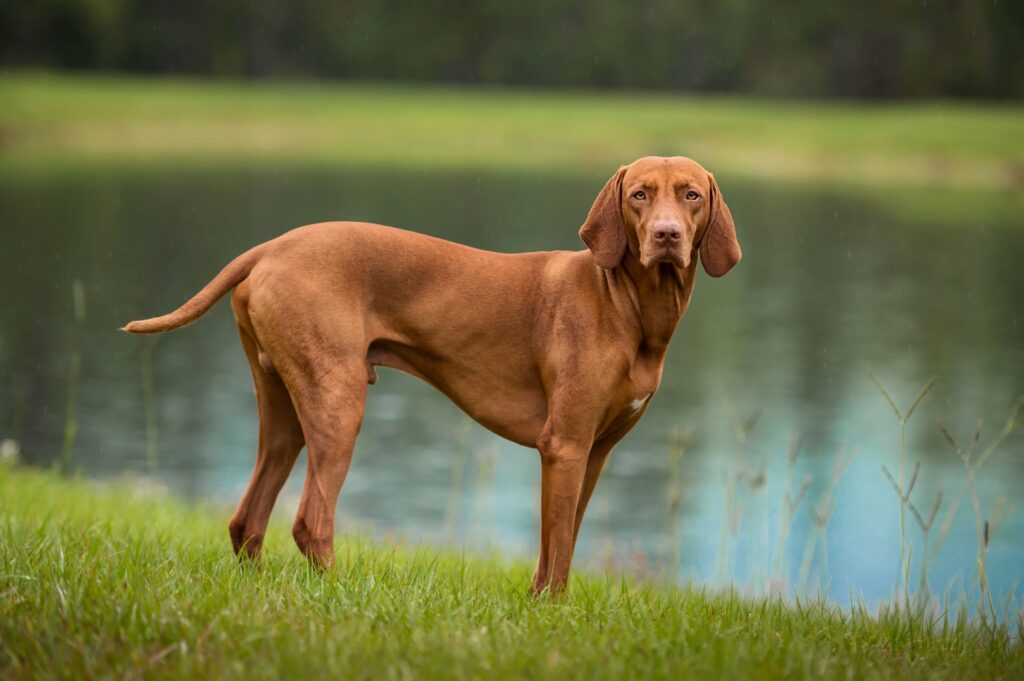
The Hungarian Vizsla has a medium-large size, reaching 50-60 cm in height and weighing up to 30 kg. Its harmonious body features well-developed bones and muscles, while its skull is wide but the muzzle is narrow and pointed. The tail is long and narrow, with oval-shaped eyes that match the coat color.
Coat Types
The Hungarian Vizsla has two coat types:
- Short Coat: Short, golden in color.
- Hard Coat: Longer, also golden in color.
Portment and Agility
The Hungarian Vizsla is agile and elegant, with a predisposition to running. Its palmate paws make it an excellent swimmer.
Hungarian Vizsla Breeders
The breed’s spread is mainly concentrated in Hungary, Germany, England, and the United States. In Italy, however, the Hungarian Vizsla is still relatively rare.
Puppy Development
From birth, the Hungarian Vizsla has an alpha leader concept, identifying its owner and following them closely. This unconditional love for the owner makes training easy and encourages learning even at a young age.
Training and Education
Teaching the first associations begins around two months of age, while from three months, it shows strong curiosity and liveliness that can be exploited to familiarize it with scents and hunting tasks.
Socialization and Training Tips
- Early socialization is crucial for developing good behavior and a positive relationship between the dog and its owner.
- Positive reinforcement training methods are highly effective in promoting a strong bond and encouraging desired behaviors.
- Consistency and patience are key to successful training, as the Hungarian Vizsla requires time and effort to develop.
Price of Hungarian Vizsla Puppies
The price of a Hungarian Vizsla puppy with pedigree varies but can range from 800-1200 euros. However, prices may be higher or lower depending on factors such as breeder reputation, bloodline, and location.
Conclusion
The Hungarian Vizsla is an exceptional breed, valued for its intelligence, athleticism, and loyalty. Its history, characteristics, and suitability as a companion animal make it an excellent choice for those looking for a noble breed.
FAQs
Q: What is the origin of the Hungarian Vizsla?
A: The Hungarian Vizsla originated in Hungary in the 9th century and was crossed with other breeds during the Ottoman invasion.
Q: Why is the Hungarian Vizsla considered a rare breed?
A: The Hungarian Vizsla is relatively rare, mainly due to its spread being concentrated in specific countries.
Q: What makes the Hungarian Vizsla an easy dog to train?
A: Its strong attachment to its owner and exceptional intelligence make it very easy to train.
Q: How old can you start teaching a Hungarian Vizsla puppy associations?
A: Around two months of age, you can begin teaching associations like making physical needs.
Q: What is the price range for a Hungarian Vizsla puppy with pedigree?
A: The price can range from 800-1200 euros.
Final Thoughts
The Hungarian Vizsla is an exceptional breed that has gained recognition and popularity worldwide. Its unique characteristics, intelligence, and athletic ability make it an excellent choice for active families and hunting enthusiasts. By understanding its history, training requirements, and socialization needs, you can provide a happy and fulfilling life for your Hungarian Vizsla companion.
Additional Tips
- Consider enrolling in puppy socialization classes or obedience training to help your Hungarian Vizsla develop good behavior and a strong bond with its owner.
- Provide regular exercise and mental stimulation to keep your Hungarian Vizsla engaged and active throughout the day.
- Consult with reputable breeders or trainers for personalized guidance on caring for and training your Hungarian Vizsla.


