
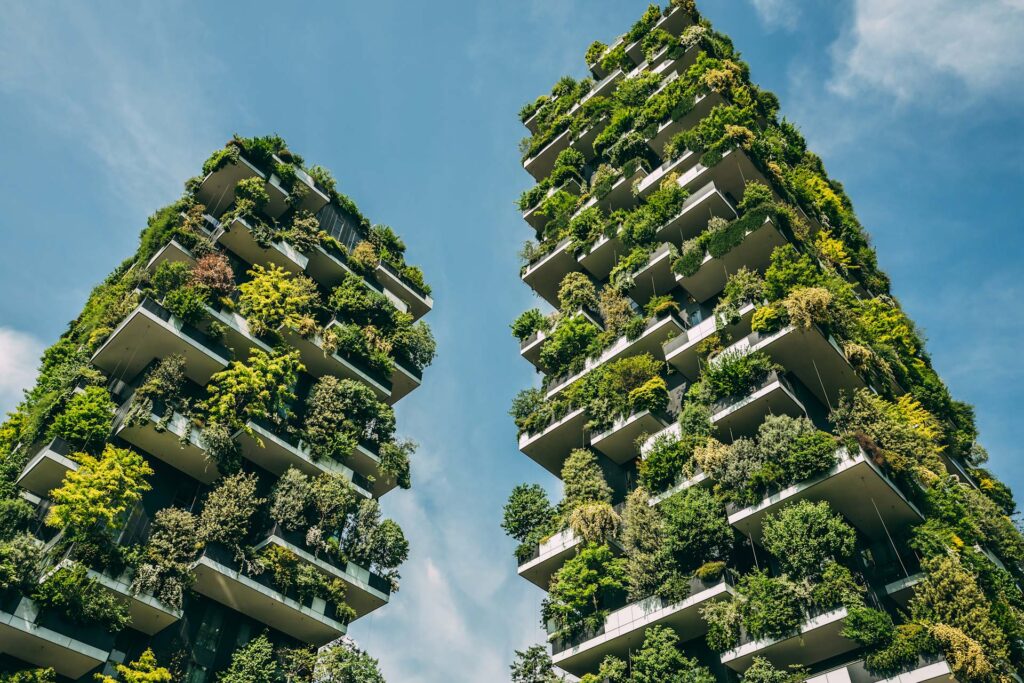
When walking through the city center, you’ve probably noticed some pots protruding from windows and balconies. But have you ever seen a building that boasts 730 plants lined up on its entire facade? The Bosco Verticale, designed for Milan Porta Nuova in the Isola neighborhood, is inspiring other European cities to follow suit.
A City’s Transformation
Milan is often criticized for being one of the most polluted cities in Europe. The Bosco Verticale has been hailed as a “synthesis of avant-garde architecture and environmental sustainability,” aiming to revitalize the urban environment. Today, it has already revitalized Milan’s image globally.
The Bosco Verticale has brought about a significant transformation in Milan, not only visually but also environmentally. The city’s residents are now surrounded by lush greenery, which has improved air quality and provided a peaceful oasis in an otherwise bustling metropolis.
The Vertical Forest: A New Era in Urban Planning
The Bosco Verticale is a pioneering project that showcases the potential of vertical urban agriculture. By integrating plants into building design, architects can create sustainable spaces that not only reduce carbon emissions but also provide habitats for urban wildlife.
The concept of vertical forests has been around for decades, but it’s the Bosco Verticale that has brought attention to its practical applications in modern architecture. Inspired by nature, this innovative approach is being adopted by cities worldwide as a solution to the growing urbanization crisis.
A Haven for Biodiversity
The Bosco Verticale boasts an impressive 97,000 square meters of outdoor space, which provides a habitat for numerous species of plants and animals. The vertical forest has become a haven for local wildlife, offering a peaceful retreat from the hustle and bustle of city life.
In addition to providing a natural environment, the Bosco Verticale also serves as a model for sustainable urban planning. By incorporating green spaces into building design, architects can create cities that are not only aesthetically pleasing but also environmentally friendly.
Microclimates and Energy Efficiency
The plants in the Bosco Verticale create microclimates that benefit buildings by providing shade, reducing cooling costs, and minimizing energy consumption. This innovative approach has reduced the need for air conditioning systems, resulting in significant energy savings.
Moreover, the vegetation acts as a natural sound barrier, reducing noise pollution and creating a more peaceful environment for residents. The Bosco Verticale is an exemplary model of how green spaces can be integrated into urban design to create sustainable and environmentally friendly buildings.
A Sustainable Future?
The Bosco Verticale is more than just a beautiful building – it represents a new era in urban planning and sustainability. As cities continue to grow, we must prioritize environmental stewardship and innovative solutions like this vertical forest.
Innovative technologies, such as solar panels and water recycling systems, are being integrated into the design of buildings worldwide. These features not only reduce waste and conserve resources but also promote sustainable development.
Key Takeaways: The Impact of the Bosco Verticale
• Designed for Milan Porta Nuova, the Bosco Verticale is an Italian model for sustainable architecture
• France and Spain are now developing projects inspired by the Italian design
• The Bosco Verticale has revitalized Milan’s image globally
• The vertical forest aims to revitalize urban environments and promote biodiversity
• Innovative solutions like solar energy and water recycling reduce waste and conserve resources
Conclusion: A Green Future for Cities?
The Bosco Verticale is a beacon of hope for sustainable urban planning. As we move forward, it’s essential to prioritize environmental stewardship and innovative design. Will other cities follow Milan’s lead in creating green spaces that benefit both humans and the planet?
The future of urban development depends on our ability to create sustainable and environmentally friendly cities. The Bosco Verticale is a pioneering project that showcases the potential of vertical urban agriculture.
Frequently Asked Questions: The Bosco Verticale
-
Q: Where is the Bosco Verticale located?
A: The Bosco Verticale is situated in Milan, Italy, specifically in the Isola neighborhood. -
Q: How many trees are there in total on the facade of the Bosco Verticale?
A: There are 730 mature trees on the facade of the Bosco Verticale. -
Q: What kind of energy source powers the building?
A: The Bosco Verticale uses solar panels to generate energy. -
Q: How does the water recycling system work?
A: The water recycling system reduces waste and conserves resources, allowing for efficient irrigation of the plants. -
Q: What is the purpose of the flower boxes on the terraces?
A: The flower boxes house the roots of the plants, providing a habitat for them to thrive. -
Q: How does the vertical forest impact local air quality?
A: The lush vegetation absorbs CO2 from the atmosphere, returning “fresh oxygen” to Milan’s residents. -
Q: Will other cities follow Milan’s lead in creating green spaces?
A: The Bosco Verticale serves as a model for sustainable architecture, and its success has inspired other European cities to develop similar projects. -
Q: What is the estimated cost of maintaining the Bosco Verticale over time?
A: Due to its innovative design and sustainable features, the long-term maintenance costs are expected to be lower than those of traditional buildings.
The Future of Urban Planning
As we look towards a more sustainable future, it’s essential to adopt innovative approaches to urban planning. The Bosco Verticale is just one example of how architects can create green spaces that benefit both humans and the environment.
Other cities worldwide are adopting similar approaches, incorporating green roofs, vertical gardens, and parks into their urban design. These features not only improve air quality but also provide habitats for urban wildlife.
In conclusion, the Bosco Verticale is a pioneering project that showcases the potential of sustainable urban planning. As we move forward, it’s essential to prioritize environmental stewardship and innovative design to create cities that are not only aesthetically pleasing but also environmentally friendly.
Case Study: The Bosco Verticale in Milan
The Bosco Verticale has become a symbol of sustainability in urban planning. This project demonstrates the potential of green spaces to revitalize urban environments, promote biodiversity, and reduce carbon emissions.
Key features of the Bosco Verticale include:
- 730 mature trees on the facade
- Solar panels generating energy
- Water recycling system reducing waste and conserving resources
- Flower boxes housing plant roots
- Natural sound barrier reducing noise pollution
The success of the Bosco Verticale has inspired other European cities to develop similar projects. The Torre Huerta in Valencia, Spain, and the Flower Tower in Paris, France, are just two examples of how this innovative approach is being adopted worldwide.
Conclusion
As we look towards a more sustainable future, it’s essential to adopt innovative approaches to urban planning. The Bosco Verticale is a pioneering project that showcases the potential of green spaces to revitalize urban environments, promote biodiversity, and reduce carbon emissions.
By incorporating green roofs, vertical gardens, and parks into urban design, cities can create sustainable and environmentally friendly buildings that benefit both humans and the environment.
The future of urban development depends on our ability to create sustainable and environmentally friendly cities. The Bosco Verticale is a beacon of hope for sustainable urban planning, demonstrating the potential of innovative design to transform urban environments.
Additional Resources
For more information on sustainable urban planning, visit:
- The European Commission’s website on Sustainable Urban Planning
- The International Union for Conservation of Nature (IUCN) website on Urban Planning and Sustainability
- The Green Building Council (GBC) website on Sustainable Architecture
By adopting innovative approaches to urban planning, we can create cities that are not only aesthetically pleasing but also environmentally friendly. The Bosco Verticale is a pioneering project that showcases the potential of green spaces to transform urban environments.
As we move forward, it’s essential to prioritize environmental stewardship and innovative design to create sustainable and environmentally friendly cities. The future of urban development depends on our ability to adopt sustainable approaches to urban planning.


