
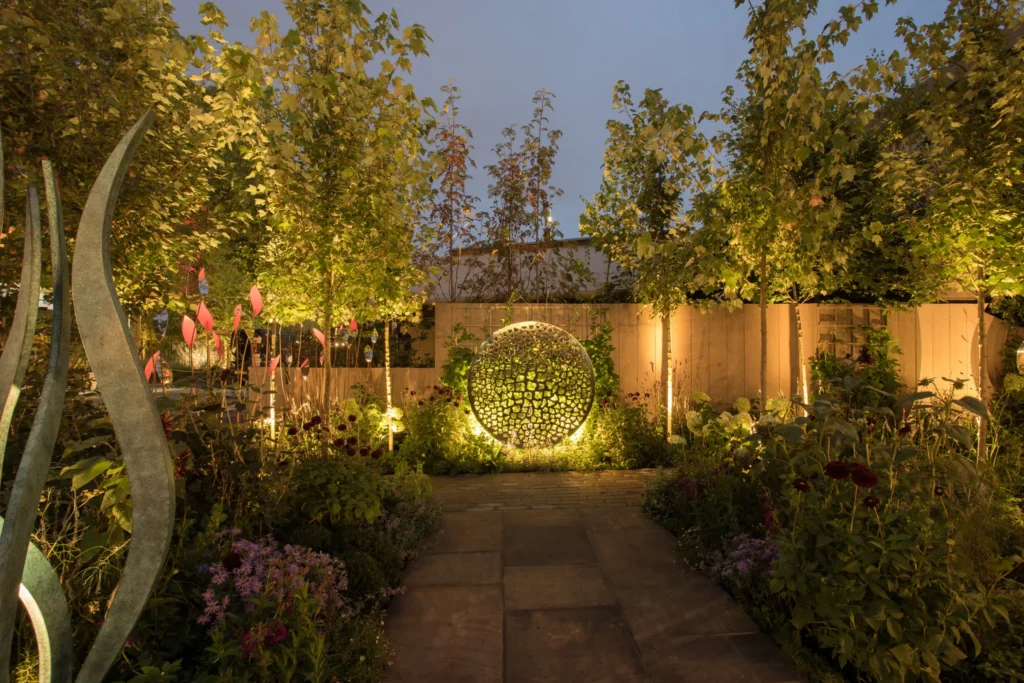
In the realm of outdoor lighting, there are two primary motivations that drive homeowners to install lights in their gardens. Firstly, it is for functional purposes, such as illuminating walkways and slopes to make them navigable and safe. Secondly, it is for aesthetic reasons, aiming to add interest to the garden by creating captivating nightscapes.
In both cases, the first piece of advice is to not overdo it. There’s already a considerable amount of light pollution, and one of the most beautiful aspects of nighttime is witnessing the stars in the sky, not seeing illuminated plants during the day. And if you need a lot of light for a night out with friends (a great reason, by the way), there are lamps, spotlights, and movable lights that can be easily taken down and stored after the party.
Functional Lighting
The ideal approach is to implement functional lighting at the same time as building or renovating your garden. This ensures that you have adequate light for slopes, walkways between the house, gate, parking area, and pool. Moreover, it necessitates a more complex setup involving scaffolding, pozzetti, and potentially integrating lights into structural elements like staircases, columns, and pool walls. It’s usually best to hire an electrician with experience in designing safe installations. This type of lighting is typically connected to the power grid and requires a comprehensive plan.
Functional lighting also helps prevent accidents by making it easier for people to navigate your garden at night. According to statistics, over 50% of nighttime accidents occur after dark due to inadequate lighting. For example, if you have a large lawn or slopes, well-lit walkways will provide a safer and more enjoyable experience for everyone.
Aesthetic Lighting
However, when it comes to aesthetic lighting, the discussion shifts, and we focus on creating ambiance around specific features like trees or shrubs. The objective isn’t to illuminate areas around your house for safety or control but rather to create captivating vistas in the evening hours. This type of lighting is far softer and requires a different approach altogether.
For instance, when setting up lights to highlight an individual tree or cluster of bushes, you’re aiming to draw attention to these spots without overwhelming them. The choice of lights here can be made either at construction time (preferably) or post-construction, with the latter providing valuable insight into which areas require additional accentuation.
An added bonus is that some of these lights don’t need to be connected to a traditional power grid due to their solar-powered nature. This simplifies the installation process while also making them eco-friendly. These lights often come equipped with sensors that turn them on when approached, serving both aesthetic and functional purposes.
Designing Aesthetic Lighting
When designing aesthetic lighting, consider using spotlights or string lights to create unique designs around your garden. You can also use uplighting to highlight architectural features like columns, arches, or statues. Alternatively, you can opt for downlighting to create a cozy ambiance in specific areas.
For example, if you have a large pond or fountain, consider using LED spotlights to illuminate the water and create a mesmerizing effect at night. Similarly, if you have trees with unique shapes or features, use lights that complement their natural beauty without overpowering them.
A Simple Guide for Adding Light Effectively
If your primary goal is to add minimal illumination (a ‘low-light’ setting), consider using solar-powered LED lights. These are energy-efficient and don’t require any wiring or maintenance.
However, if you’re looking to dive deeper into the technical aspects of outdoor lighting (such as brightness levels and color temperatures), please refer to our article on luminosity.
Instead, here’s a practical solution involving floor-mounted sensors for creating ambiance among trees and bushes. These sensors can be placed around specific plants or areas, triggering lights to turn on when someone approaches.
Floor-Mounted Sensors
Floor-mounted sensors are an innovative way to create dynamic lighting in your garden. These sensors can detect movement and automatically adjust the brightness of lights nearby. They’re perfect for creating a unique ambiance around individual trees or clusters of bushes.
For example, if you have a favorite tree in your garden that you want to highlight at night, place a floor-mounted sensor near its base. When someone approaches, the sensor will trigger a series of LED lights around the tree to turn on, creating a beautiful and dynamic effect.
Benefits of Floor-Mounted Sensors
Floor-mounted sensors offer several benefits for outdoor lighting design. Firstly, they eliminate the need for wires or maintenance, making them an eco-friendly option. Secondly, they provide a flexible way to create unique light effects in your garden, without limiting yourself to traditional fixed lights.
Lastly, floor-mounted sensors can be programmed to turn on and off automatically, creating a seamless and natural lighting experience that complements the natural beauty of your garden.
Frequently Asked Questions
-
What is the ideal time to install functional outdoor lighting?
Answer: Ideally, during construction or renovation of your garden to ensure proper integration with other structural elements. -
Can I use solar-powered lights without wiring?
Answer: Yes, they can be a great option for both aesthetic and functional purposes, especially if you’re looking to reduce energy consumption. -
How do I choose the right color temperature for outdoor lighting?
Answer: Warm white (2700K-3000K) is ideal for highlighting natural features or creating a cozy ambiance, while cool white (3500K-5000K) can be better suited for task-oriented spaces like walkways. -
Can I use solar-powered lights in areas with heavy shade?
Answer: While it’s possible to install them even in shaded areas, the effectiveness will vary depending on the specific light model and ambient conditions. -
How often should outdoor lights be inspected or replaced?
Answer: Regular maintenance is crucial for ensuring that your lights are working efficiently and safely; ideally every 2-3 years for both functional and aesthetic lighting installations. -
What are some general safety precautions to follow when installing outdoor lights?
Answer: Be mindful of power lines, water exposure, and secure all electrical connections to prevent accidents. -
Can I combine different types of outdoor lighting (e.g., solar-powered with wired lights)?
Answer: Yes, combining different light sources can create more versatility in your garden’s ambiance while also meeting various needs throughout the day. -
What is the recommended lifespan for most outdoor lighting components?
Answer: Most LED lights are designed to last around 50,000 hours or longer, with some estimates suggesting up to 100,000 hours of continuous operation before needing replacement.
Conclusion
Outdoor lighting design can be a challenging task, but with the right approach and knowledge, it can also be an incredibly rewarding experience. By balancing functional and aesthetic lighting needs, you can create a beautiful and inviting atmosphere that complements your garden’s natural beauty while providing safety and convenience for everyone who spends time there.
Remember to prioritize energy efficiency, choose the right color temperature, and consider using innovative solutions like floor-mounted sensors to create unique light effects in your garden. With these tips and guidelines, you’ll be well on your way to designing an outdoor lighting system that enhances both your home’s curb appeal and its functionality.


