
Introduction
Deep in the Russian Far East lies a region shrouded in mystery, where the sun dips into the horizon and paints the sky with hues of crimson and gold. It is here, on the picturesque islands of the Kuril archipelago, that one of the world’s rarest and most enigmatic cat breeds was born – the Kurilian Bobtail. This majestic feline has been hiding in plain sight for centuries, leaving a trail of curiosity and wonder in its wake.
Characteristics of the Kurilian Bobtail
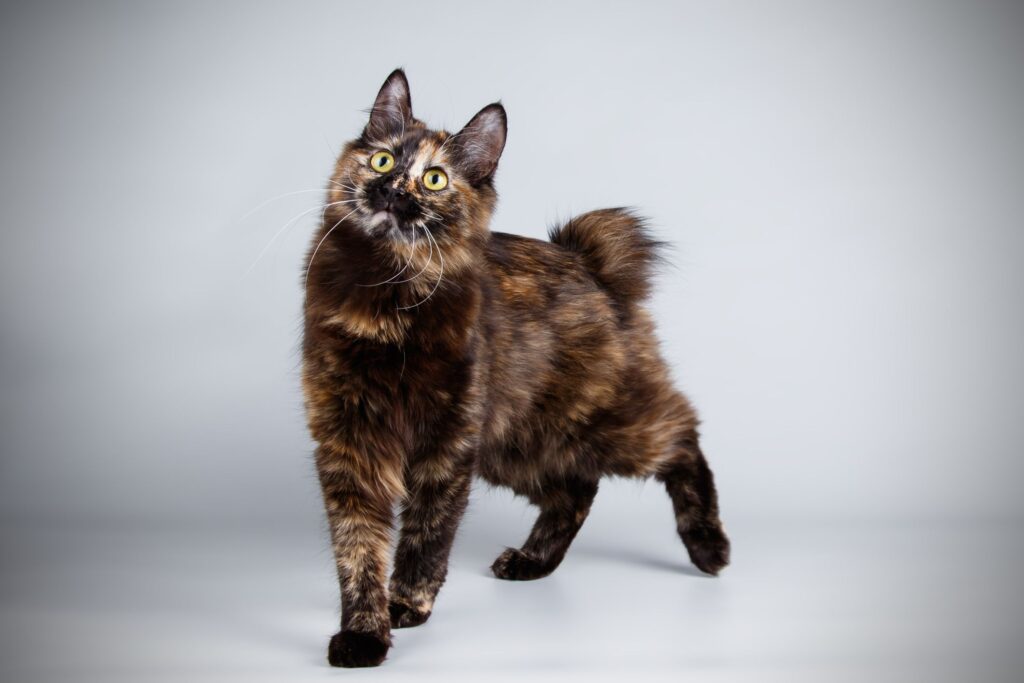
The Kurilian Bobtail is a sturdy and athletic cat with a medium to large build, despite being relatively compact in size. Its powerful legs are well-suited for movement, with the hind legs being slightly longer than the front ones, giving it an endearing “strut” as it moves about. The tail is short and carried low, often tucked between its legs when not in use.
The Kurilian Bobtail’s head shape is reminiscent of a triangular silhouette, but without the sharp angles that define more pointed breeds. Its face is broad and rounded, with full cheeks and a sweet expression that makes it an instant favorite among cat enthusiasts.
One of the most striking features of this breed is its coat, which can be either short or semi-long, depending on individual preferences. The fur itself is soft and silky to the touch, with a minimal undercoat that requires infrequent grooming. When the coat does shed, however, it can get quite thick, necessitating more regular maintenance.
Origins of the Kurilian Bobtail
Despite its relative obscurity, the Kurilian Bobtail has a rich history that dates back centuries. It is believed to have descended from the Japanese Bobtail, which was introduced to the islands of the Kuril archipelago as early as the 17th century. Over time, this feline population adapted to their new surroundings, developing distinct characteristics that set them apart from their Japanese counterparts.
Today, the Kurilian Bobtail can be found living a relatively solitary existence on its native islands, with occasional sightings in domestic settings where it has been brought under human care.
Personality of the Kurilian Bobtail
Contrary to its rugged appearance, the Kurilian Bobtail is known for its charming and sociable nature. These cats thrive on attention and affection from their human companions, often seeking out cuddles and playtime with gusto. While they may appear reserved or even timid at times, this breed has a deep-seated love of interaction and connection.
In fact, the Kurilian Bobtail is well-suited to families with children, who can appreciate its playful yet gentle demeanor. With proper care and attention, these cats can live long, happy lives as beloved members of the family.
Breeding and Care
Due to their rarity, breeding programs for the Kurilian Bobtail are extremely challenging to establish and maintain. However, for those fortunate enough to encounter this breed, it is essential to approach with caution and sensitivity.
Grooming needs are relatively low, requiring only a weekly brushing to remove dead hair and prevent matting. Ear cleaning and nail trimming should also be done regularly, as overgrown ears can lead to infections and poorly trimmed nails can cause discomfort for both cat and owner alike.
Health and Wellness
The Kurilian Bobtail is generally a healthy breed, with few reported instances of genetic disorders or health issues related to its physical characteristics. Regular veterinary check-ups and proper nutrition can help ensure a long, healthy life for these magnificent felines.
However, as with any breed, there are some potential health concerns that owners should be aware of. Hypertension, hyperthyroidism, and patellar luxation have been reported in Kurilian Bobtails, so regular monitoring is essential to prevent serious complications.
Nutrition and Diet
A well-balanced diet is crucial for maintaining the overall health and well-being of a Kurilian Bobtail. Feed a high-quality commercial cat food that meets the breed’s nutritional needs, and supplement with fresh water and treats in moderation.
It is also important to note that Kurilian Bobtails are prone to obesity, so careful monitoring of their weight is essential to prevent related health problems.
Litter Training
Kurilian Bobtails are intelligent and trainable, making litter training a relatively straightforward process. Establish a consistent routine and reward good behavior with treats and praise to encourage successful elimination outside the litter box.
Socialization and Interaction
Socialization plays a critical role in shaping the personality and behavior of Kurilian Bobtails. Provide plenty of attention, playtime, and interaction from an early age to help your cat develop into a confident and well-adjusted adult.
In addition to socialization, introduce your Kurilian Bobtail to new environments, people, and animals at a young age to ensure they are comfortable and adaptable in various situations.
Grooming Techniques
Regular grooming is essential for maintaining the health and appearance of a Kurilian Bobtail. Brush their coat weekly to prevent matting and tangling, paying particular attention to areas around the tail and ears.
Trimming nails regularly can help prevent overgrowth and discomfort, while cleaning the ears with a damp cloth or cotton ball can help prevent infections.
Health Issues
While rare, certain health issues can affect Kurilian Bobtails. Hypertension has been reported in some individuals, so regular monitoring is essential to detect any signs of high blood pressure.
Hyperthyroidism is another potential issue, which can cause symptoms such as weight loss, increased appetite, and changes in vocalization. Regular veterinary check-ups can help identify this condition early on.
Conclusion
The Kurilian Bobtail is a true marvel of nature – a testament to the incredible diversity and adaptability of the feline world. As we continue to explore and learn more about this enigmatic breed, it becomes increasingly clear that their unique charm and character have captured the hearts of many around the globe.
Whether you’re a seasoned cat enthusiast or simply looking for a new and exciting addition to your family, the Kurilian Bobtail is sure to captivate and inspire. So if you’re ready to embark on an unforgettable journey with this rare and exotic Russian cat breed, get ready to fall in love all over again!
FAQs
-
What is the lifespan of a Kurilian Bobtail?
The average lifespan of a Kurilian Bobtail is around 12-15 years. -
How often should I groom my Kurilian Bobtail?
Weekly brushing and occasional nail trimming are sufficient for maintaining your Kurilian Bobtail’s coat and overall health. -
Can Kurilian Bobtails be kept as pets in small spaces?
Due to their size and energy level, it is recommended that these cats have access to a spacious living area where they can exercise and roam freely. -
Are Kurilian Bobtails suitable for families with young children?
Yes, Kurilian Bobtails are generally great with children, provided they receive proper socialization and attention from an early age. -
Can I find Kurilian Bobtail breeders online?
While there may be some reputable breeders online, it is essential to exercise caution when searching for a breeder, as many may not provide accurate information or prioritize the health and well-being of their cats. -
What are some common health issues associated with Kurilian Bobtails?
Regular veterinary check-ups can help identify potential health problems early on, but some reported issues include respiratory infections, skin allergies, and hyperthyroidism. -
Can I get a Kurilian Bobtail as a kitten?
Yes, kittens from reputable breeders may be available for adoption, but it is crucial to research the breeder thoroughly and ensure that the kitten will receive proper care and socialization before being brought home. -
Are there any notable differences between the Kurilian Bobtail and other cat breeds?
The Kurilian Bobtail’s unique combination of size, coat type, and temperament sets it apart from many other feline breeds.


