
Introduction
In the world of equestrian, few breeds evoke as much admiration and awe as the majestic Clydesdale. Hailing from Scotland, this gentle giant is renowned for its impressive size, muscular build, and striking appearance. With a rich history dating back to the 18th century, the Clydesdale has evolved into one of the most recognizable and beloved horse breeds in the world.
Origins
The name “Clydesdale” is derived from the Scottish county where it originated, now known as Lanark or Lanarkshire. This majestic breed is a result of an unlikely union between local galloway horses and Flemish stallions. The introduction of these strong and sturdy horses in the mid-18th century revolutionized the landscape of Scotland’s transportation needs, particularly with the construction of major roads that required a more substantial horse power.
One theory on their origins suggests that the Flemish stallions were brought to Scotland to meet the demands for heavier loads, particularly during the time of the industrialization era. The addition of these powerful horses to the local galloway breed resulted in the magnificent Clydesdale we know today.
Characteristics
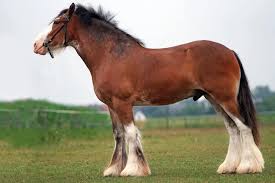
A glance at a Clydesdale reveals its striking features, including a distinctive bay or dark brown coat with white markings on the face, legs, and belly. This unique coloration is a testament to the breed’s genetic makeup. The Clydesdale’s muscular build, coupled with its impressive height (average 164-173 cm for males and 163-165 cm for females), makes it an awe-inspiring sight.
The breed’s head profile is characterized by a straight or slightly convex shape, accompanied by a broad forehead and slightly sloping shoulders. The Clydesdale’s body is muscular and well-proportioned, with a deep chest and relatively short back. Its long, powerful legs are adorned with thick hair, covering the hooves from the knee down.
Temperament and Usage
Historically, the Clydesdale was employed as a driving horse, capable of carrying heavy loads across challenging terrain. This role has been passed on through generations, making it an invaluable asset in agriculture and transportation. The breed’s gentle nature makes it suitable for a variety of tasks, from plowing fields to pulling carts.
Clydesdales are often used in parades and ceremonies due to their majesty and impressive size. Some notable examples include the Budweiser Clydesdales, which have become an iconic symbol of the brand worldwide.
Health Concerns
Like all horse breeds, the Clydesdale is susceptible to certain health issues. One major concern is foot problems, such as laminitis and hoof cracks, due to its large size and weight-bearing capacity. Additionally, the breed is prone to joint issues, particularly in the legs and hips. Regular veterinary check-ups and proper care can help mitigate these risks.
Diet and Nutrition
As a working horse, the Clydesdale requires a substantial amount of food to maintain its strength and muscle mass. Its diet should consist of high-quality hay, grains, and vitamins to ensure optimal health. A balanced diet is essential to prevent obesity, which can exacerbate existing health issues.
In addition to proper nutrition, regular exercise and physical activity are crucial for maintaining the Clydesdale’s overall health. Regular grooming is also necessary to prevent skin problems and hoof issues.
Breeding and Selection
Breeding a Clydesdale requires careful consideration of genetics, conformation, and temperament. Breeders strive to produce horses that possess the desired combination of strength, size, and gentle disposition.
To achieve this, breeders select for specific traits such as:
- High-quality conformation: A well-proportioned body with a deep chest, strong hindquarters, and a straight or slightly convex head profile.
- Muscular build: A sturdy, athletic build that allows for efficient movement and strength.
- Temperament: A calm, gentle disposition that makes the Clydesdale an ideal breed for driving, riding, and working.
Clydesdale Racing and Competitions
While Clydesdales are renowned for their gentle nature, they can still participate in various equestrian competitions. These include:
- Driving competitions: Clydesdales are often used to compete in driving events such as the annual Kentucky Horse Show.
- Parade and ceremonial duties: Clydesdales are frequently employed to participate in parades, festivals, and other ceremonial events.
- Agility and obstacle courses: Some Clydesdale owners engage their horses in agility and obstacle courses, providing a fun and challenging workout.
History of the Breed
The Clydesdale’s history dates back to the 18th century when it was first introduced to Scotland. The breed quickly gained popularity due to its strength, size, and gentle nature.
In the late 19th century, the Clydesdale became an integral part of the agricultural industry in Scotland, particularly with regards to plowing fields and tilling soil. This role has been passed down through generations, cementing the Clydesdale’s place as a vital breed in Scottish agriculture.
Modern-Day Clydesdales
Today, Clydesdales are found all over the world, serving various purposes from driving and riding to parades and ceremonies. The breed continues to evolve, with modern breeding techniques aimed at preserving its natural beauty and gentle disposition.
Some notable organizations dedicated to promoting the Clydesdale breed include:
- The American Clydesdale Registry
- The British Clydesdale Horse Society
- The Scottish Clydesdale Horse Society
Frequently Asked Questions
- What is the average height of a Clydesdale?
Average height for males: 164-173 cm; Average height for females: 163-165 cm. - How long do Clydesdales live?
Typically, Clydesdales have an average lifespan of 20-25 years with proper care and nutrition. - What is the purpose of a Clydesdale’s distinctive white markings?
The white markings serve as identification markers for breeders and help distinguish individual horses within the breed. - Can Clydesdales be used for children’s riding lessons?
While Clydesdales are known for their gentle nature, they can still be challenging for inexperienced riders due to their size and strength. - What is the most common health issue affecting Clydesdale horses?
Foot problems, particularly laminitis and hoof cracks, are prevalent among Clydesdales due to their large size and weight-bearing capacity. - Can I own a Clydesdale if I’m a beginner rider?
It’s essential to have prior riding experience and guidance from an experienced instructor before owning or riding a Clydesdale. - How often should I trim my Clydesdale’s hooves?
Regular trimming (every 4-6 weeks) is crucial to prevent hoof cracks, laminitis, and other health issues related to untrimmed hooves. - Can I train a Clydesdale myself?
While it’s possible to train a Clydesdale with patience and dedication, professional guidance from an experienced trainer or equine expert is highly recommended for optimal results.
By understanding the unique characteristics, needs, and potential health concerns of the majestic Clydesdale, you can better appreciate this incredible breed and provide the best possible care for your equine companion.


