
Introduction
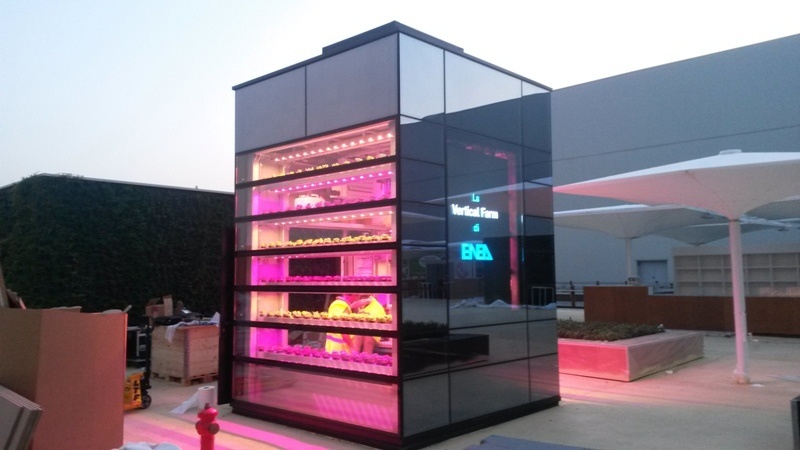
In a world where food security is becoming increasingly challenging, innovative solutions are needed to meet the growing demands of a growing population. The ENEA’s (Italian National Agency for New Technologies, Energy and Economic Development) Vertical Farm at EXPO Milano 2015 is a pioneering project that demonstrates the potential of sustainable food production.
What is a Vertical Farm?
So, why “vertical”? A vertical farm is an indoor agriculture system where plants and crops grow in vertically stacked layers, using hydroponics or aeroponics, without the need for soil. This innovative approach occupies minimal space, can be built in cities, and has the potential to revolutionize the way we produce food.
The ENEA’s Vertical Farm at EXPO Milano
The first Italian prototype of a vertical farm was developed by the Agenzia per le nuove tecnologie, l’energia e lo sviluppo economico sostenibile (ENEA) and presented at EXPO Milano as part of the Future Food District. This cutting-edge facility showcases the latest advancements in sustainable agriculture, incorporating five key areas of research: soil, water, energy, sustainable agriculture, and food security.
Benefits of Vertical Farming
The ENEA’s vertical farm offers several benefits, including:
- Zero land use: plants and crops don’t require soil to grow, reducing the pressure on arable land.
- Zero pesticides: no chemical fertilizers or pesticides are used in this system.
- Zero emissions: the farm produces minimal waste and uses renewable energy sources.
- Tracability: every aspect of the farm’s operations is trackable, ensuring maximum food safety.
The Importance of Sustainable Agriculture
Sustainable agriculture is crucial for addressing global food security challenges. The ENEA’s vertical farm demonstrates that it’s possible to produce high-quality food without depleting natural resources or harming the environment. This approach has significant implications for Italy’s agricultural industry, which has lost over 6 million hectares of arable land in the past 60 years.
Global Challenges and Opportunities
The world faces several pressing challenges related to food production:
- Water scarcity: 70% of global water resources are allocated to agriculture and livestock.
- Energy consumption: the food industry is responsible for around 30% of global energy consumption.
- Climate change: rising temperatures, changing precipitation patterns, and increased frequency of extreme weather events will further strain global food systems.
The Potential Impact of Vertical Farming
As the world’s population continues to grow, the demand for sustainable food production solutions will only increase. The ENEA’s vertical farm at EXPO Milano is a game-changing project that could have far-reaching implications for the future of agriculture:
- Increased crop yields: vertical farming can produce higher yields per acre than traditional farming methods.
- Reduced water consumption: hydroponics and aeroponics use significantly less water than traditional farming methods.
- Improved food safety: every aspect of the farm’s operations is trackable, ensuring maximum food safety and quality.
Case Studies: Successful Implementations of Vertical Farming
While the ENEA’s vertical farm at EXPO Milano is a pioneering project, there are already successful implementations of vertical farming around the world:
- The Green Sense Farm: Located in Ohio, USA, this vertical farm uses hydroponics and aeroponics to produce leafy greens and other crops.
- The Urban Crops: Based in Vancouver, Canada, this company specializes in growing a wide range of crops indoors using hydroponics and aeroponics.
Challenges and Limitations
While vertical farming has many benefits, there are also challenges and limitations that need to be addressed:
- High initial costs: setting up a vertical farm can be expensive, particularly for small-scale operations.
- Energy consumption: while the ENEA’s vertical farm uses renewable energy sources, traditional vertical farms may still consume significant amounts of electricity.
- Scalability: as demand for vertical farming increases, it will be essential to develop more efficient and scalable systems.
Conclusion
The ENEA’s Vertical Farm at EXPO Milano is a pioneering project that demonstrates the potential of sustainable food production. By adopting innovative technologies like hydroponics and aeroponics, we can produce high-quality food while minimizing our environmental footprint. While there are challenges and limitations to vertical farming, the benefits make it an exciting and promising solution for the future of agriculture.
Frequently Asked Questions (FAQs)
- What makes a vertical farm “vertical”?
- Vertical farms use vertically stacked layers to grow plants and crops, maximizing space efficiency.
- How does the ENEA’s vertical farm produce energy?
- The farm uses renewable energy sources like solar panels and wind turbines to power its operations.
- Can vertical farming replace traditional agriculture?
- While vertical farming offers numerous benefits, it is not a replacement for traditional agriculture. Both methods have their own strengths and weaknesses.
- How does the ENEA’s vertical farm ensure food safety?
- Every aspect of the farm’s operations is trackable, ensuring maximum food safety and quality.
- What are some potential applications of vertical farming?
- Vertical farming can be used to produce a wide range of crops, from leafy greens to root vegetables, and even fruits like strawberries and blueberries.
- How does the ENEA’s vertical farm address climate change?
- By reducing energy consumption and minimizing waste, the farm helps mitigate the environmental impacts of agriculture.
- Can I visit the ENEA’s vertical farm?
- The farm is open to visitors during EXPO Milano 2015; however, please note that access may be limited due to high demand.
- What are some potential economic benefits of vertical farming?
- Vertical farming can increase crop yields while reducing water and energy consumption, resulting in significant economic savings for farmers.


