
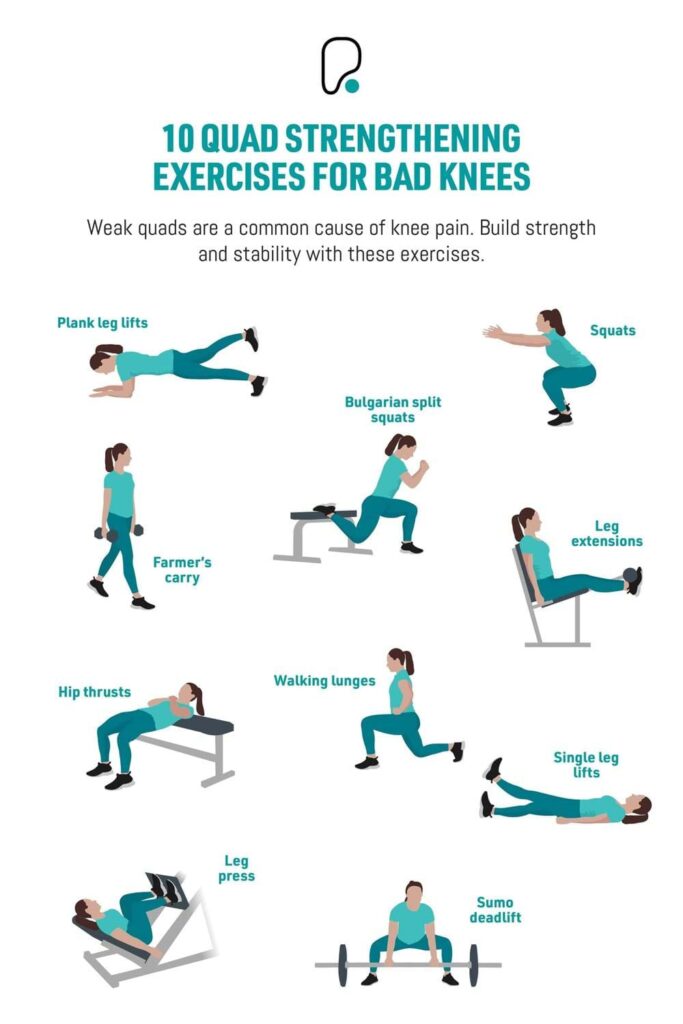
The quadriceps muscle is one of the most powerful muscles in the human body, responsible for extending the knee joint and straightening the legs. It’s a complex muscle made up of four parts: the rectus femoris, vastus medialis, vastus lateralis, and vastus intermedius. The rectus femoris is the largest part of the quadriceps and is responsible for most of its movements.
Understanding the Quadriceps Muscle
The quadriceps muscle plays a crucial role in maintaining balance, stability, and strength in our legs. It’s essential to understand how this muscle works and functions in order to build strong, toned legs. Here are some key facts about the quadriceps muscle:
- The quadriceps muscle is responsible for extending the knee joint, which means it helps straighten the leg.
- The rectus femoris muscle is the largest part of the quadriceps and is responsible for most of its movements.
- The vastus medialis, vastus lateralis, and vastus intermedius muscles work together to extend the knee joint.
- The quadriceps muscle also helps to stabilize the knee joint and maintain balance.
Exercises for Quadriceps
There are numerous exercises that can help strengthen the quadriceps muscle. Here are some of the best ones:
- Squats: This is one of the most effective exercises for strengthening the quadriceps. To perform a squat, stand with your feet shoulder-width apart and slowly lower yourself down into a seated position, keeping your back straight and your knees behind your toes.
- Lunges: Lunges are another excellent exercise for targeting the quadriceps. Stand with your feet together and take a large step forward with one foot. Lower your body down into a lunge position, keeping your front knee at a 90-degree angle and your back knee almost touching the ground.
- Leg Press: This machine allows you to control the amount of weight you’re lifting, making it an excellent choice for building strength in your quadriceps.
- Leg Extensions: These machines allow you to isolate your quadriceps and focus on strengthening them without putting unnecessary strain on other muscles.
- Leg Abductors: This exercise targets the muscle that helps to stabilize the knee joint, making it essential for overall lower body strength.
Equipment-Based Exercises
If you prefer to work out with equipment, there are several machines that can help target the quadriceps. Here are some of the most effective ones:
- Leg Press Machine: This machine allows you to control the amount of weight you’re lifting, making it an excellent choice for building strength in your quadriceps.
- Leg Extension Machine: These machines allow you to isolate your quadriceps and focus on strengthening them without putting unnecessary strain on other muscles.
- Leg Abduction Machine: This exercise targets the muscle that helps to stabilize the knee joint, making it essential for overall lower body strength.
Home Workouts
If you don’t have access to a gym or prefer to work out at home, there are several exercises that can help strengthen your quadriceps:
- Bodyweight Squats: Stand with your feet shoulder-width apart and slowly lower yourself down into a squatting position. Keep your back straight and your knees behind your toes.
- Bodyweight Lunges: Stand with your feet together and take a large step forward with one foot. Lower your body down into a lunge position, keeping your front knee at a 90-degree angle and your back knee almost touching the ground.
Tips for Building Strong Quadriceps
Here are some tips to help you build strong quadriceps:
- Start slowly: Don’t try to do too much too soon. Begin with lower reps and sets and gradually increase them as you become stronger.
- Focus on proper form: Make sure you’re using proper form when performing exercises like squats and lunges. This will help prevent injury and ensure that you’re targeting the right muscles.
- Incorporate variety: Mix up your workout routine to include a variety of exercises and machines. This will help keep your workouts interesting and prevent plateaus.
- Stretch regularly: Make sure to stretch your quadriceps muscles after each workout, as this can help improve flexibility and reduce muscle soreness.
Conclusion
Building strong quadriceps requires patience, dedication, and consistency. By incorporating a variety of exercises into your workout routine and focusing on proper form, you can achieve the strong, toned legs you desire. Remember to start slowly, focus on variety, and incorporate exercises that target multiple muscle groups to build overall lower body strength.
Frequently Asked Questions
- How often should I exercise my quadriceps?
Answer: Aim to exercise your quadriceps 2-3 times per week, with at least one day of rest in between. - What is the best exercise for building strong quadriceps?
Answer: Squats are an excellent exercise for building strong quadriceps. They work multiple muscle groups and can be modified to suit different fitness levels. - Can I build strong quadriceps without going to the gym?
Answer: Yes, you can build strong quadriceps without going to the gym. Bodyweight exercises like squats and lunges are effective ways to target the quadriceps. - How long does it take to see results from exercising my quadriceps?
Answer: The amount of time it takes to see results from exercising your quadriceps depends on various factors, including your starting fitness level, consistency, and overall diet. However, with consistent exercise and proper nutrition, you can start to notice improvements in strength and tone within 4-6 weeks. - Can I get injured if I don’t do squats?
Answer: Yes, it is possible to injure yourself if you don’t do squats or perform them incorrectly. Squats are a compound exercise that target multiple muscle groups, including the quadriceps, hamstrings, and glutes. If not done correctly, they can put unnecessary strain on these muscles, leading to injury.
Common Injuries
Squats and lunges can be high-risk exercises for certain individuals, particularly those who have pre-existing injuries or health conditions. Here are some common injuries that may occur when performing squats and lunges:
- Patellofemoral pain syndrome: This is a condition that causes pain in the front of the knee, specifically around the patella (kneecap). It’s often caused by repetitive strain on the knee joint.
- Meniscal tears: The menisci are cartilage structures in the knee joint that help absorb shock and distribute pressure. Tears in the menisci can cause pain and stiffness in the knee.
- Ligament sprains: The ligaments in the knee joint provide stability and support to the bone. Sprains or strains of these ligaments can cause pain and stiffness in the knee.
Prevention Strategies
To minimize the risk of injury when performing squats and lunges, follow these prevention strategies:
- Warm up properly: Before starting any exercise routine, make sure to warm up with light cardio and dynamic stretching.
- Focus on proper form: Make sure to use proper form when performing exercises like squats and lunges. This will help prevent injury and ensure that you’re targeting the right muscles.
- Start slowly: Don’t try to do too much too soon. Begin with lower reps and sets and gradually increase them as you become stronger.
- Incorporate variety: Mix up your workout routine to include a variety of exercises and machines. This will help keep your workouts interesting and prevent plateaus.
Conclusion
Building strong quadriceps requires patience, dedication, and consistency. By incorporating a variety of exercises into your workout routine and focusing on proper form, you can achieve the strong, toned legs you desire. Remember to start slowly, focus on variety, and incorporate exercises that target multiple muscle groups to build overall lower body strength.


