
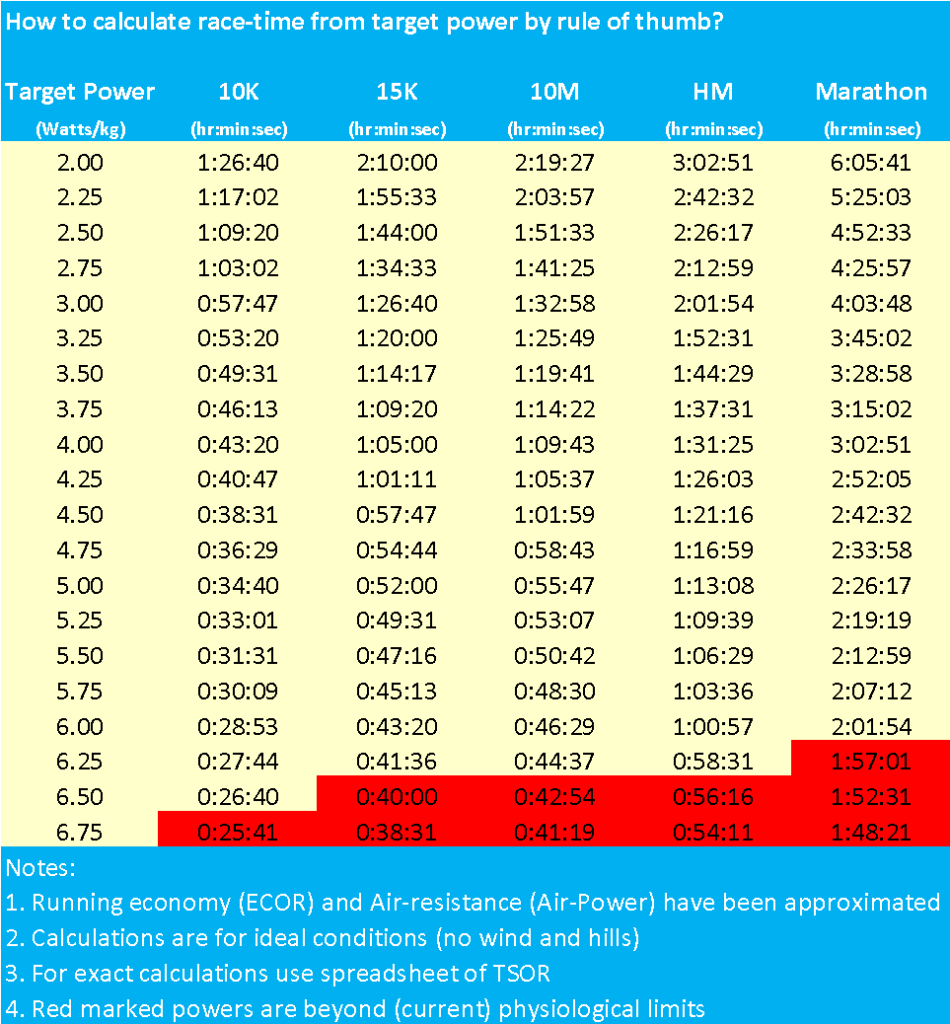
As an athlete participating in a competition, calculating and estimating your race time is crucial. The estimation of your performance on a distance different from the one you normally run can be challenging, but there are formulas and tools available to help you achieve this goal.
Understanding the Challenges of Estimating Your Race Time
One of the main challenges in estimating your race time is taking into account factors such as terrain incline, density of participants at the starting line, temperature, and ground conditions. To overcome these challenges, athletes can use formulas that adjust their performance based on these variables.
The Riegel Formula: A Tool for Estimating Your Race Time
In 1977, Riegel developed a formula to estimate race times based on an athlete’s performance on a specific distance. The formula is as follows:
T2 = T1 * (D2 / D1) ^ 1.06
This formula can be used to calculate your estimated race time by taking into account the following factors:
- Time taken on a familiar distance (T1): the time it takes you to complete a specific distance during training
- Familiar distance (D1): the distance at which you performed in T1
- Target distance (D2): the distance for which you want to estimate your race time
For example, let’s say you have completed a 5K run in 25 minutes. If you are training for a 10K, using the Riegel formula would look like this:
T2 = 25 * (10 / 5) ^ 1.06
T2 = 25 * 2 ^ 1.06
T2 = 25 * 2.16
T2 = 54 minutes
So in this example, your estimated race time for the 10K would be approximately 54 minutes.
Using Our Calculator: A Convenient Tool for Estimating Your Race Time
To make it easier for you to calculate your estimated race time, we have created a calculator that can be used with minimal input. Simply enter your performance on a familiar distance, and our calculator will provide you with an estimate of your target race time.
Comparing the Riegel Formula with Garmin’s Race Predictor
We compared the results from our calculator using the Riegel formula with those provided by Garmin’s Race Predictor, which is available on their GPS watches. The comparison showed that both methods produced similar estimates for a specific distance and pace.
However, when it came to estimating your performance on different distances and paces, we found that some of our estimates were overly optimistic compared to the actual results.
The Importance of Using Multiple Tools and Evaluating Results
While formulas and tools like Garmin’s Race Predictor can provide valuable insights into your performance, they are not a substitute for personal evaluation and reflection. It’s essential to take a closer look at your own strengths, weaknesses, and areas for improvement to get an accurate estimate of your race time.
Using the 10x Rule
Another formula used by athletes is the 10x rule. This rule states that you can increase your running speed by multiplying it by 10x when training on a specific distance. For example, if you are able to run a certain distance at a normal pace in 25 minutes, then with the 10x rule, you should be able to run the same distance at a faster pace of approximately 12:30 minutes.
Training Programs Based on Estimated Race Time
One of the most important things to consider when calculating your race time is training. A well-structured training program can help you achieve an accurate estimate of your performance and improve your overall fitness level.
There are many different types of training programs available, including interval training, hill sprints, and long runs. It’s essential to choose a training program that aligns with your goals and allows for adequate recovery time.
Nutrition and Hydration
In addition to training, nutrition and hydration play an important role in achieving an accurate estimate of your race time. Proper nutrition can help you maintain energy levels throughout the run, while adequate hydration can prevent dehydration and improve performance.
It’s essential to experiment with different types of food and drinks during training to determine what works best for you. For example, some athletes may find that consuming complex carbohydrates about 1-2 hours before a run helps them perform better, while others may prefer a balanced meal.
Mental Preparation
Mental preparation is an often overlooked aspect of athletic performance. It’s essential to develop strategies to manage stress and anxiety during competition, as well as stay motivated and focused throughout the run.
One effective strategy for mental preparation is visualization. This involves imagining yourself running at your best pace and performing well on race day. Visualization can help build confidence and improve performance by allowing you to mentally rehearse success.
Conclusion: Estimating Your Race Time Requires a Combination of Formulaic Calculations and Personal Evaluation
In conclusion, calculating and estimating your race time requires a combination of formulaic calculations and personal evaluation. By using formulas like the Riegel formula, tools like Garmin’s Race Predictor, and taking into account individual factors such as terrain incline, density of participants at the starting line, temperature, and ground conditions, you can make more accurate estimates of your performance on different distances.
Frequently Asked Questions (FAQs)
- What is the Riegel formula used for?
- The Riegel formula is a tool used to estimate race times based on an athlete’s performance on a specific distance.
- How does Garmin’s Race Predictor work?
- Garmin’s Race Predictor uses data from your GPS watch and personal performance metrics to estimate your target pace and finish time for a specific distance.
- What are some factors that can affect the accuracy of my estimated race time?
- Factors such as terrain incline, density of participants at the starting line, temperature, and ground conditions can impact the accuracy of your estimated race time.
- Can I use the Riegel formula to estimate my performance on different distances and paces?
- While the Riegel formula is useful for estimating your target pace for a specific distance, it may not be as accurate when applied to different distances or paces.
-
What other tools can I use to estimate my race time?
- In addition to the Riegel formula and Garmin’s Race Predictor, there are various other tools available that can help you estimate your performance on different distances and paces.
-
How often should I update my training plan based on the accuracy of my estimated race time?
- Regularly reviewing and updating your training plan will enable you to make adjustments to ensure you stay on track to meet your racing goals.
-
What role does mental preparation play in achieving a better performance during races?
- Mental preparation plays an important role in improving your overall performance, allowing you to push through challenges, and remain focused under pressure.
-
How can I balance my training program with the need for recovery time?
- A well-balanced training program that includes adequate recovery time is essential to avoid injury, maintain progress, and ensure long-term success as an athlete.
-
What types of training programs are available for athletes?
-
There are many different types of training programs available, including interval training, hill sprints, and long runs.
-
How can I improve my nutrition and hydration during competition?
- Proper nutrition and hydration are essential to achieving optimal performance during competition. Experiment with different types of food and drinks during training to determine what works best for you.
-
What is the role of visualization in mental preparation?
- Visualization involves imagining yourself running at your best pace and performing well on race day, helping build confidence and improve performance by allowing you to mentally rehearse success.


