
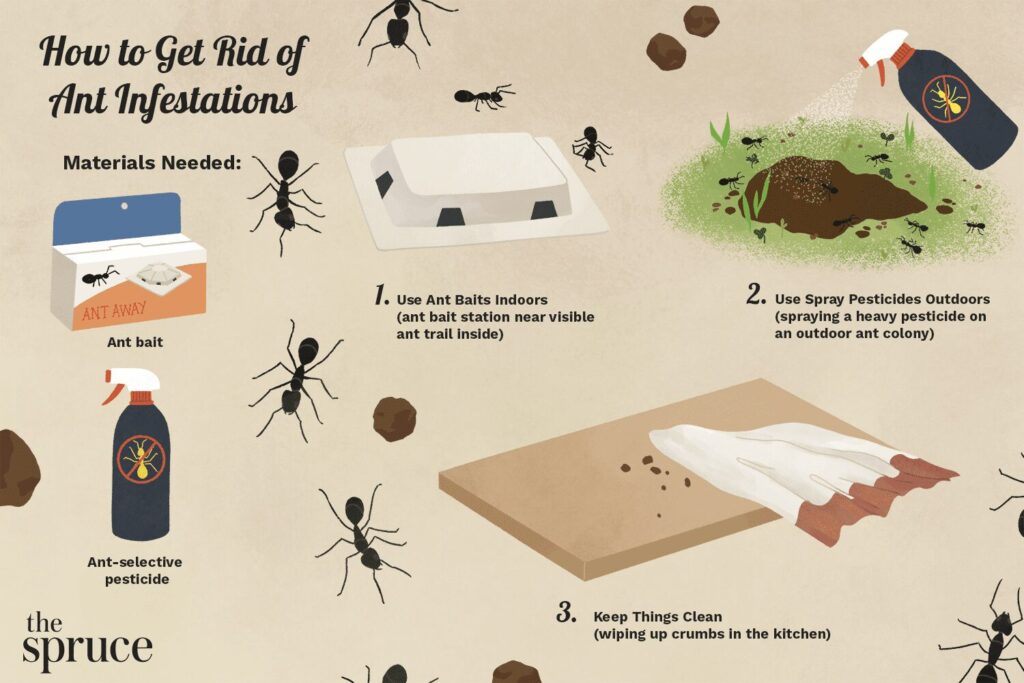
When you least expect it, your home can be invaded by unwanted guests – ants. While using an insecticide might seem like a quick fix, is it really the best solution? In fact, many insecticides are harmful to humans and the environment.
Before we dive into getting rid of them, let’s talk about what attracts these little critters in the first place. Ants are omnivores, which means they’re drawn to sweet substances like sugar and honey. So, it’s essential to take steps to eliminate any food sources that might be attracting them. This includes closing tight containers of sugar, covering honey with plastic wrap, removing standing water around the house, and cleaning up crumbs and spills promptly.
If the infestation persists, here are some natural remedies to help get rid of ants in your home.
Understanding Ants
Ants have an incredibly developed sense of smell, but surprisingly, they hate strong odors! This knowledge can be used to our advantage when trying to repel them. For example, using peppermint oil or cinnamon can be an effective way to keep ants away from certain areas of the home.
Pepper: A Natural Deterrent
One effective way to repel ants is by using pepper. Sprinkle pepper powder at the entry points where you think ants are entering your home. The capsaicin in pepper can be a potent deterrent for these little critters. Ants are highly sensitive to the heat of peppers, and when they encounter it, they will quickly leave the area.
To make pepper a more effective deterrent, try mixing it with water to create a spray solution. Spray this solution on surfaces where ants are present or near entry points to keep them away. The acidity in the mixture will also help break down any pheromone trails that might be attracting ants.
Cleaning and Eliminating Food Sources
- Create a solution of two tablespoons of dish soap mixed with one liter of water in a spray bottle.
- Spray this solution near windows, doors, and cracks to eliminate any pheromone trails that might be attracting ants.
- Clean up crumbs, spills, and sticky residue promptly to remove potential food sources.
Acetic Acid: A Natural Insecticide
Mix equal parts white vinegar and water in a spray bottle. Spray this solution on countertops, floors, and surfaces where ants are present. Ants hate the acidity of acetic acid and will quickly leave your space. This method is effective because it not only repels ants but also breaks down their exoskeletons.
To make this solution even more effective, try adding a few drops of tea tree oil or peppermint oil to the mixture. These oils have natural antibacterial properties that can help prevent future infestations.
Eucalyptus Oil: A Natural Ant Repellent
Combine five milliliters of cajeput oil with five milliliters of eucalyptus oil in a small bowl. Add twenty milliliters of ethanol (100 proof) to the mixture. Shake well and store in a spray bottle.
- Spray this solution directly on ants or areas where ants are present to repel them.
- Use as a natural ant repellent and deodorizer for your home.
Sealing Entry Points
- Caulk cracks and crevices around windows, doors, and pipes.
- Seal gaps under appliances and baseboards using silicone sealant.
By sealing entry points, you can prevent ants from entering your home in the first place. This method is especially effective when combined with natural deterrents like pepper or acetic acid.
Using Ants to Your Advantage (Sort of)
If you live in a garden, ants can be beneficial in cleaning up small animal carcasses. However, if you want to get rid of them from your home, it’s best to take measures to keep them out. For example, try using natural ant repellents like citronella or lemongrass oil around the perimeter of your home.
These oils have a strong scent that can repel ants and other pests, making them an effective way to deter these unwanted critters from entering your home.
Conclusion
Getting rid of ants in your home requires patience and persistence. By eliminating food sources, using natural deterrents like pepper, acetic acid, and eucalyptus oil, and sealing entry points, you can keep these unwanted critters at bay. Remember, it’s all about creating an ant-unfriendly environment.
Frequently Asked Questions
- What are the best ways to get rid of ants in my home?
- Eliminate food sources by cleaning up crumbs, spills, and sticky residue.
- Use natural deterrents like pepper, acetic acid, and eucalyptus oil.
- Seal entry points using caulk or silicone sealant.
- How long does it take to get rid of ants in my home?
- The time it takes to get rid of ants depends on the severity of the infestation and the effectiveness of your treatment method.
- It may take several days to a week or more to completely eliminate an ant colony.
- Are there any natural ant repellents that work well?
- Yes, there are several natural ant repellents that have shown promise in keeping ants away from homes. These include pepper, acetic acid, eucalyptus oil, and cinnamon.
-
Can I use insecticides to get rid of ants in my home?
- While insecticides can be effective against ants, they can also harm humans and the environment. It’s generally recommended to use natural deterrents instead.
-
What are some common signs that an ant infestation is present in my home?
- Signs of an ant infestation may include:
- Small ants or ant trails on surfaces.
- Droppings (small, dark specks).
- Sweet-smelling substances like sugar or honey.
- Signs of an ant infestation may include:
- How do I prevent ants from entering my home?
- To prevent ants from entering your home:
- Seal all cracks and crevices around windows, doors, and pipes.
- Clean up crumbs, spills, and sticky residue promptly.
- Store food in sealed containers.
- To prevent ants from entering your home:
By taking these steps, you can effectively get rid of ants in your home and create an ant-unfriendly environment.


