
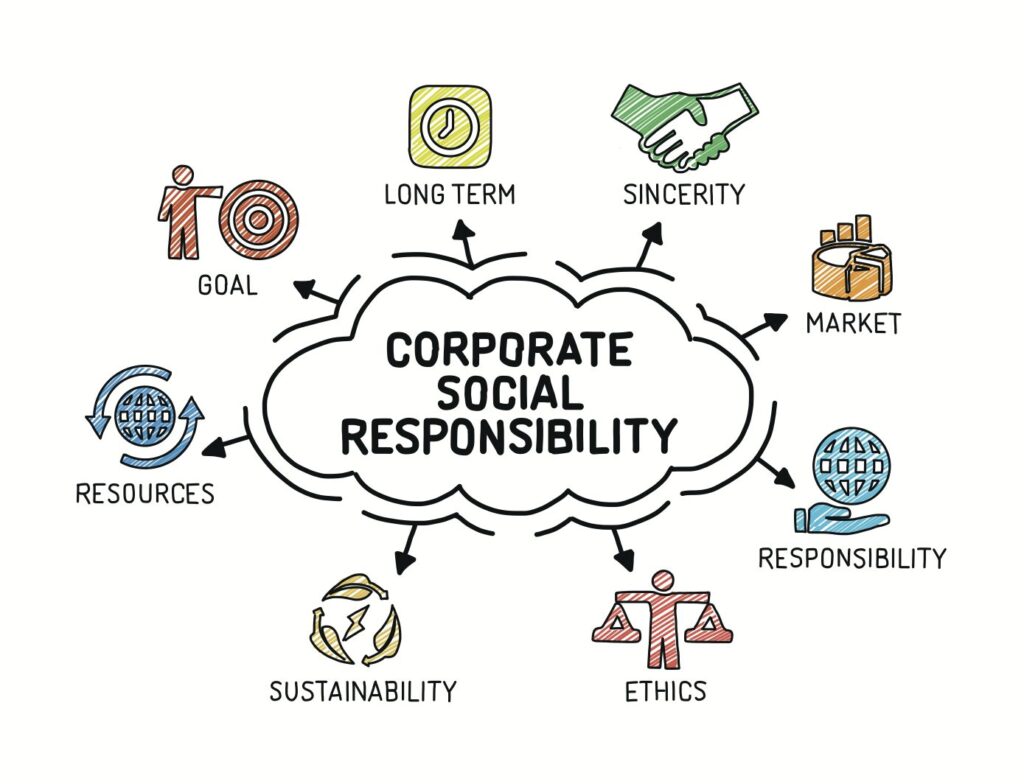
As the world grapples with the challenges of climate change, social inequality, and economic instability, companies are being forced to rethink their approach to business. In this era of increasing sustainability expectations, the concept of Corporate Social Responsibility (CSR) has become a buzzword in the corporate world.
But can CSR and sustainability be synonymous? While there is some overlap between the two terms, they are not interchangeable. Sustainability encompasses environmental, social, and economic dimensions, whereas CSR specifically refers to an organization’s commitment to integrating business operations with socially responsible practices.
The Growing Importance of CSR
In recent years, companies in Italy have been shifting their focus towards CSR as a means of staying competitive in the market. The trend is driven by increasing consumer demand for sustainable products and services, as well as the need for organizations to demonstrate their social responsibility.
A prime example of this shift can be seen at Il Salone della CSR e dell’innovazione sociale, an annual event held in Milan that brings together businesses, NGOs, and government representatives. What was once a niche gathering has grown into a significant industry, with over 140 companies participating in the 2016 edition.
The Evolution of Communication and Stakeholder Engagement
As companies adopt a more sustainable approach to business, their communication strategies must also evolve. No longer can simply declaring intentions or principles be enough; organizations must demonstrate concrete actions that align with their CSR goals.
Effective stakeholder engagement is crucial for CSR success. Companies must choose the right channels to reach their target audience and involve them in the decision-making process. By doing so, they can build trust and credibility, which are essential for long-term sustainability.
The Role of Certifications and Reporting
In today’s digital age, having transparent and accurate reporting systems is crucial for CSR success. Certifications such as Social Accountability Certification (SAC) and B Corp certification demonstrate an organization’s commitment to social responsibility.
Additionally, companies must also adopt a “culture of transparency,” where they provide regular updates on their sustainability performance and progress towards their CSR goals. This can be achieved through various tools, including annual reports, sustainability dashboards, and stakeholder engagement platforms.
The Benefits of Implementing CSR
Implementing CSR can bring numerous benefits to organizations, including:
- Increased brand reputation: By demonstrating a commitment to social responsibility, companies can build trust with their customers and stakeholders.
- Improved operational efficiency: CSR initiatives often lead to cost savings and process improvements, making businesses more efficient.
- Access to new markets: Companies that prioritize sustainability are better positioned to tap into emerging markets and consumer segments.
- Talent attraction and retention: CSR-conscious organizations attract top talent and retain existing employees who share their values.
The Challenges of Implementing CSR
While the benefits of implementing CSR are numerous, there are also several challenges that organizations must overcome:
- Resource allocation: Integrating CSR into business operations requires significant resources, including personnel, budget, and infrastructure.
- Stakeholder engagement: Engaging stakeholders and building trust is a critical aspect of CSR success.
- Measuring progress: Evaluating the effectiveness of CSR initiatives can be challenging, requiring specialized tools and methodologies.
- Balancing economic and social goals: Companies must balance their economic objectives with their social responsibility commitments.
The Future of Corporate Social Responsibility
As the business landscape continues to evolve, CSR will play an increasingly important role in driving innovation and growth. Companies that have successfully integrated social responsibility into their operations are more likely to experience improved performance and increased competitiveness.
Moreover, the rise of Benefit Corporations – a new model of entrepreneurship that prioritizes environmental and social impact alongside economic returns – signals a significant shift towards a more sustainable business model.
Case Studies: Successful CSR Implementations
- Patagonia: The outdoor apparel company has been at the forefront of sustainability efforts, using environmentally-friendly materials and manufacturing processes.
- Unilever: The consumer goods giant has set ambitious targets for reducing its environmental impact, including a 100% renewable energy supply by 2030.
- Microsoft: The technology company has prioritized diversity and inclusion initiatives, aiming to create a more inclusive workplace culture.
Conclusion
In conclusion, Corporate Social Responsibility is no longer just a buzzword; it has become an essential aspect of modern business. As companies continue to evolve and adapt to changing market conditions, their communication strategies, stakeholder engagement approaches, and reporting systems must also keep pace with this shift towards sustainability.
By embracing CSR and adopting a more holistic approach to business, organizations can unlock new opportunities for growth, innovation, and long-term success. The future of corporate social responsibility is bright – but it requires a fundamental transformation of the way businesses operate.
Frequently Asked Questions (FAQs)
- What is Corporate Social Responsibility (CSR)?
Corporate Social Responsibility (CSR) refers to an organization’s commitment to integrating business operations with socially responsible practices, encompassing environmental, social, and economic dimensions.
- Can CSR and sustainability be synonymous?
While there is some overlap between the two terms, CSR specifically refers to a company’s commitment to socially responsible practices, whereas sustainability encompasses broader environmental, social, and economic considerations.
- What role does communication play in CSR success?
Effective stakeholder engagement and transparent reporting are crucial for CSR success. Companies must choose the right channels to reach their target audience and involve them in the decision-making process.
- How can companies measure and report on their sustainability performance?
Companies can use various tools, including annual reports, sustainability dashboards, and stakeholder engagement platforms, to demonstrate their commitment to social responsibility and sustainability.
- What is the role of certifications and reporting in CSR success?
Certifications such as Social Accountability Certification (SAC) and B Corp certification demonstrate an organization’s commitment to social responsibility, while regular reporting systems help build trust and credibility with stakeholders.
- How can companies integrate social responsibility into their operations?
Companies must adopt a more holistic approach to business, incorporating environmental, social, and economic considerations into their decision-making processes.
- What is the future of corporate social responsibility?
CSR will play an increasingly important role in driving innovation and growth as businesses continue to evolve and adapt to changing market conditions.
- How can companies prioritize stakeholder engagement in their CSR efforts?
Companies must choose the right channels to reach their target audience and involve them in the decision-making process, building trust and credibility through regular communication and transparency.


