
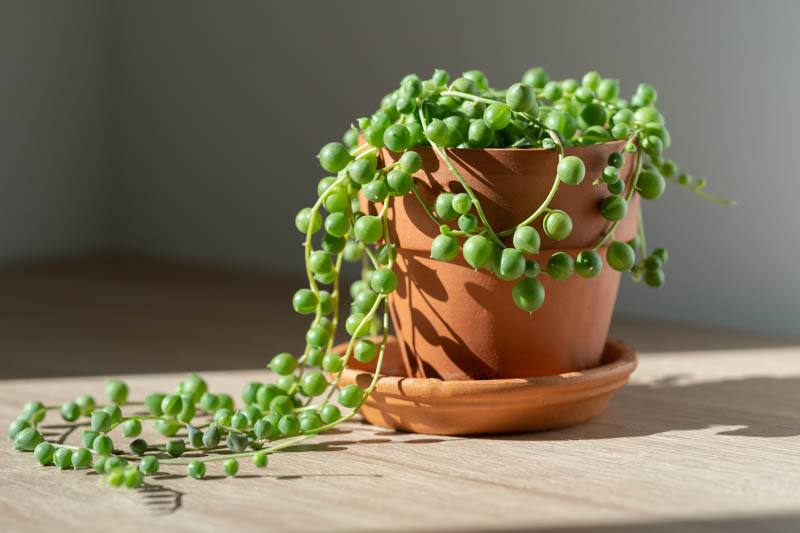
As we welcome the changing seasons, many of us turn our attention to indoor gardening. One popular choice is the striking Senecio rowleyanus, also known as “String of Pearls” or “Ponytail Cactus.” This versatile succulent has captured hearts with its delicate, pear-shaped leaves and versatility in design. But what makes this plant so special? And how can we care for it to bring out its full beauty?
What is Senecio Rowleyanus?
Belonging to the Asteraceae family and Asteroideae subfamily, Senecio rowleyanus is a unique species with over 1,500 varieties. Its name “Senex” comes from the Latin word for “old man,” referring to its mature fruit’s white hairs resembling a wispy beard. This plant is native to South Africa but has been widely cultivated globally due to its adaptability.
Description and Characteristics
Senecio rowleyanus is easily recognizable by its:
- Stem: Thin, pendulous, ramosed, and stridulating stems that can reach up to 90 cm in length.
- Leaves: Small, round, and smooth, measuring approximately 6 mm in diameter. Leaves may vary in color, ranging from green to variegated, with white or yellow stripes.
- Fruit: Mature fruit features a white beard-like hair.
Growing Conditions
This succulent is relatively easy to care for, requiring minimal maintenance but attention during specific seasons:
- Lighting: Can thrive both indoors and outdoors, adapting well to partial shade or full sun. Be cautious of intense direct sunlight that may cause the leaves to become scorched.
- Temperature: Avoid exposing the plant to extreme temperature fluctuations. Keep it away from frosty windowsills and maintain a consistent indoor temperature between 65-75°F (18-24°C).
- Watering: Water sparingly, only when the soil is dry to the touch. Reduce watering in winter months as the plant enters dormancy.
Propagation: A Simple Process
Propagating Senecio rowleyanus through stem cutting is a straightforward process that requires minimal equipment and effort:
- Choose healthy stems with at least two nodes.
- Cut the stems at an angle, using a clean, sharp knife or pruning tool.
- Remove lower leaves to prevent moisture loss and promote rooting.
- Plant the cut ends in well-draining potting mix, gently firming the soil around each stem.
- Water sparingly until roots develop, which may take several weeks.
Tips for Successful Propagation
To increase the chances of successful propagation:
- Use fresh, healthy stems to minimize the risk of root rot and other complications.
- Ensure the potting mix is well-draining to prevent waterlogged soil that may lead to root decay.
- Keep the cut ends moist but not waterlogged during the rooting process.
Common Problems and Solutions
If you encounter any issues with your Senecio rowleyanus, here are some common problems and their solutions:
- Overwatering: Reduce watering frequency and ensure good drainage to prevent root rot. If affected, remove infected roots and repot the plant in fresh potting mix.
- Underwatering: Water more frequently during dry periods, but avoid overwatering that can cause damage.
A Different Succulent: Cineraria Cruenta
While we’ve explored the charms of Senecio rowleyanus, another captivating succulent deserves attention. Cineraria cruenta, also known as “Blood Sedum” or “Scarlet Sedum,” boasts vibrant, colorful flowers and striking foliage.
- Appearance: Features upright rosettes with silvery-gray leaves adorned with powdery white dots. Flowers appear in shades of blue, yellow, red, and white.
- Flowering Period: Blooms from spring to summer, providing a burst of color for your indoor or outdoor space.
- Cultivation: Prefers full sun exposure, making it an ideal choice for bright windowsills.
Growing Cineraria Cruenta
To cultivate this succulent successfully:
- Provide direct sunlight for at least four hours a day to promote healthy growth and flowering.
- Water sparingly during the growing season (spring-fall), allowing the soil to dry out slightly between waterings.
- Reduce watering in winter months when the plant enters dormancy.
- Fertilize lightly with a balanced fertilizer during the growing season to encourage healthy growth.
Conclusion
Senecio rowleyanus is more than just a beautiful succulent; its unique features and adaptability make it an excellent addition to any indoor or outdoor garden. By understanding the proper care and propagation methods outlined in this guide, you can enjoy the beauty of this captivating plant.
Frequently Asked Questions:
- Can I grow Senecio rowleyanus outdoors?
- Yes, but ensure protection from extreme temperatures and frosty winds.
- How often should I water my Senecio rowleyanus?
- Water sparingly, allowing soil to dry before rehydrating.
- Is it challenging to propagate Senecio rowleyanus?
- No, stem cutting is a simple process that yields successful results.
- Can I grow Cineraria cruenta indoors?
- Yes, this succulent thrives in bright, sunny windowsills with proper care.
- Are there any potential health concerns associated with Senecio rowleyanus or Cineraria cruenta?
- None known, but ensure your plants receive adequate light and water to maintain optimal health.
By embracing the fascinating world of succulents and understanding their unique needs, you can create a stunning indoor garden that brings joy and serenity into your life.


