
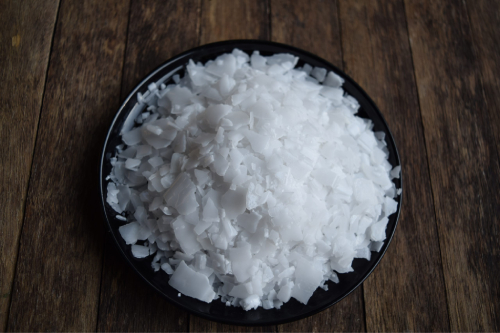
Soda caustica, also known as sodium hydroxide, is a strong mineral base that appears solid at room temperature but absorbs and deliquesces in high humidity. It’s commonly sold in the form of white beads called “pearls” of soda caustica, pastilles, or powder. However, not all soda caustic products are created equal; some may contain impurities due to the production process.
Formula of Soda Caustic
The chemical formula for sodium hydroxide is NaOH, which develops heat when dissolved in water. When mixed with organic solvents like ethanol, it can ignite vapors and create excessive heat, so it’s best to avoid mixing these substances altogether.
Sodium hydroxide has a pH level of around 14 (at 20°C) due to its strong alkaline properties. A solution made from 50 grams of soda caustic dissolved in one liter of water will have this high pH level.
What is Soda Caustic Used For?
Soda caustic is used across various industries, both domestic and industrial. In the home, it’s commonly used as a degreaser for clogged pipes and drains. It’s also used to make homemade soap by replacing traditional ingredients like ash. Its versatility makes it useful in many sectors:
- Industrial applications: It serves as a reagent in the production of colorants, detergents, soaps, paper, fabrics, candies, and more.
- Alimentary use: In Scandinavian cuisine, soda caustica is used to make lutefisk, while German tradition employs it in making Brezel (or Prezels). It also appears as an ingredient for olive processing, helping remove bitterness from green olives. The product containing E 524 on labels signifies its use as a food additive.
- Brewing: Some wineries utilize soda caustica to clean cisterns free of residue.
Where Can I Buy Soda Caustic?
The availability of soda caustic is quite high, and it’s easy to find in hardware stores, home improvement shops, online retailers, or through a number of local dealers. You can even purchase it by the kilogram from various online sellers at around 8 euro including shipping costs.
Where Can I Buy Soda Caustic for Food Use?
The availability of food-grade soda caustica is somewhat lower than that of its industrial counterpart, though still accessible through specialty stores, such as baking supply stores or food processing suppliers. The requirement for a pure and undiluted product makes it difficult to find a reputable seller who can guarantee the highest quality.
How to Use Soda Caustic
Using soda caustica is quite simple; however, certain safety precautions should be taken. When working with this substance:
- Always follow the instructions on the packaging.
- Wear protective gloves and eye gear.
- Keep away from children and pets.
- Clean up spills immediately.
Using Soda Caustic for Home Tasks
Here are some ways to use soda caustica in your home:
- Cleaning clogged pipes: Pour a generous amount of soda caustica down the pipe, let it sit for 30 minutes before rinsing with hot water.
- Making homemade soap: Replace traditional ash ingredients with soda caustic to make a more alkaline soap.
- De-bittering olives: Soak green olives in an acidic liquid containing soda caustica.
Safety Precautions for Soda Caustica
The safety information provided by the Ministry of Environment and Protection of the Territory and Marine is presented below.
- Use the product in a well-ventilated area.
- Wear protective gloves, goggles, and clothing to protect against skin contact and eye irritation.
- In case of skin contact: rinse thoroughly with water and neutralize with baking soda or lime water. If necessary, consult a medical professional.
- In case of eye exposure: flush eyes with plenty of water for 15 minutes, then seek medical attention if irritation persists.
FAQs
Here are some frequently asked questions about soda caustica:
Q: What is the primary use of soda caustic in industrial applications?
A: Soda caustic serves as a reagent and de-grader, used to create products like detergents, soaps, and paper.
Q: Can I use soda caustic for washing dishes?
A: Due to its corrosive properties, it is not recommended for dishwashing purposes. However, you can use it to clean clogged pipes with caution and thorough rinsing afterward.
Q: What are the safety precautions when handling soda caustica?
A: When working with soda caustic, make sure to wear protective clothing, eye gear, and gloves, keep away from children and pets, follow instructions on packaging, and clean up spills immediately.
Q: How can I remove bitterness from green olives using soda caustica?
A: To de-ammarize olives with soda caustica, soak them in an acidic liquid for a few days before rinsing thoroughly to achieve the desired effect.
Q: Can I use food-grade soda caustica as a substitute for traditional ingredients like ash when making homemade soap?
A: Yes, but it’s recommended to follow a recipe specifically designed for using sodium hydroxide.
Q: Is soda caustic safe to use around children and pets?
A: Due to its corrosive properties, it is not recommended to leave soda caustica unattended near children or pets. Always supervise usage and take necessary precautions to prevent accidents.
Q: What are the potential environmental impacts of using soda caustica in industrial applications?
A: Although sodium hydroxide itself has a minimal environmental impact, its use can lead to unintended consequences, such as contamination of water sources or soil pollution, if not handled correctly. Proper disposal and recycling practices must be implemented.
Q: Can I find food-grade soda caustic at local markets or grocery stores?
A: Due to the high purity requirements for sodium hydroxide in food products, it is less likely to be found at regular markets or grocery stores without proper labeling as a food additive.


