
Introduction
Are you fascinated by the unique beauty of the Hydrangea petiolaris, also known as the rampicante? This rambling plant has captivated gardeners and botanists alike with its striking flowers and fascinating history. In this article, we’ll delve into the world of the Hydrangea petiolaris, exploring its origins, characteristics, care requirements, and cultivation tips.
Origins
The Hydrangea petiolaris is native to the forests of Japan, Korea, and eastern Russia. Its scientific name is a testament to its connection with other hydrangea species: Hydrangea petiolaris. Interestingly, this plant is also considered a subspecies of Hydrangea anomala in China, highlighting the similarities between these two unique hydrangeas.
Visual Identification
To distinguish between the Hydrangea petiolaris and its relative, the Hydrangea anomala, let’s examine some key visual features:
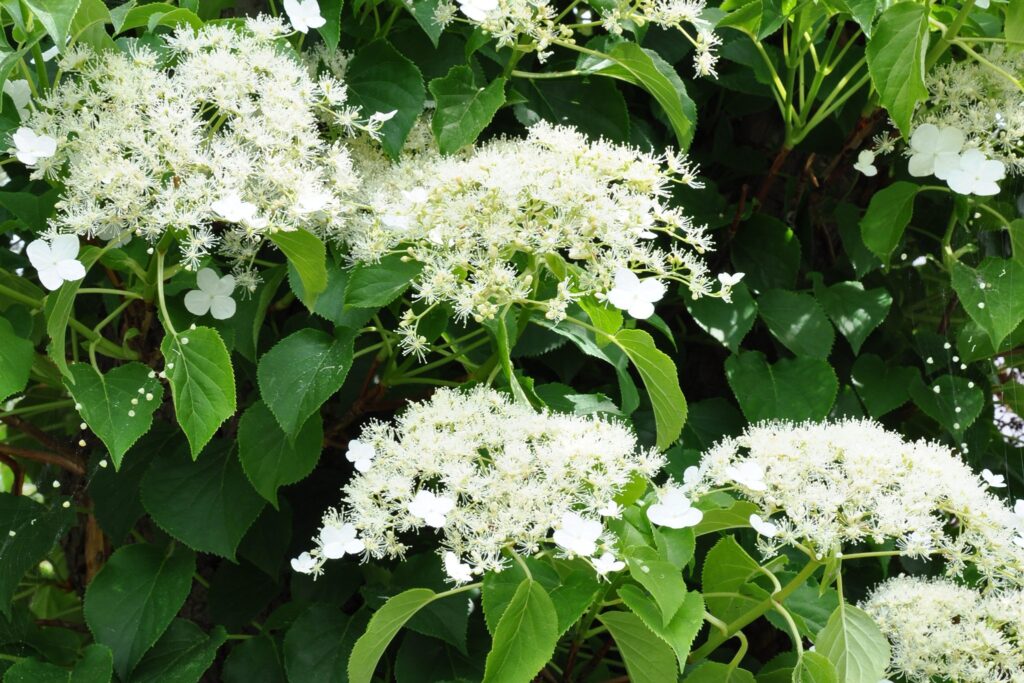
- Inflorescence: The first image shows an immature inflorescence of Hydrangea anomala, while the second image displays a mature inflorescence of the Hydrangea petiolaris.
- Foliage: Both plants have deciduous leaves with oval shapes. However, the Hydrangea petiolaris has larger leaves (up to 10 cm long) compared to the Hydrangea anomala (4-6 cm).
- Flowers: The inflorescence of the Hydrangea petiolaris has a diameter of 15-25 cm, with small white flowers at the periphery and tiny fertile central flowers.
Cultivation
The Hydrangea petiolaris is an adaptable plant that can thrive in various environments. It prefers a temperate climate with moderate temperatures, making it suitable for cultivation in northern Italy. In contrast, the Hydrangea anomala prefers shadier conditions, while the Hydrangea petiolaris flourishes in full sun or partial shade.
Terrestrial Cultivation
When cultivating in full ground, ensure the following:
- Soil: Choose a well-draining soil with medium texture and good fertility.
- Watering: Water infrequently (1-2 times a week) during the growing season.
- Fertilization: Apply organic fertilizers like compost or manure once or twice a year.
Container Cultivation
For container cultivation, follow these guidelines:
- Soil: Use a well-draining potting mix with good fertility.
- Watering: Water frequently (daily) during the growing season.
- Fertilization: Apply liquid fertilizer rich in phosphorus and potassium from March to September.
Pruning
Regular pruning is essential for maintaining the Hydrangea petiolaris’s shape and promoting healthy growth. Prune the plant in late winter or early spring, removing any dead or damaged branches.
Propagation
Propagating the Hydrangea petiolaris can be done through stem cuttings, layering, or division. Here are some methods:
- Stem Cuttings: Take 10-15 cm long stems in the spring or summer and plant them in a moist potting mix. Keep the soil consistently moist until roots develop.
- Layering: Bend a long stem down to the ground and secure it with a rock or a U-shaped wire. Cover the buried part of the stem with soil and wait for roots to form.
- Division: Divide established plants in the spring or fall, making sure each division has at least one set of leaves.
Pest and Disease Management
Regular monitoring is crucial for preventing pest and disease issues:
- Pests: Keep an eye out for aphids, spider mites, and scale insects. Use neem oil or insecticidal soap to control infestations.
- Diseases: Inspect plants regularly for signs of fungal diseases like powdery mildew and leaf spot. Apply fungicides if necessary.
Common Varieties
Several varieties of Hydrangea petiolaris are available, each with its unique characteristics:
- ‘Mikawa Yukino’: A compact variety with small white flowers and dark green leaves.
- ‘Kusumono’: A semi-compact variety with large white flowers and pale green leaves.
Conclusion
The Hydrangea petiolaris is a captivating rambling plant with unique characteristics. By understanding its origins, visual features, care requirements, and cultivation tips, you can successfully cultivate this remarkable plant in your garden.
Frequently Asked Questions
- What is the ideal climate for cultivating Hydrangea petiolaris?
- The Hydrangea petiolaris thrives in a temperate climate with moderate temperatures.
- How often should I water my Hydrangea petiolaris in container cultivation?
- Water your Hydrangea petiolaris in container cultivation daily during the growing season.
- What type of fertilizer should I use for cultivating Hydrangea petiolaris?
- Use liquid fertilizers rich in phosphorus and potassium for optimal growth.
- Can I grow Hydrangea petiolaris in full shade?
- No, the Hydrangea petiolaris prefers full sun or partial shade for optimal growth.
- How often should I prune my Hydrangea petiolaris?
- Prune your Hydrangea petiolaris regularly to maintain its shape and promote healthy growth.
- Can I grow Hydrangea petiolaris in northern Italy?
- Yes, the Hydrangea petiolaris can thrive in northern Italy’s temperate climate.
- How do I care for my Hydrangea petiolaris during winter?
- Reduce watering and fertilization during the winter months, as the plant is dormant.
- Can I propagate Hydrangea petiolaris by cuttings?
- Yes, you can propagate Hydrangea petiolaris using stem cuttings in the spring or summer.
By following these guidelines, you’ll be well on your way to cultivating a thriving and beautiful Hydrangea petiolaris in your garden.


