
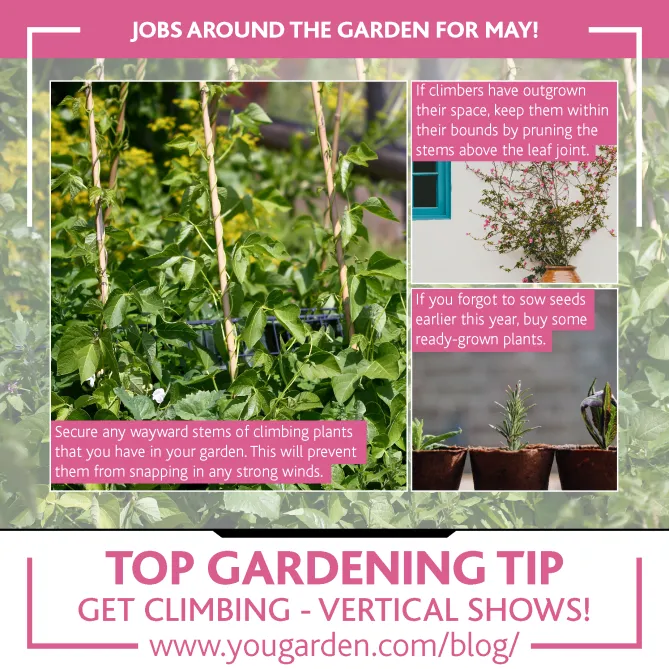
As May arrives, both gardens and orchards are in full bloom. New vegetables begin to sprout, and flowers start to color the landscape. This is also a time when gardening maintenance intensifies with new plantings, whether for ornamental plants or vegetables. In this article, we’ll explore the works to be done in the garden during May.
Planting Time: Getting Your Plants Ready for Spring
May is still possible to get your plants ready for spring by planting them directly into the ground. For fruit trees and roses, however, it’s best to wait until next year to see fruits and flowers. Let’s dive into how to proceed with planting:
Before planting a plant, dig a hole that’s large enough and apply fertilizer immediately afterward. Cover the fertilizer with a layer of soil: this will prevent the roots from coming into direct contact with the nutrient.
Position the plant well in the ground, compacting the soil around it firmly.
Finally, water abundantly, especially when rain starts to scarce, avoiding puddles of water.
Choosing the Right Plants for May
May is an excellent time to plant a wide variety of vegetables such as:
Rucola: This leafy green vegetable is easy to grow and can be harvested in as little as 20 days.
Radicchio: A cool-season crop, radicchio prefers the cooler temperatures of spring and can be harvested in about 60 days.
Spinach: Another cool-season crop, spinach thrives in May’s mild temperatures and can be harvested in about 30 days.
Tomatoes: While tomatoes are typically thought of as a summer crop, some varieties like cherry tomatoes and patio tomatoes can be planted in May for an early harvest.
Zucchini: This versatile squash is easy to grow and can be harvested in about 35 days.
Melons: Melons prefer the warmer temperatures of spring and can be planted in May for a mid-summer harvest.
Grapes: Grapes are typically thought of as a summer crop, but some varieties like muscadine grapes can be planted in May for an early harvest.
May Gardening: Works to Be Done
As temperatures begin to rise, we can finally:
Bring out plants that have been kept indoors during winter
Remove outdoor covers and protection
Remove weeds: this is the time when plants are more susceptible to disease, so it’s essential to do it. If you want to prevent weeds from growing in the first place, consider covering the soil with tarpaulins or non-woven fabric.
Aerate the soil: Aerating your soil once a month will help to improve drainage and promote healthy growth.
Fertilize your plants regularly with liquid fertilizer
Cut back lawn coverings and apply fertilizer at a slow release rate.
Irrigation: The Key to Successful Gardening
As temperatures rise, irrigation becomes more crucial! If you have an automatic watering system, it’s essential to program it to activate regularly, preferably in the morning or evening. Consider using a rain sensor to avoid overwatering when heavy rainfall is expected.
Diseases and Pests: Protecting Your Plants
May is a time when plants are more vulnerable to pests and diseases. To prevent these issues, we must take preventive measures by applying treatments before they become a problem. If an attack occurs, you’ll need to act quickly with specific treatments. In the garden, it’s essential to be extremely cautious regarding this aspect, as your vegetables will eventually end up on your plate.
Common plant diseases include fungal infections and root rot, which can be prevented with proper care and maintenance. Some common signs of disease in plants include yellowing leaves, black spots, or powdery mildew.
Integrated Pest Management (IPM)
IPM is a holistic approach to managing pests that involves identifying the pest, assessing the risk, implementing control measures, monitoring the result, and adjusting the control measures as needed. In the garden, IPM can be used to manage pests like aphids, whiteflies, and spider mites.
Some common signs of pests in plants include holes in leaves, stunted growth, or actual insects on the plant. To prevent pest infestations, consider using physical barriers like row covers or fine-mesh screens to prevent insects from reaching your plants.
What to Plant in May
In addition to vegetables, there are many ornamental plants that can be planted in May. Some popular options include:
Perennials: Perennials are plants that come back year after year. They’re perfect for adding color and texture to the garden.
Annuals: Annuals are plants that complete their life cycle within a single growing season. They’re great for adding a pop of color or interest to the garden.
Bulbs: Bulbs are underground storage organs that contain seeds. They’re often planted in fall, but some varieties like tulips and daffodils can be planted in May.
Tips for Planting
When planting, consider using organic fertilizers like compost or manure to promote healthy growth without harming the environment.
To prevent weeds from growing, cover the soil with tarpaulins or non-woven fabric.
Water abundantly, especially when rain starts to scarce, avoiding puddles of water.
Frequently Asked Questions
- How long do fruit trees need to wait before producing fruits?
- Fruit trees typically take around one year after planting to produce fruits.
- What should I use to cover my soil to prevent weeds from growing?
- To prevent weeds, you can use tarps or non-woven fabric to cover your soil.
- How often should I fertilize my plants?
- Regularly apply fertilizer to ensure healthy growth and development.
- What is the best time to plant new vegetables in May?
- Plant new vegetables as soon as possible, while the weather is still cool.
- Can I use a drip irrigation system instead of an automatic watering system?
- Yes, you can use a drip irrigation system if it suits your specific needs and garden size.
- What are some common diseases that affect plants in May?
- Common plant diseases include fungal infections and root rot, which can be prevented with proper care and maintenance.
- How often should I aerate my soil?
- Aerating your soil once a month will help to improve drainage and promote healthy growth.
- Can I use organic fertilizers instead of chemical fertilizers?
- Yes, you can use organic fertilizers such as compost or manure to promote healthy growth without harming the environment.
By following these tips and guidelines, you’ll be well on your way to creating a thriving garden in May. Happy gardening!


