
As a gardener, providing the right support for your tomato plants is crucial for their growth and productivity. The use of plant supports or tutors can help promote upright growth, prevent damage from wind, and ensure healthy fruit production. In this article, we’ll delve into how to position plant supports effectively, taking into account the unique needs of different tomato varieties.
Understanding Tomato Variety Portment
Before discussing plant support strategies, it’s essential to understand the two main types of tomato variety portment: determinate and indeterminate. Determinate tomatoes grow in a bush-like shape, with a single stem that requires staking or pruning to control height. Indeterminate tomatoes, on the other hand, are more vigorous and produce multiple stems, requiring support to prevent them from toppling over.
The Benefits of Plant Supports
Plant supports not only help maintain the structural integrity of your tomato plants but also offer several additional benefits:
- Wind protection: Prevents damage from strong winds that can cause stems to break or become dislodged.
- Easy harvesting: Allows for easy access to fruit, reducing the risk of bruising and spoilage.
- Improved growth: Promotes healthy stem elongation and prevents legginess.
Setting Up Plant Supports
To set up plant supports effectively, follow these steps:
- Choose the right material: Select sturdy, rust-resistant materials like PVC pipes or wooden stakes to support your tomato plants.
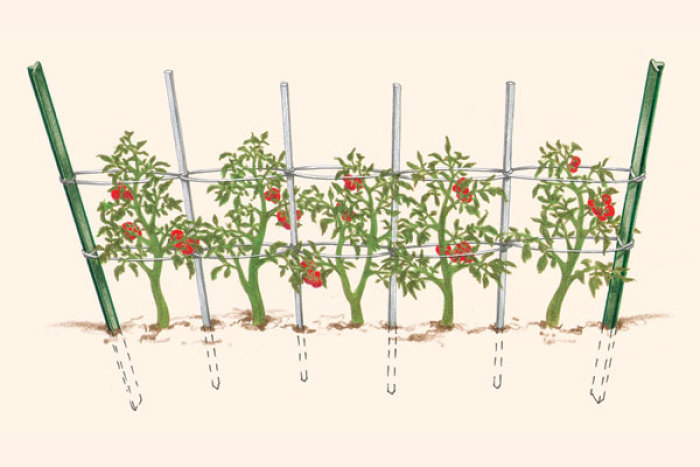
- Create a trellis system: Install two wooden stakes or PVC pipes at the head of the bed, spaced about 30-40 cm apart. Tend these stakes with wire or twine to create a stable frame for your supports.
- Plant supports: Place individual plant supports beside each tomato plant, ensuring they’re securely attached to the trellis system.
Key Considerations
When setting up plant supports, keep in mind the following:
- Support height: Ensure plant supports are at least 1 meter long to accommodate multiple stem growth.
- Fruit weight: Provide robust support for fruit as it ripens to prevent damage or breakage.
- Easy access: Consider the ease of harvesting and maintenance when positioning plant supports.
Additional Tips and Resources
For more information on growing tomatoes, check out our articles on:
- How to grow tomatoes in a pot: Learn the best techniques for container gardening.
- The best ways to prune tomato plants: Discover how to prune your tomatoes for maximum yield and flavor.
- Growing your own seeds: Understand the process of growing your own tomato seeds from scratch.
Trellis Systems: A Variety of Options
When it comes to setting up plant supports, trellis systems are a popular choice. Here are some options to consider:
- Cage systems: Use wire cages or individual plant cages to provide support for indeterminate tomatoes.
- Teepee structures: Create a teepee-like structure using wooden stakes and twine for added stability.
- Arbor systems: Install an arbor system, consisting of horizontal beams and vertical posts, to create a sturdy framework.
Common Mistakes to Avoid
To ensure the best results when setting up plant supports, be aware of these common mistakes:
- Insufficient support height: Make sure your plant supports are at least 1 meter long.
- Poor material selection: Choose materials that can withstand wind and weather conditions.
- Inadequate pruning: Regular pruning is crucial for maintaining a healthy, productive tomato plant.
Frequently Asked Questions
- What is the ideal distance between plant supports?
- The recommended distance between plant supports is about 30-40 cm.
- How do I choose the right material for my plant supports?
- Select sturdy, rust-resistant materials like PVC pipes or wooden stakes to support your tomato plants.
- Can I reuse old plant supports?
- It’s best to disinfetate and clean any reused plant supports before using them again.
- How do I prevent legginess in my tomato plants?
- Provide regular pruning, fertilization, and support to promote healthy stem elongation.
- What is the optimal height for plant supports?
- Plant supports should be at least 1 meter long to accommodate multiple stem growth.
By following these guidelines and tips, you’ll be able to create an optimal support system for your tomato plants, ensuring healthy growth, productive yields, and a bountiful harvest.


