
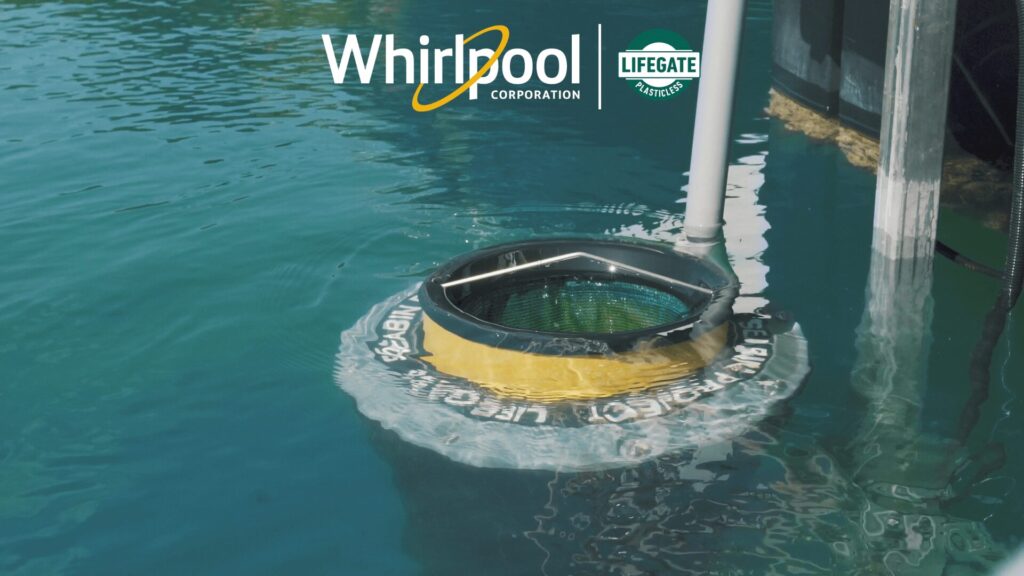
The recent partnership between Whirlpool and LifeGate PlasticLess has dealt another devastating blow to plastic pollution in the Mediterranean, a true nightmare for our country. Italy, in this “field,” boasts impressive performances, unfortunately.
According to the UNEP (the United Nations Environment Programme), 90 tons of plastic waste from the 731 that end up in the Mediterranean Sea are “made in Italy,” we’re essentially the third country polluter of the beautiful sea that so comforts our masses of tourists. Our waters are one of the most affected areas worldwide, with microplastics found at a staggering 7% of the total global amount.
Let’s take a closer look at what this partnership entails and where it’s headed in order to make a significant turn, now that pollution is no longer a niche topic among experts.
LifeGate PlasticLess and Whirlpool: The Project
The LifeGate PlasticLess initiative aims to protect marine health while fighting plastic waste in ports and nautical circles. Whirlpool EMEA, an entity highly sensitive to economic circularity and environmental sustainability issues, has chosen to team up with LifeGate to take concrete action against microplastics, making it possible to install 11 new Sebin devices produced by their partner Poralu Marine.
Before we dive into the specifics of this groundbreaking project, let’s imagine the impact that can be achieved on our planet and comprehend its future developments.
Today, the ports and nautical circles hosting these devices are:
- Marina dei Cesari in Fano
- Circolo Nautico Sambenedettese in San Benedetto del Tronto
- Marina Sant’Andrea in San Giorgio di Nogaro
- Marina Blu in Rimini
- La Marina Dorica in Ancona
- Gestiport in Senigallia
- Marina di Capraia on the Island of Capraia
- Club Nautico della Vela in Naples (Borgo Marinari)
- Marina di Lacco Ameno and Marina di Forio on Ischia
- Marina Capo d’Orlando
- Marina Acquatica di Alghero, and
- The Association of Italian Mariners in the Darsena of Milan
To quantify the action being taken by these devices to be installed in our ports, let’s take a look at two examples: one from Fano’s Marina dei Cesari, and another from San Benedetto del Tronto’s Circolo Nautico Sambenedettese. In these waters, the Sebin have already collected over 400 kg of floating debris, equivalent to more than 26,000 half-liter plastic bottles, along with pipes and bottle caps, cigarette butts, polystyrene pieces, food packaging (such as merienda confectionery), and fishing nets.
These devices are indeed very useful, as they’re continuously active, h24, and collect plastic waste at a rate of 1.5 kg per day, which translates to over 500 kg annually. To put this into perspective, 1.5 kg of plastic is equivalent to 100 bottles, but it’s worth noting that these bins are able to capture not just visible plastic waste but also the treacherous microplastics with diameters between 2 and 5 mm and the equally perilous microfibers measuring 0.3 mm, which can enter the food chain by attaching themselves to seaweed ingested by fish.
LifeGate PlasticLess: Sensibilization
The waste collected in these Sebin is sorted by selected companies for proper disposal, making local administrations also protagonists of this project. It’s crucial that people across the board feel the impact of plastic pollution, not just those living near the sea or witnessing its effects. The Ministry of Environment has launched the “Plastic Free Challenge,” a competition based on the Ice Bucket Challenge model to raise awareness among citizens, businesses, and institutions about eliminating single-use plastics.
The collaboration with Whirlpool is another key element making this project exemplary. It’s a demonstration of how positive and virtuous synergies can be formed when different entities work together to tackle environmental challenges on a large scale, where solo action often doesn’t yield the desired results.
Other companies may follow in Whirlpool’s footsteps by adopting similar strategies for sustainability and combating waste within the circular economy context. Beyond this project, according to Karim Bruneo, Corporate Responsibility and Government Relations Manager, EMEA, Whirlpool is engaged in numerous other initiatives and participates in the European Commission’s campaign aiming to use 44,000 tons of 100% recycled plastic in its products by 2025.
Plastic Pollution in the Mediterranean: The Numbers
The data on plastic pollution in the Mediterranean Sea is alarming:
- Every day, 731 tons of plastic waste enter the sea that could double by 2025.
- Italy alone contributes 90 tons to this problem.
- Microplastics are present at a concentration of 1.2 million / kmq.
Below you’ll find an infographic highlighting the 13 ports involved in the #Plasticless project for plastic collection using Sebin devices.
Download the complete infographic
I hope you enjoyed this article and will continue to follow me on Twitter, Facebook, and Instagram


