
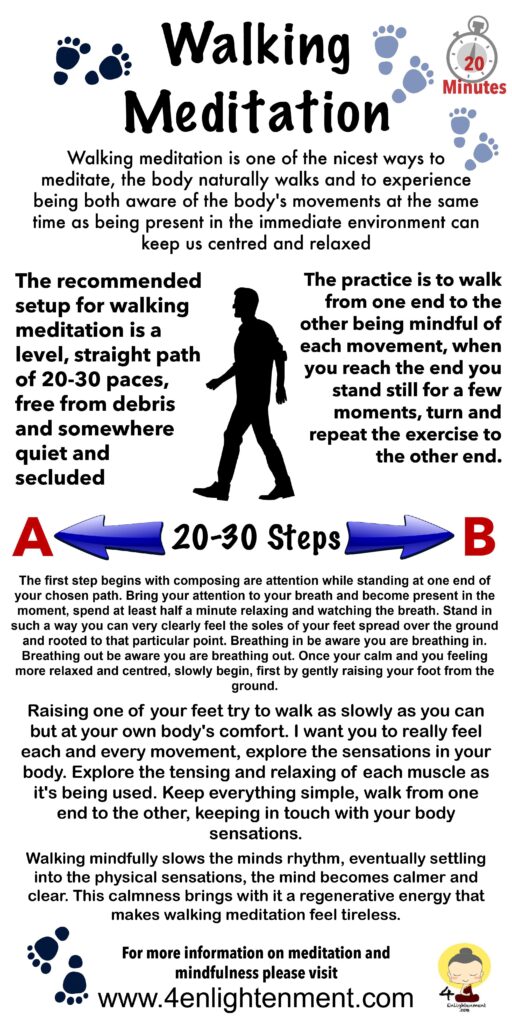
When we imagine someone meditating, we often picture a person sitting or lying down with their eyes closed. However, this is not the only way to practice meditation. One effective method that combines physical movement with mental focus is walking meditation.
In this article, we will explore what walking meditation is, its benefits, and how to incorporate it into your daily routine.
What is Walking Meditation?
Walking meditation, also known as “sitting on the go,” involves paying attention to your breath, posture, and movement while walking. This practice combines physical movement with mental focus, allowing you to cultivate mindfulness and reduce stress.
Unlike traditional sitting meditation, walking meditation engages both the body and mind, making it an excellent way to improve concentration, balance, and overall well-being.
Benefits of Walking Meditation
Walking meditation offers numerous benefits, including:
- Improved concentration and focus: By paying attention to your breath and movement, you can improve your ability to concentrate and stay focused.
- Reduced stress and anxiety: The gentle pace of walking meditation can help calm the mind and reduce feelings of stress and anxiety.
- Increased mindfulness and self-awareness: Walking meditation encourages you to be present in the moment, allowing you to become more aware of your thoughts, emotions, and physical sensations.
- Enhanced physical fitness and coordination: Regular walking meditation practice can improve balance, flexibility, and overall physical fitness.
- Better sleep quality: The relaxation response triggered by walking meditation can lead to improved sleep quality and duration.
By incorporating walking meditation into your daily routine, you can experience these benefits firsthand.
How to Practice Walking Meditation
To practice walking meditation, follow these steps:
- Find a quiet, peaceful spot: Choose a location with minimal distractions, such as a park or forest.
- Set aside time for practice: Commit to a regular schedule, ideally early in the morning or before bed.
- Focus on your breath and posture: Pay attention to your body position, breathing patterns, and any thoughts that arise.
- Maintain a steady pace: Walk at a slow, deliberate pace, allowing yourself to settle into the present moment.
- Practice mindfulness: Bring awareness to your surroundings, noticing sights, sounds, and smells without judgment.
Tips for Successful Walking Meditation
- Wear comfortable shoes: Choose footwear that allows you to walk freely and comfortably.
- Avoid distractions: Leave your phone behind or silence notifications to minimize interruptions.
- Stay hydrated: Drink water before and during practice to maintain energy levels.
- Be gentle with yourself: Remember that it’s okay if your mind wanders – gently bring your focus back to the present moment.
Choosing the Right Location
The ideal location for walking meditation is one that allows you to connect with nature and minimize distractions. Consider the following options:
- Parks or gardens: These peaceful environments offer plenty of opportunities for reflection and mindfulness.
- Forests or woodlands: The sounds of nature can help calm the mind and promote relaxation.
- Beaches or lakeshores: The soothing sounds of water can create a calming atmosphere, ideal for walking meditation.
- Quiet neighborhoods or rural areas: These locations often have minimal distractions, allowing you to focus on your practice.
If you live in a busy urban environment, try practicing walking meditation in a nearby park or on a quiet street.
Additional Resources
For more information and guidance on walking meditation, explore the following resources:
- Guided audio recordings: Utilize apps like Headspace or Calm to access guided meditations tailored for walking.
- Local classes or workshops: Join a local yoga studio, wellness center, or community organization offering walking meditation sessions.
- Online communities: Connect with online forums or social media groups dedicated to mindfulness and walking meditation.
Overcoming Common Challenges
Walking meditation can be challenging, especially if you’re new to the practice. Here are some common challenges and how to overcome them:
- Difficulty staying focused: Start by practicing short sessions (5-10 minutes) and gradually increase duration as you become more comfortable with the practice.
- Feeling self-conscious: Find a quiet location where you feel comfortable walking without distractions or judgment from others.
- Worrying about pace: Focus on your breath, posture, and movement rather than trying to maintain a specific pace.
Incorporating Walking Meditation into Your Daily Routine
To make walking meditation a regular part of your routine, try the following:
- Schedule it in: Set aside time each day or week for walking meditation, ideally at the same time each day.
- Start small: Begin with short sessions and gradually increase duration as you become more comfortable with the practice.
- Make it convenient: Find a location that’s easy to access and minimize distractions.
Conclusion
Walking meditation is a powerful practice that can improve concentration, reduce stress, and enhance overall well-being. By incorporating this practice into your daily routine, you can experience its numerous benefits firsthand. Remember to find a quiet, peaceful spot, focus on your breath and posture, maintain a steady pace, and practice mindfulness. With regular practice, you’ll become more comfortable with the technique and be able to reap its many rewards.
As you begin your walking meditation journey, remember that it’s okay if your mind wanders – gently bring your focus back to the present moment. Be patient with yourself, and don’t hesitate to seek guidance from online resources or local classes. With time and practice, walking meditation can become a powerful tool for cultivating mindfulness, reducing stress, and improving overall well-being.


