
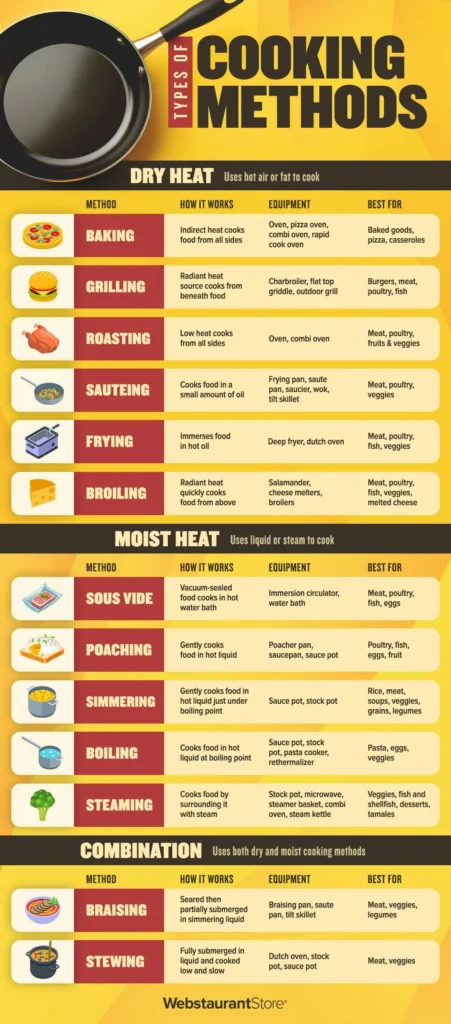
As we navigate the vast world of cooking, it’s essential to understand the various methods at our disposal. From ancient techniques to modern innovations, each method offers its unique benefits and drawbacks. In this comprehensive guide, we’ll delve into the different cooking methods, exploring their characteristics, advantages, and disadvantages.
Understanding Cooking: The Science Behind It
Before diving into the specifics of cooking methods, it’s crucial to grasp the fundamental principles behind cooking. Cooking is essentially a process of transferring heat from a source to an object, resulting in a transformation of its physical and chemical properties. This transfer of heat can occur through three primary mechanisms: conduction, convection, and radiation.
The Five Primary Heat Transfer Methods
While understanding the scientific aspects of cooking is essential, it’s equally important to recognize the five primary heat transfer methods that govern our culinary endeavors:
- Air: Utilized in oven roasting, air frying, and toasting.
- Water: Employed in boiling, steaming, and braising.
- Oil/Oil-based: Leveraged in frying, sautéing, and stir-frying.
- Fire: Applied in grilling, broiling, and barbecue cooking.
- Steam/Vapor: Used in steaming, poaching, and stewing.
Exploring the World of Cooking Methods
Now that we’ve examined the foundational principles and heat transfer methods, let’s explore some popular cooking techniques:
Bollitura
The simplest yet most versatile method, boiling involves immersing food in water to cook it. This technique is suitable for a wide range of ingredients, including pasta, vegetables, meat, and seafood.
- Pros: Easy to execute, cost-effective, and allows for precise control over cooking time.
- Cons: Can result in nutrient loss due to excessive water usage.
Cottura al Vapore
A healthier alternative to boiling, steaming involves cooking food using steam instead of water. This method helps retain nutrients and flavors while minimizing the risk of overcooking.
- Pros: Preserves nutrients, easy to execute, and doesn’t require excess liquid.
- Cons: Limited applications for certain types of food.
Cottura al Microonde
Microwaving involves using electromagnetic waves to heat food. This technique is quick and convenient but can result in uneven cooking and nutrient loss.
- Pros: Fast, energy-efficient, and suitable for reheating leftovers.
- Cons: Can lead to overcooking, nutrient degradation, and texture changes.
Grigliata
Grilling involves cooking food directly over an open flame. This technique adds a distinct smoky flavor to the finished dish but can also result in charred, unappealing textures.
- Pros: Adds depth of flavor, creates a crispy exterior.
- Cons: Requires precise temperature control and regular monitoring for optimal results.
Frittura
Frying involves submerging food in hot oil. This technique is ideal for creating crispy exteriors but can lead to excessive fat consumption and nutrient loss.
- Pros: Produces a satisfying crunch, versatile cooking method.
- Cons: High caloric content, potential for overcooking and nutrient degradation.
Cottura a Fuoco Lento
Slow-cooking involves cooking food at low temperatures for an extended period. This technique is ideal for tenderizing tougher cuts of meat while preserving flavors.
- Pros: Tenderizes tough meat, retains flavors.
- Cons: Requires long cooking times, may lead to overcooking if not monitored closely.
The Balance Between Cooking Methods
While each cooking method has its unique benefits and drawbacks, the key to a well-rounded culinary experience lies in balance. By incorporating multiple techniques into your repertoire, you can create a diverse range of dishes that cater to various tastes, dietary needs, and occasions.
- Experimentation: Try new combinations of cooking methods to discover innovative flavors and textures.
- Adaptability: Be willing to adjust cooking times, temperatures, and ingredients based on the specific recipe and desired outcome.
- Flexibility: Don’t be afraid to substitute or swap out ingredients to accommodate dietary restrictions or personal preferences.
Common Mistakes to Avoid
To maximize your culinary success, it’s essential to recognize common mistakes that can compromise the quality of your dishes:
- Overcooking: Be mindful of cooking times and temperatures to prevent overcooking, which can lead to dry, tough food.
- Underseasoning: Don’t be afraid to add flavorings and seasonings throughout the cooking process to ensure your dish is well-seasoned.
- Insufficient Browning: Allow for adequate browning time to develop a rich, caramelized crust on meats and vegetables.
- Inadequate Resting: Ensure that cooked dishes are allowed to rest before serving, allowing juices to redistribute and flavors to meld.
Tips for Successful Cooking
To become a skilled cook, it’s essential to master several key techniques:
- Master the art of knife skills: Develop sharpness and dexterity with your knives to ensure precise cutting and chopping.
- Understand ingredient ratios: Learn to balance flavors by adjusting ingredient proportions.
- Invest in quality cooking equipment: Choose high-quality cookware that distributes heat evenly, ensuring perfectly cooked dishes.
- Practice patience: Allow for sufficient cooking time to achieve desired results.
Conclusion
Cooking is an art that requires patience, creativity, and a deep understanding of various techniques. By exploring the diverse world of cooking methods, you can unlock new flavors, textures, and possibilities in your kitchen. Whether you’re a seasoned chef or a culinary novice, embracing the diversity of cooking methods will elevate your cooking experience and provide you with endless creative opportunities.
Frequently Asked Questions
- Q: What is the best cooking method for retaining nutrients?
- A: Steaming is generally considered the healthiest cooking method, as it minimizes nutrient loss while preserving flavors.
- Q: How do I prevent overcooking when using multiple cooking methods?
- A: Monitor cooking times and temperatures closely, especially when combining techniques like grilling and frying.
- Q: Can I substitute ingredients in a recipe without compromising the dish’s overall flavor profile?
- A: While some substitutions may work better than others, it ultimately depends on personal taste preferences and the specific ingredients used.
- Q: Are there any cooking methods that can help reduce food waste?
- A: Techniques like slow-cooking, braising, and stewing can be effective in tenderizing tougher cuts of meat and reducing food waste.
- Q: Can I use the same cooking pan for both frying and sautéing?
- A: While it’s possible to share a pan between these two techniques, it’s essential to clean and sanitize the pan properly between uses to prevent cross-contamination of flavors and bacteria.
Whether you’re an avid home cook or a professional chef, embracing the diversity of cooking methods will enrich your culinary experience and provide you with endless creative possibilities.


