
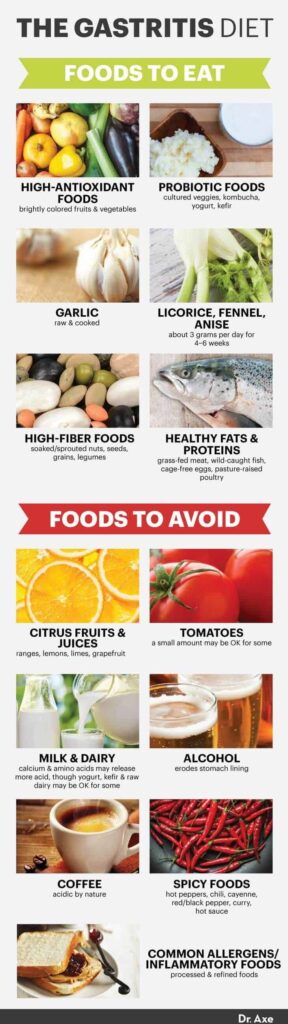
Gastritis is an inflammation of the mucous lining in the stomach, causing discomfort, acid reflux, nausea, and vomiting. While a healthy diet can help alleviate symptoms, it’s not always easy to manage inflammation with just dietary changes. In some cases, consulting a doctor may be necessary to identify the underlying cause.
Understanding Gastritis
Gastritis is a common condition that can be triggered by various factors. These include:
- Prolonged use of non-steroidal anti-inflammatory drugs (NSAIDs) like aspirin or ibuprofen
- Chronic alcohol and substance abuse
- Smoking habit
- Autoimmune disorders, such as pernicious anemia
- Elevated stress levels
- Consuming large and heavy meals
- Presence of Helicobacter pylori infection
Managing Gastritis Symptoms
Gastritis can cause discomfort or pain in the upper abdomen, nausea, vomiting, and internal bleeding. Some people may not exhibit noticeable symptoms, while others may experience severe digestive issues.
While there are no specific dietary recommendations for gastritis, certain foods can worsen symptoms, such as bloating, indigestion, or heartburn.
Key Principles of Gastritis-Friendly Diet
- Eat smaller meals: Divide daily calorie intake into 4-6 main meals and 2-3 snacks to ease digestion.
- Avoid trigger foods: Steer clear of foods that can irritate the stomach lining, such as spicy or fatty foods, citrus fruits, and carbonated drinks.
- Choose gentle protein sources: Opt for lean meats, fish, eggs, tofu, and legumes instead of red meat, organ meats, and processed foods.
- Select low-acid produce: Focus on alkaline-rich fruits and vegetables like bananas, apples, sweet potatoes, and carrots.
Foods to Include in Your Gastritis Diet
- Latte or yogurt
- Caffeinated beverages (in moderation)
- Grissini crackers without salt
-
Fruits and vegetables
- Fresh berries
- Citrus fruits like oranges, lemons, and grapefruits are avoided due to their acidity.
- Raw or cooked leafy greens
- Carrots
- Sweet potatoes
- Apples
Beverages for Gastritis
- Water: Adequate hydration is essential for digestive health.
- Herbal teas: Choose caffeine-free options like peppermint, chamomile, and licorice root tea.
- Low-acidity juices: Opt for diluted fruit or vegetable juice.
Lifestyle Changes for Gastritis
- Keep a food diary: Track symptoms and potential triggers to identify problematic foods.
- Limit alcohol consumption: Avoid drinking altogether until the condition is resolved.
- Exercise regularly: Engage in gentle physical activities like yoga, walking, or swimming to reduce stress levels.
- Manage stress: Practice relaxation techniques like meditation, deep breathing exercises, or guided imagery.
Food Choices for Specific Gastritis Symptoms
- Bloating and Gas: Opt for low-fiber foods, like bananas, applesauce, and plain toast. Avoid beans, cabbage, broccoli, and other high-fiber vegetables.
- Indigestion and Heartburn: Choose gentle protein sources, such as chicken or fish. Select low-fat dairy products, like milk or yogurt, instead of fatty cheeses.
- Nausea and Vomiting: Eat small, frequent meals to reduce stress on the stomach. Opt for bland foods like crackers, toast, or plain rice.
Herbal Remedies for Gastritis
- Peppermint Oil: Apply topically or ingest peppermint oil capsules (after consulting a doctor) to soothe digestive issues.
- Ginger: Consume ginger tea, ginger ale, or add fresh ginger to meals to reduce inflammation and alleviate symptoms.
Conclusion
While a natural diet can help alleviate symptoms of gastritis, it’s crucial to consult with a healthcare professional to determine the underlying cause and develop a personalized treatment plan. With patience, persistence, and lifestyle changes, it is possible to manage symptoms and promote overall stomach health.


